

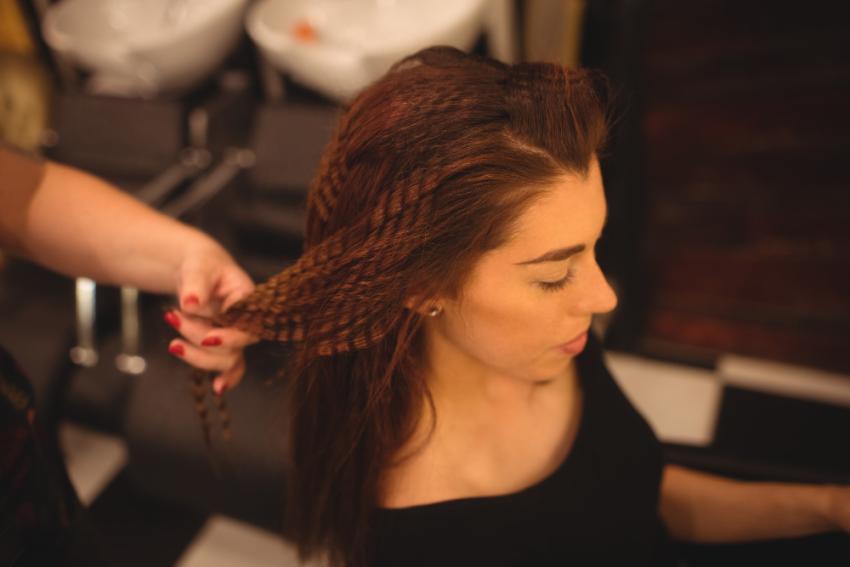
You have a style in mind and a few weeks before you want to wear it, and the people who can do it work in very different settings. One works from a rented chair. One works from a living room. A cousin offers to do it for free. The best choice in Colorado Springs depends on your hair, your calendar and how much risk you can accept, and a hair braiding salon in Colorado Springs is only one of the four routes worth weighing.
This guide treats the choice as a decision, not a ranking. Each setup wins in some situations and loses in others. You will see what each one offers, what it costs in time and certainty, and which rules point you toward it.
Start With Your Hair and Your Goal
The setup matters less than the match between the job and the person doing it. Before you compare places, write down three facts about the install you want.
The style: knotless, box braids, twists, feed-in cornrows, crochet or something with extensions and a pattern.
The size and length: small and long styles take the most hours, while larger sizes finish sooner.
The condition of your hair: detangled, fully dry, and free of heavy buildup on the day.
A simple style on healthy, prepared hair works almost anywhere. A complex pattern, a very small size or a scalp that is tender raises the stakes. Those jobs reward a braider with a track record you can check and a setup that lets the braider sit and work for hours.
Add one more fact: how long the style has to last. A style that must look sharp for a month needs more precision than one you will take out in two weeks. Precision costs time, and time is what separates the four setups below.
The Four Setups, Described Plainly
Every route comes down to one of four arrangements. Each has a typical strength and a typical weak point.
A studio chair
A studio or salon has a fixed address, posted hours and a space built for long sessions. Appointments follow a schedule, and the place stays open whether one person is out sick or not. The trade-off is less flexibility. You work around the studio's hours, and you may not choose which braider sits behind you.
A solo independent braider
An independent braider runs their own book, often from a rented suite or a private room. You usually deal with one person from the first message to the last braid. That makes it easy to ask for exactly what you want. It also means one person's schedule, health and phone are the whole operation.
A home-based braider
Some braiders work from their own home, and some travel to yours. The setting is relaxed, and sessions can run into the evening. The trade-off is that the room, the lighting and the seating vary widely. Ask what applies to the setup, because licensing and local rules differ by state and arrangement.
A friend or a do-it-yourself install
A friend costs the least and offers the most patience. Skill varies, though, and a first-time install on your own head is slow. This route suits simple styles, practice runs and low-stakes weeks. It suits a high-stakes event much less.
Match Your Situation to a Setup With Simple Rules
Read the rules below from top to bottom and stop at the first one that describes you. Most readers land on a clear answer within three or four lines.
Choose a studio when you want a fixed address, posted hours and a place that keeps running if one person is unavailable.
Choose a studio when the style is complex or the session will last most of a day, since the space and the routine are built for that.
Choose an independent braider when you want one person to know your hair across several visits and to answer messages directly.
Choose a home-based braider when you value a quiet setting, can travel to the location, and have seen the work you are paying for.
Choose a friend when the style is simple, the date is flexible and nothing rides on the result.
Skip any setup, whatever its price, when the braider will not show you finished work or explain how the process runs.
The last rule matters most. A setup is only as good as the hands in it, and no address or hourly rate replaces a look at real results.
What a Studio Setup Offers That Other Routes Cannot Promise
A fixed location is the quiet advantage of a hair braiding salon in Colorado Springs. You can find it again, visit before you book and see how it runs. One local business posts its address, 2937 Galley Rd, and its hours, Monday to Saturday from 8:30 AM to 7 PM, with Sunday closed. The Betty African Hair Braiding styles, hours and booking details sit on one page, and the page says appointments are recommended and that most appointments take a few hours.
That kind of posted detail is a decision tool. It lets you check three things before you commit: whether the hours fit your week, whether the style you want is listed, and whether the setup has stated how it works. The same page names more than eight years of professional experience. Treat that as a claim to ask about, not proof of quality, and look at finished work before you book.
A studio also gives you a built-in answer to a problem that single-person setups share. If your braider is unavailable on your date, a studio can often reassign or reschedule inside the same business. A solo braider with a cold or a family emergency has no backup. Ask any setup how it handles a cancelled appointment, and the answer tells you how much risk you carry.
When an Independent or Home Braider Is the Better Call
Studios do not win every case. A solo or home-based braider is the stronger pick in four situations.
You want a specific braider whose work you have already seen, such as a friend's install you admired.
You need an evening or weekend slot that a studio's hours do not cover.
You want a quiet space with no one else in the room, perhaps because a child or a sensory need makes noise hard.
You plan several visits and want one person to learn your hair and track how it holds.
In each case, the personal relationship is the product. That relationship works well while it lasts, and it depends on one person staying reachable. Save the contact, confirm the date in writing and agree on what happens if either side has to cancel.
Here is a hypothetical example. A reader who works shifts finds a home-based braider who takes appointments after 6 PM. The style turns out well, and the schedule fits. Two months later the braider moves away, and the reader starts over with no record of the size, the extensions or the pattern used. A short note kept on a phone, with the style name, size and hair type, would have made the next search much easier.
The Hidden Costs in Every Route
Price is the loud number. Time, rework and removal are the quiet ones, and they differ by setup.
Time: a few hours is typical for many installs, and complex ones run longer. Ask for a start and end window, then add travel.
Rework: a style that sits unevenly or pulls at the scalp may need redoing. Ask each setup how it handles a fix and whether it fits in the same week.
Removal: taking braids out takes patience. Ask whether the braider offers takedown, or plan time to do it yourself.
Travel and parking: a home visit that is far away adds time to a day that is already long.
Waiting: a popular braider may be booked out, so an early date is a sign of either good luck or a thin schedule. Ask which.
Many styles last between four and eight weeks, according to the Colorado Springs salon's own site, so the install is a month-long commitment in practice. A rushed or uncomfortable session is a poor trade for something you wear that long.
A Ten-Minute Test Before You Commit
You can compare any two setups in ten minutes with these steps. Do them in order, and note the answers.
Ask for photos of finished work in the style you want, from several clients and not one favorite.
Describe your hair in plain words and ask what the braider would do first.
Ask for the total time window, the cancellation terms and how to reschedule.
Ask how the braider handles a scalp that is tender during the session.
Ask what prep the braider expects. Many setups want your hair clean, detangled and fully dry on arrival.
Ask where the session happens, who else will be present and how long the braider has worked.
Good answers are specific. A braider who names the parting method, the tension and the products and tools involved is describing a process. A braider who says only that everything will be fine is describing a mood.
If two setups pass, break the tie with comfort. Pick the place where you can sit for several hours without dreading the door.
Pick the Setup, Then Lock In the Date
The framework reduces to three moves. Name the style and the condition of your hair. Match the stakes to the setup using the rules above. Then run the ten-minute test on your top two choices.
For many readers with a complex style or a firm deadline, a hair braiding salon in Colorado Springs offers the steadiest balance of posted hours, a checkable address and a backup if plans change. For readers who value one trusted person, a solo or home-based braider is the better fit, and for simple styles a friend is a fair choice. Whichever route you take, make the choice on purpose and not by default.
Betty African Hair Braiding recommends booking ahead to hold a preferred date and time, and that advice holds for any setup you pick. Book early, arrive with clean and dry hair, and keep a note of what was done so the next install starts from facts.