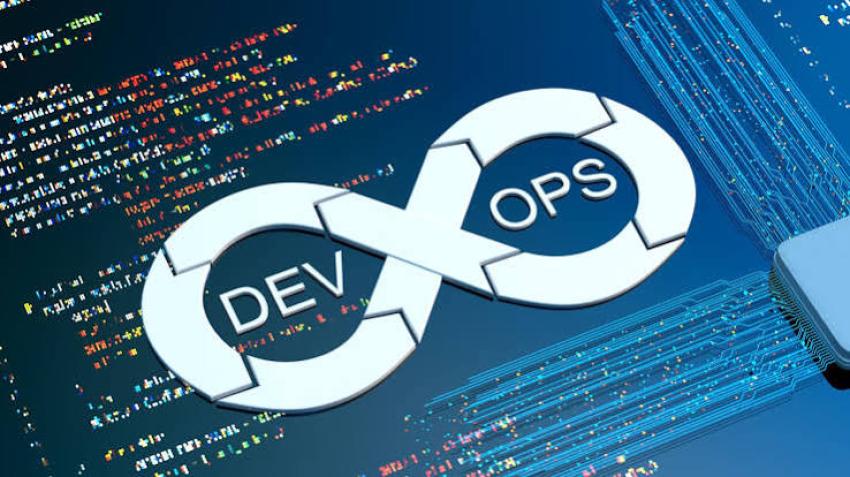
Is DevOps still in high demand, or is the field cooling down?
Some commentators have even declared that "DevOps is dead," claiming that AI code assistants, automated cloud platforms, and the rise of "Platform Engineering" will make the role obsolete.
The reality on the ground tells a very different story.
DevOps is not dead. In fact, it remains one of the most sought-after, highly compensated domains in the global technology sector. However, the role has fundamentally evolved.
Here is an honest, data-driven look at the current state of DevOps, why demand remains so high, and what skills engineers need to stay competitive today.
What the Numbers Say: The DevOps Market Outlook
Industry data strongly refutes the idea that demand for DevOps is fading:
Massive Market Expansion: According to research by Global Market Insights, the DevOps market size exceeded $8 billion in 2022 and is projected to grow at a Compound Annual Growth Rate (CAGR) of over 20% between 2023 and 2032.
High Compensation: In the United States, data from Glassdoor and Levels.fyi reveals that senior DevOps and Site Reliability Engineers (SREs) consistently command average base salaries ranging from $130,000 to $180,000+, with total compensation packages at enterprise firms often exceeding $250,000.
Persistent Talent Shortage: Despite tech company restructuring, organizations are still desperately hiring for specialized infrastructure roles. The reason? Writing code has become easier, but safely deploying, securing, and scaling that code in production remains exceptionally difficult.
Why Organizations Still Desperately Need DevOps
Why are companies continuing to pour money into DevOps talent even while cutting other departments? Four primary drivers explain this demand:
1. Cloud Complexity Has Exploded
Ten years ago, moving to the cloud meant renting a virtual machine on AWS EC2. Today, enterprise architectures consist of sprawling microservices, distributed Kubernetes clusters, serverless functions, multi-cloud deployments, and complex service meshes. Developers cannot manage this infrastructure alone while still hitting feature deadlines. Companies need dedicated experts to ensure systems are resilient, automated, and observable.
2. The Urgent Shift to DevSecOps
Cybersecurity threats, data breaches, and ransomware attacks are at an all-time high. In the past, security was a final checkpoint handled by a separate team right before release. Today, vulnerabilities must be caught during development. DevSecOps—baking automated compliance, secret scanning, and container security directly into CI/CD pipelines—is now a mandatory board-level priority across industries.
3. Cloud Cost Optimization (FinOps)
During the zero-interest-rate boom, tech companies prioritized growth at all costs. Today, profitability is king. Unchecked cloud bills are sinking startup margins. Companies are actively hiring DevOps engineers with FinOps expertise to right-size compute resources, identify architectural waste, and slash hundreds of thousands of dollars from monthly cloud invoices.
4. Accelerating Time-to-Market
In a fiercely competitive digital economy, the company that ships bug-free features first wins. DevOps engineers create the frictionless deployment pipelines that allow development teams to push code to production multiple times a day instead of once a quarter.
The Elephant in the Room: Is AI Replacing DevOps Engineers?
With tools like ChatGPT, GitHub Copilot, and Claude writing functional scripts, many wonder if AI will replace DevOps teams.
The short answer is no—AI is replacing repetitive tasks, not the engineers.
What AI can do: Write standard bash scripts, generate Dockerfiles, produce boilerplate Terraform configurations, and scan logs for common error patterns.
What AI cannot do: Understand the intricate business logic of a legacy payment pipeline, architect zero-downtime database migrations, handle high-stakes live incident triage, or make nuanced trade-offs between system performance and network latency.
Modern DevOps engineers use AI as an accelerator. Instead of spending two hours writing a complex regular expression or deployment script, they generate the baseline in seconds and spend their brainpower on high-level system architecture, reliability engineering, and security governance.
DevOps vs. Platform Engineering: Evolution, Not Extinction
Much of the confusion about DevOps "dying" stems from the rise of Platform Engineering.
In early DevOps implementations, developers were often told, "You build it, you run it." In practice, this overwhelmed software developers with operations overhead, forcing them to become experts in Kubernetes, networking, and cloud IAM roles just to deploy a simple API.
To fix this friction, companies are pivoting toward Platform Engineering—building Internal Developer Platforms (IDPs) that offer self-service deployment portals for developers.
This is not the death of DevOps; it is the ultimate expression of DevOps maturity. The engineers building, maintaining, and automating these internal platforms are the DevOps engineers of today.
The 2025 DevOps Tech Stack: What Skills Are in Demand?
If you want to capitalize on the high demand for DevOps talent, simply knowing how to write a basic Jenkins pipeline or spin up an EC2 instance is no longer enough. The market is looking for engineers skilled in:
Infrastructure as Code (IaC): Deep mastery of Terraform, OpenTofu, or Pulumi for reproducible, declarative environments.
Container Orchestration: Advanced operational knowledge of Kubernetes (K8s), Helm charts, and container runtime security.
Continuous Delivery & GitOps: Modern deployment frameworks like ArgoCD, Flux, and GitLab CI/GitHub Actions.
Comprehensive Observability: Moving beyond basic server uptime to distributed tracing and telemetry using tools like Prometheus, Grafana, Datadog, and OpenTelemetry.
Security & Policy as Code: Integrating security scanning tools (Trivy, Snyk) and policy engines (OPA/Kyverno) directly into build pipelines.
Final Thoughts: The Road Ahead
So, is DevOps still in high demand?
Without question, yes.
As long as companies build software, they will require professionals who understand the bridge between application logic and physical infrastructure. While entry-level competition has stiffened and the toolset has evolved toward automation, security, and internal developer platforms, the core mission of DevOps remains unchanged: delivering software faster, safer, and with rock-solid reliability.