Understanding the Role of Financial Information
The documents required for a visa depend on the applicant's nationality, travel purpose, and relevant application rules. Some applicants may be asked to provide evidence relating to travel expenses, accommodation, sponsorship, or financial resources.
Before starting an armenia visa application, check the current document requirements for your circumstances. Do not assume that a particular bank balance or document is universally required for every applicant.
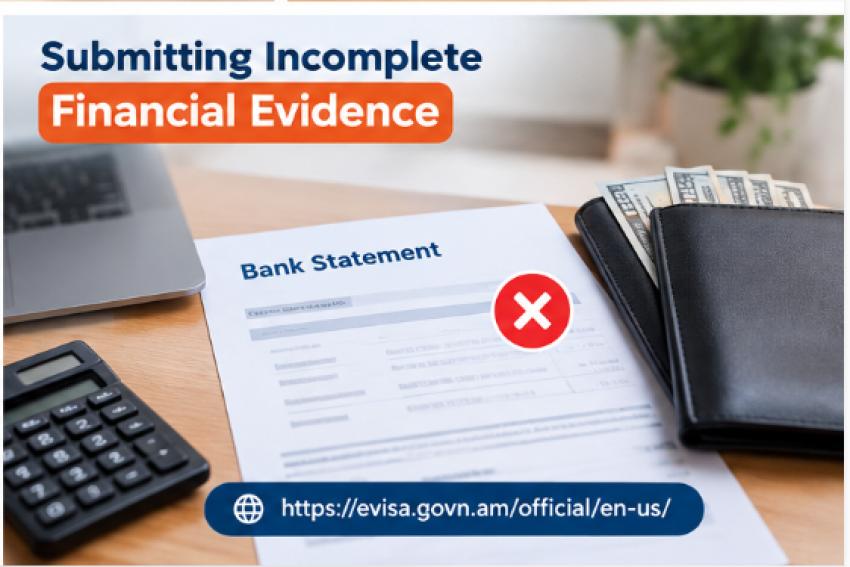
Mistake 1: Submitting Incomplete Financial Evidence
An applicant may provide one financial document while overlooking another item specifically requested in the instructions. For example, the authority may ask for a particular statement period or supporting information about who will pay for the journey.
Read the checklist carefully and prepare the requested evidence in the correct format. If a document is unavailable, do not substitute an unrelated document without checking whether it is acceptable.
A clear set of supporting documents can make the information easier to understand.
Mistake 2: Providing Information That Does Not Match
Names, dates, employment details, and other information may differ between application forms and supporting records. Sometimes these differences result from spelling variations or outdated documents rather than deliberate misrepresentation.
Nevertheless, unexplained inconsistencies may require clarification. When completing an armenia e visa application, compare relevant details across the documents you intend to submit.
If a legitimate difference exists, such as a recent change in employment, follow the application instructions to explain it where appropriate. Never modify official financial records to make them appear consistent.
Mistake 3: Using Altered or Misleading Statements
Submitting fabricated bank statements, edited transaction histories, false employment letters, or invented sponsorship documents is a serious mistake. Such material can undermine an applicant's credibility and may lead to refusal or other consequences under applicable law.
Applicants should always use genuine records issued by the relevant institution or organisation. If you need a replacement statement, request it from your bank rather than editing an existing file.
Honest documentation is more important than trying to make your financial position appear different from reality.
Mistake 4: Failing to Explain Sponsorship
Some travellers receive financial support from a parent, spouse, employer, host, or another sponsor. Problems may arise if the application suggests that the traveller is paying for everything while the supporting documents indicate otherwise.
If sponsorship is relevant and requested, clearly identify who will cover the expenses and provide the evidence specified by the applicable rules. Do not assume that a sponsor's documents automatically replace every document required from the applicant.
Before you apply for an armenia e visa online, confirm whether sponsorship evidence is necessary for your particular case.
Mistake 5: Relying on Outdated Requirements
Visa information found in old articles, discussion forums, and social media posts may no longer reflect current requirements. Applicants sometimes prepare financial records based on advice intended for a different nationality or visa category.
The armenia evisa online application process should be based on current instructions from the relevant official authority. Confirm document requirements, accepted formats, and any stated validity periods before collecting your records.
Do not assume that a document accepted for a previous application will automatically satisfy the requirements for a new one.
How to Organise Financial Documents
Applicants preparing for a visa to armenia can use a simple document-management approach:
Read the current checklist before requesting documents.
Obtain genuine statements and letters from the relevant institutions.
Check names, dates, and other identifying details.
Include sponsorship evidence if required and applicable.
Ensure documents are complete and readable.
Keep copies of all submitted records.
Respond promptly and truthfully if clarification is requested.
It is also useful to prepare documents early because some institutions may take time to issue official records. Last-minute preparation can lead to missing pages or avoidable mistakes.