An old analog CCTV camera system doesn't have to be torn out completely just because the picture quality has started to look dated. In most cases, the coaxial cabling already running through the walls is the most expensive and disruptive part of the original installation — and it's also the part that's usually still perfectly usable. The upgrade path that avoids the most cost and disruption almost always starts with keeping that cabling in place and being selective about what actually gets replaced.
Why the Cabling Is the Part Worth Keeping
Coaxial cable used for analog CCTV carries a video signal that newer HD analog formats — HD-TVI, AHD, and HD-CVI — can also run over, at significantly higher resolution than the original standard-definition signal the cable was likely installed for. This means the cable itself often isn't the limiting factor at all; the camera and DVR at either end are. Ripping out existing coax to replace it with new cabling is one of the most labor-intensive and expensive parts of any CCTV overhaul, so confirming the existing runs are still in good condition — no corrosion, no damaged connectors, no excessive length degrading signal quality — is the first practical step before deciding what else needs upgrading.
Upgrading Camera Resolution Without Rewiring
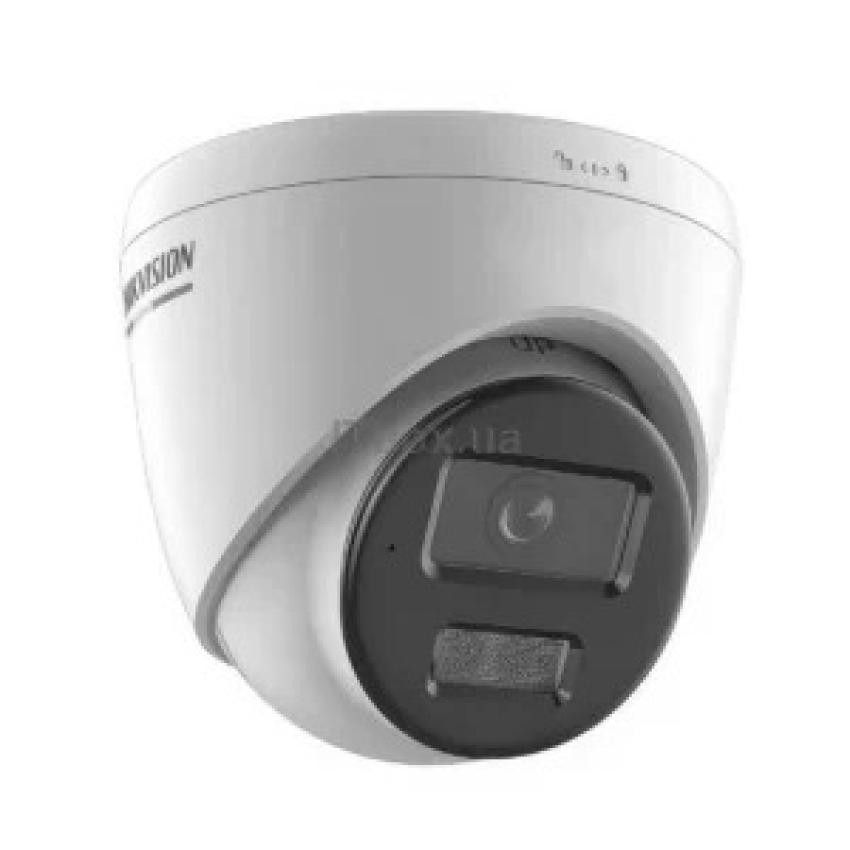
If the existing cabling tests out fine, the most direct resolution upgrade is swapping old standard-definition analog cameras for modern HD analog cameras that still run over the same coaxial cable. A camera like the 5MP Analog Outdoor Bullet Camera illustrates this well — it delivers a noticeably sharper image than an older analog camera from a decade ago, while still connecting through the same coax and power arrangement the original system used, meaning the physical installation barely changes even though the image quality does.
This single swap is often the highest-impact, lowest-disruption upgrade available: better resolution, same cable run, same mounting point, no new holes drilled.
Does the DVR Need to Be Replaced Too?
This depends entirely on what the current DVR supports. An older analog DVR built only for standard-definition signals generally can't process the higher-resolution signal from a newer HD analog camera — connecting a 5MP camera to a DVR that only handles the older standard will typically just display a lower-resolution or garbled image, not the camera's actual capability. Checking the DVR's supported input resolution before buying new cameras avoids spending on cameras whose full capability the existing recorder can't actually use.
If the DVR is the bottleneck, it usually makes more sense to replace the DVR as part of the upgrade rather than the cameras — a single DVR swap unlocks better resolution across every camera on the system at once, compared to upgrading cameras individually against a recorder that still caps what they can output.
Hybrid DVRs: Mixing Analog and IP on the Same System
For a partial upgrade rather than a full one, a hybrid DVR is worth considering specifically. These recorders support both traditional analog camera inputs and a limited number of IP camera channels on the same unit, which allows an existing analog setup to gradually incorporate IP cameras — say, one added at a new entrance or a spot where the flexibility of PoE installation is genuinely useful — without needing to replace every analog camera and cable run at once.
This approach suits a phased upgrade well: keep the working analog cameras and cabling exactly as they are, add IP cameras only where there's a genuine reason to (typically because of a mounting point with no existing coax, or a location that benefits from higher resolution than HD analog comfortably offers), and let the hybrid DVR manage both signal types together.
When It Makes Sense to Add IP Cameras Instead
IP cameras generally offer higher maximum resolution than HD analog formats and are the more future-proof direction for any expansion. Comparing IP camera price in Pakistan against the cost of extending analog cabling to a new location is worth doing directly — if a new camera position needs fresh cabling anyway because there's no existing coax run to reuse, that's the point where running ethernet for an IP camera (potentially over PoE, combining power and data in one cable) can end up more practical than running new coax plus a separate power line for another analog unit.
In other words, the "keep analog, add IP" decision usually comes down to whether existing cabling reaches the spot in question. Where it does, sticking with analog for that camera keeps costs and disruption low. Where it doesn't, it's often worth evaluating IP for that specific addition rather than extending coax into a spot with no existing infrastructure.
Checking Power Supply Before Adding or Swapping Cameras
Many analog CCTV systems use a centralized power supply box feeding multiple cameras rather than individual adapters per camera. Before adding new HD analog cameras to an existing setup, it's worth checking that this power supply has enough spare capacity — swapping to newer cameras with different power draw, or adding a camera or two, can exceed what an older, fully-loaded power supply was originally sized for. This is a detail that's easy to overlook since it doesn't show up as an obvious fault until the system is already under load.
Storage Considerations When Upgrading Resolution
Higher-resolution cameras produce larger video files, which means an old hard drive that comfortably stored weeks of standard-definition footage will hold noticeably less once the cameras are upgraded to HD analog resolution. This is worth planning for as part of the upgrade rather than discovering afterward that footage retention has quietly dropped from three weeks to five days. Checking the DVR's storage capacity against the new resolution, and upgrading the hard drive alongside the cameras if needed, keeps footage retention consistent with what the system provided before the upgrade.
What a Partial Upgrade Typically Costs Versus a Full Replacement
A full system replacement — new cameras, new DVR or NVR, new cabling throughout — carries the highest cost and the most installation disruption, including reopening walls or ceilings where cable was originally run. A partial upgrade that reuses existing coax, swaps only outdated cameras for HD analog equivalents, and upgrades the DVR only if it's genuinely the bottleneck, typically costs meaningfully less while still delivering most of the resolution improvement a full replacement would offer.
Security camera price in Pakistan for individual HD analog camera upgrades tends to sit well below the cost of a full IP camera system replacement covering the same number of positions, which is part of why a targeted, partial upgrade remains the more economical route for most existing analog installations that don't have a specific reason to move to IP entirely.
Deciding What Actually Needs Replacing
Before starting any upgrade, it helps to separate the system into three questions: is the existing cabling still in good condition, does the current DVR support higher-resolution analog signals, and is the current power supply sized for any new or upgraded cameras. Answering these honestly — rather than assuming a full teardown is the only option — usually reveals that most of an older analog system is still perfectly serviceable, and that a full replacement is rarely necessary just to get a meaningfully sharper, more reliable result from an existing installation.