Choosing a commercial fridge is an important decision for any Australian restaurant, café, bakery, takeaway shop, supermarket, catering business or foodservice operation. The right refrigeration system needs to provide enough storage, maintain consistent temperatures, fit your available space and remain economical to operate.
Unlike a domestic refrigerator, a professional fridge is designed for frequent door opening, higher workloads and demanding foodservice environments. Before purchasing, businesses should consider capacity, product type, temperature performance, energy consumption, construction, layout, maintenance and total operating cost.
1. What Size Commercial Fridge Do You Need?
Capacity should be one of the first factors. A refrigerator that is too small can become congested. However, an unnecessarily large unit can use more power and take up precious kitchen space.
Factor in the volume and type of food your business stores each day. This includes meat, seafood, dairy, vegetables, prepared meals, and beverages. Also think about peak times rather than average trading days.
Business
Common refrigeration requirement
Café
Underbench, upright or prep refrigeration
Restaurant
Upright, workbench and prep fridges
Bakery
Upright and display refrigeration
Takeaway
Underbench and prep refrigeration
Supermarket
Upright and display refrigeration
Catering operation
High-capacity upright or larger storage refrigeration
Match capacity to your actual stock requirements. The Australian Government's Energy Rating guidance also recommends considering whether a smaller refrigerated cabinet could provide better savings, because bigger is not always better for running costs.
2. Which Type of Commercial Fridge Is Right?
These fridges are available in different configurations, and each serves a different purpose. An upright commercial fridge provides substantial vertical storage without requiring a large floor footprint. An underbench fridge works well where refrigeration needs to be positioned beneath preparation benches. A prep fridge provides convenient access to ingredients during food preparation, while a display fridge is designed to present chilled products to customers.
The best choice depends on your workflow. A busy café, for example, may benefit from underbench refrigeration close to coffee and food preparation areas. A restaurant with high-volume ingredient storage may require larger upright refrigeration.
3. Can the Fridge Maintain Safe Temperatures?
Temperature management is one of the most crucial factors to consider when buying professional refrigeration in Australia. FSANZ states that you need to store potentially hazardous food at 5°C or colder, unless the business can demonstrate that an alternative temperature is safe.
Therefore, look for products that can keep a stable working temperature under normal industrial circumstances. Digital temperature systems, trustworthy thermostats and efficient air circulation can help sustain constant cooling. A built-in temperature display is useful. However, businesses should also use a proper food thermometer to check food temperatures. We recommend an accessible thermometer accurate to within 1°C for establishments managing potentially hazardous food.
4. How Much Energy Will the Commercial Fridge Use?
Purchase price is only part of the cost. A commercial refrigerator runs for long periods, so electricity consumption can significantly affect its lifetime cost.
When comparing models, consider rated energy consumption, refrigeration technology, insulation, door configuration and expected operating conditions. Top experts always recommend considering the lifetime cost, including purchase, installation, maintenance and running expenses, rather than focusing only on the initial price.
Commercial refrigerated cabinets also fall under Australia's Greenhouse and Energy Minimum Standards (GEMS) requirements, so buyers should check that the equipment suits the Australian market and intended application.
5. Is the Construction Suitable for a Commercial Kitchen?
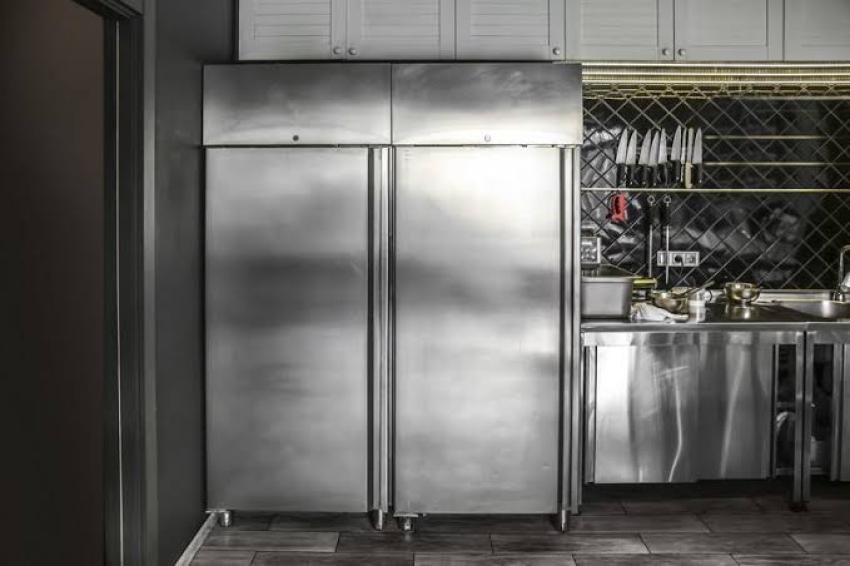
Commercial refrigeration needs to withstand demanding working conditions. Stainless steel construction is widely used because it is durable, practical and relatively easy to clean.
Pay attention to the quality of the cabinet, shelves, door hinges, handles, seals and internal surfaces. Strong door seals are particularly important because damaged or poorly fitting seals can allow cold air to escape and make the refrigeration system work harder.
The internal layout also matters. Adjustable shelves can make it easier to organise different containers and food products while maintaining adequate airflow.
6. Will It Fit Your Kitchen and Workflow?
Measure the available space before ordering. Check the fridge's external dimensions as well as the clearance required for doors, ventilation and servicing.
Also consider how staff will use the refrigerator. An appliance placed too far from the preparation area can increase unnecessary movement. Conversely, placing a large upright unit in a narrow working area can restrict access and create workflow problems.
Australian commercial kitchens can also experience demanding ambient conditions, particularly during hot weather. Therefore, consider the installation environment when selecting refrigeration equipment.
7. How Easily Can You Clean and Maintain It?
Commercial refrigeration requires regular cleaning and servicing. FSANZ recommends regularly maintaining and servicing refrigerators and avoiding overstocking so that chilled air can circulate properly.
Look for removable or adjustable shelving, accessible internal surfaces, and components you can clean without excessive dismantling. Check how easily you can access condenser areas, door seals, and other serviceable components.
An easier-to-maintain refrigerator can reduce downtime and support more consistent performance.
8. What Warranty and After-Sales Support Are Available?
A commercial fridge is an investment, so consider warranty and service support before purchase. Ask what is included in the warranty and what its duration is. Also ask whether parts and technical help are readily available in Australia.
For a busy foodservice business, local servicing can be particularly valuable if the refrigeration system develops a fault during trading hours.
Commercial Fridge Buying Checklist
Consideration
What to check
Capacity
Does it accommodate your daily and peak stock levels?
Configuration
Upright, underbench, prep or display?
Temperature
Can it maintain the required chilled temperature?
Energy
What are its expected running costs?
Construction
Is it durable and suitable for commercial use?
Dimensions
Will it fit the available space and workflow?
Cleaning
Are shelves and internal surfaces easy to clean?
Maintenance
Can key components be serviced easily?
Warranty
What protection and support are provided?
Installation
Are power, ventilation and access requirements suitable?
What Is the Most Important Factor When Buying a Commercial Fridge?
No single feature makes one commercial refrigerator ideal for every Aussie company. The best option balances volume, temperature performance, and power saving. It also manages long-lasting features, kitchen space, and total ownership cost.
Most importantly, do not select a refrigerator based solely on its buying price or advertised capacity. Think about the unit's performance during busy service. Check how frequently its doors will be opened, what items will be stored and how easily your team can clean and maintain it.