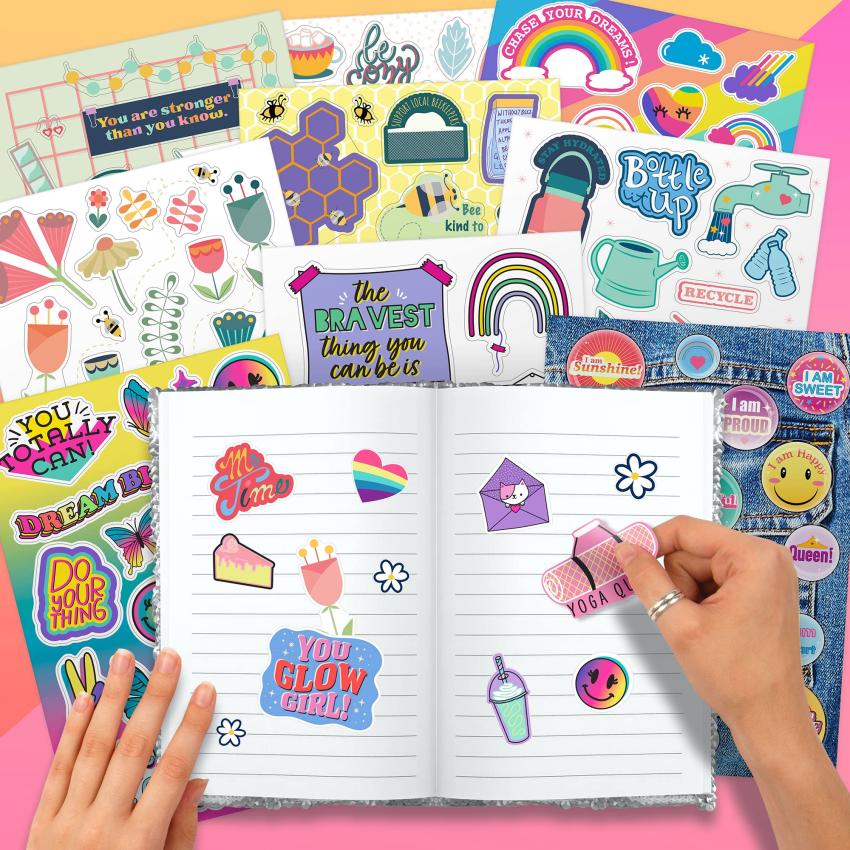
Stickers have been a beloved staple of childhood for generations, but craft stickers for kids have evolved well beyond simple reward stickers on a homework chart. Today's craft sticker collections — from detailed themed sheets to alphabet sets and scrapbooking packs — serve as versatile tools for creative development, fine motor skill building, and self-expression across a wide age range. Understanding the different types of craft stickers available and how each supports different developmental goals helps parents, educators, and gift-givers make choices that genuinely enrich children's creative lives.
The Developmental Benefits of Sticker Play
Using stickers is not merely a passive activity — it actively engages multiple developmental capacities in young children. Peeling a sticker from its backing requires the precise pincer grip that is foundational to later writing skills. Placing a sticker intentionally — on a piece of paper, in a journal, or as part of a collage — exercises spatial reasoning and planning. For younger children, even the simple act of aligning a sticker to a specific area develops hand-eye coordination. As children grow, the creative decisions involved in sticker use — which sticker goes where, how stickers can be combined to tell a story or create a scene — develop aesthetic judgment and narrative thinking.
Alphabet Stickers for Kids: Learning Through Hands-On Engagement
Alphabet stickers for kids represent one of the most educationally rich categories within craft sticker collections. Physical manipulation of letter forms — picking up, examining, and placing an 'A' or 'B' sticker — creates a multisensory learning experience that reinforces letter recognition more effectively than passive observation. Children who use alphabet sticker sets alongside early reading activities frequently demonstrate stronger letter-sound association skills, because the physical act of handling the letter form creates a distinct memory trace. Educators in early childhood settings use alphabet sticker sheets for name-building activities, spelling games, and simple word-construction exercises that make phonics engaging.
Scrapbook Stickers for Kids: Building Storytelling Skills
Scrapbooking is one of the most narrative-rich craft activities available to children, and scrapbook stickers for kids are the element that brings creative pages to life. Border stickers, themed icon sets (travel, nature, animals, seasons), decorative lettering, and illustrated vignette stickers allow children to arrange visual narratives about their experiences, family memories, or imaginary worlds. The act of constructing a scrapbook page — selecting which stickers belong together, where to place photographs, and how to use embellishments to emphasize what matters most — builds story structure thinking that supports literacy and communication development. Scrapbooking also creates meaningful keepsakes that children and families revisit for years.
Sticker Sheets for School Projects
Sticker sheets for school projects serve both functional and creative purposes in the classroom and at home. Students use decorative stickers to enhance project covers, posters, and dioramas with visual interest that elevates a standard assignment into a presentation that demonstrates care and effort. Themed sticker sheets — maps, science icons, historical illustrations, or mathematical symbols — can also serve as learning aids embedded directly into projects. Teachers frequently use sticker sheets as a classroom management resource, with organizational stickers helping students label, categorize, and arrange materials systematically. For home project use, keeping a varied collection of sticker sheets accessible encourages children to approach assignments creatively.
Choosing the Right Craft Sticker Set
When selecting craft stickers for kids, a few practical considerations guide the decision. Age-appropriateness matters: very young children (ages two to four) benefit from large, easy-peel stickers with rounded edges and simple, recognizable imagery. Older children (ages six and up) engage more productively with smaller, more detailed sticker sheets that reward precision and offer more creative possibilities. Material quality affects both the creative experience and safety: look for non-toxic adhesives, stickers that peel cleanly without tearing, and surfaces that adhere well to paper without leaving residue. Variety within a set — multiple themes, formats, or complementary designs — extends the creative lifespan of the collection and prevents the rapid boredom that can follow when a limited set is exhausted.
Conclusion
Craft stickers for kids are far more than a simple amusement — they are a developmentally rich creative resource that supports learning, storytelling, and fine motor development across childhood. Whether chosen for alphabet practice, scrapbooking, school projects, or open-ended creative play, a thoughtfully selected sticker collection is a gift that extends meaningful creative value far beyond the first use.