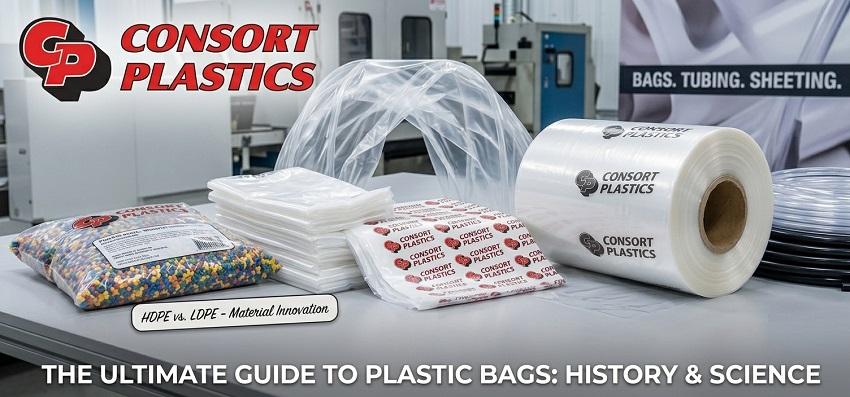
It is hard to imagine a world without the plastic bag. Found in virtually every retail store, warehouse, and household on the planet, this lightweight packing marvel is an indispensable part of global commerce and logistics. But what exactly is a plastic bag, where did it come from, and what is the science behind its incredible strength? https://www.consortplastics.co.za/plastic-bags/
The Evolution of the Plastic Shopping Bag
While synthetic polymers began changing manufacturing in the early 20th century, the modern plastic shopping bag as we know it wasn’t born until the 1960s. Swedish engineer Sten Gustaf Thulin developed a method of folding, welding, and die-cutting a flat tube of plastic film to create a lightweight sack with a high carrying capacity. Patented by the company Celloplast in 1965, this "t-shirt bag" design quickly replaced paper sacks and cloth bundles across Europe and North America due to its superior water resistance and low production costs.
The Material Science: HDPE vs. LDPE
At a molecular level, the vast majority of plastic bags are created from polyethylene—a polymer made chain-linking ethylene monomers. However, the performance and texture of the bag depend entirely on how these molecular chains are structured during the manufacturing process:
High-Density Polyethylene (HDPE)
HDPE features linear molecular chains with minimal branching. This dense structure creates a rigid, crinkly plastic with incredible tensile strength. Because it resists tearing under heavy loads, HDPE is the industry standard for grocery checkout bags, T-shirt bags, and heavy-duty industrial liners.
Low-Density Polyethylene (LDPE)
LDPE consists of highly branched molecular chains, which prevents the molecules from packing tightly together. The result is a smooth, flexible, and highly transparent film. LDPE is widely preferred for premium boutique shopping bags, bread bags, dry-cleaning sleeves, and protective bubble wraps where clarity and flexibility are prioritized over sheer tensile strength.
Linear Low-Density Polyethylene (LLDPE)
Blending the properties of both worlds, LLDPE offers substantial impact strength and puncture resistance. It is highly stretchable, making it a favorite for industrial waste bags and stretch wraps.
Industrial and Everyday Applications
The utility of poly bags extends far beyond the supermarket checkout line. Because they can be engineered to be completely sterile, airtight, or anti-static, they serve vital functions across diverse sectors:
Logistics & E-Commerce: High-strength poly mailers protect goods from moisture and tearing during global shipping.
Healthcare & Medicine: Specialized, heavy-gauge biohazard bags safely isolate and transport medical waste and sterile equipment.
Agriculture: Perforated plastic bags preserve fresh produce by regulating airflow and humidity from the farm to the store shelf.
Summary: A Triumph of Modern Packaging
Ultimately, the plastic bag represents a massive achievement in chemical engineering. By transforming simple hydrocarbon resins into ultra-thin, durable, and highly adaptive films, modern manufacturers can protect, store, and transport goods more efficiently than ever before. Whether utilized as a simple grocery sack or a heavy-duty industrial liner, the plastic bag remains foundational to modern distribution.