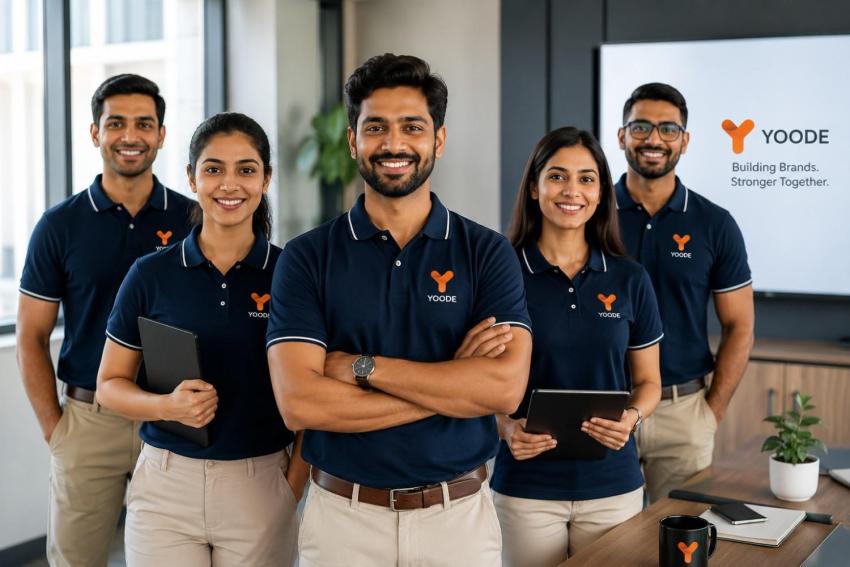
A sales team steps into a client’s office for an important presentation. Everyone arrives on time, carries the right materials, and knows the agenda. Yet before anyone speaks, the client has already formed an opinion. Their matching custom polo shirts, neatly embroidered with the company logo, instantly communicate professionalism, attention to detail, and team unity.
That first impression is difficult to reverse. People naturally judge businesses by what they see before they experience the service itself. The way your employees present themselves influences trust, confidence, and even buying decisions. Team apparel isn't simply about wearing matching clothes—it reflects your company's standards, culture, and commitment to quality.
This guide explains how thoughtful team presentation strengthens your brand, why businesses continue choosing custom polos for everyday workwear, and what to consider before placing your next order.
Why Do Some Teams Instantly Look More Professional?
Walk into two retail stores selling similar products. One has employees dressed in different colours, styles, and casual clothing. The other has staff wearing coordinated branded polos that fit well and look clean.
Most customers naturally feel more comfortable approaching the second team.
Professional appearance creates several immediate advantages:
- Customers identify staff more easily.
- Employees appear approachable.
- The business looks organised.
- The brand feels established.
- Customers expect better service.
Presentation influences perception long before conversations begin.
We've seen many businesses invest heavily in office interiors, advertising, and websites while overlooking how employees represent the brand every day. Team apparel is one of the few branding investments that works continuously—during customer meetings, trade shows, deliveries, networking events, and even social media photos.
Why Are Custom Polos a Favourite Across So Many Industries?
Few garments offer the same balance between professionalism and comfort as a polo shirt.
Unlike formal shirts that may feel restrictive or promotional T-shirts that sometimes appear too casual, custom polos strike the right balance for daily business wear.
They work equally well for:
- Corporate offices
- Retail stores
- Educational institutions
- Hospitality businesses
- Healthcare facilities
- Manufacturing units
- Real estate teams
- Sales representatives
- Event staff
- Startup teams
A well-designed polo adapts to different environments without making employees feel overdressed or uncomfortable.
Another reason companies prefer corporate polos is longevity. High-quality fabrics combined with durable logo embroidery allow the garments to maintain their appearance after repeated washing, making them a practical choice for everyday use.
Why Does Comfort Matter as Much as Appearance?
An attractive uniform loses its value if employees avoid wearing it.
Many HR teams focus on branding but overlook comfort during the selection process. Employees spend eight to ten hours wearing their uniforms, often in changing weather conditions or physically demanding roles.
Comfort directly affects confidence.
When apparel fits properly, feels breathable, and allows unrestricted movement, employees naturally appear more relaxed and engaged while interacting with customers.
Several factors influence everyday comfort:
Fabric Selection
Fabric determines how the garment performs throughout the day.
100% Cotton
Ideal for office environments where softness and breathability are priorities. Cotton feels comfortable against the skin and works well in air-conditioned workplaces.
Cotton-Polyester Blends
Blended fabrics combine comfort with durability. They resist wrinkles better, dry faster after washing, and retain colour over time, making them suitable for businesses requiring daily uniforms.
Many growing companies choose blends because they balance employee comfort with long-term maintenance costs.
Choosing the Right GSM
Fabric thickness also affects performance.
- 180–200 GSM: Lightweight and comfortable for everyday office wear.
- 210–220 GSM: Offers a premium feel while remaining breathable.
- 230 GSM and above: Better suited for industrial environments or cooler weather where extra durability is needed.
Selecting GSM should depend on where employees work rather than assuming thicker fabric always means better quality.
Why Does Fit Influence Customer Perception?
Even premium fabric cannot compensate for poor fit.
Loose, oversized uniforms may look untidy, while garments that are too tight can make employees uncomfortable throughout the day.
Businesses often benefit from offering multiple fit options rather than using a single standard size for every employee.
Before approving bulk production, it's worth checking:
- Shoulder alignment
- Sleeve length
- Body fit
- Collar structure
- Overall movement during regular work
Many procurement teams discover that conducting a small sample trial helps avoid costly size exchanges after full production.
A properly fitted team doesn't just look better—it projects confidence, making customer interactions feel more professional and approachable.
How Do Colours Quietly Shape Customer Trust?
Colour plays a subtle yet powerful role in workplace branding. Customers often associate certain colours with specific qualities before they consciously realise it.
For example:
- Navy Blue suggests reliability and professionalism, making it popular for corporate and financial teams.
- Black creates a premium, sophisticated appearance, especially in hospitality and luxury retail.
- White conveys cleanliness and precision, which is why it's common in healthcare and wellness settings.
- Green reflects sustainability, freshness, and growth, aligning well with environmentally conscious brands.
- Red communicates energy and urgency, making it a strong choice for promotional campaigns or event teams.
Consistency matters just as much as colour choice. When every employee wears the same approved shades, customers perceive the organisation as more structured and dependable.
How Do You Decide Between Logo Printing and Embroidery?
One of the biggest decisions businesses face is choosing how their logo will appear on the garment. The right choice depends on how the apparel will be used, the type of logo, and the image the company wants to project.
Choose Embroidery for a Premium, Long-Term Look
Embroidery adds texture and depth, giving branded apparel a polished finish that suits everyday professional wear. It stands up well to regular washing and keeps its appearance for years when properly maintained.
It's an excellent choice for:
- Corporate polos
- Client-facing teams
- Hospitality staff
- Educational institutions
- Management uniforms
- Employee welcome kits
Logos with clean lines and simple shapes usually translate beautifully into embroidery.
Choose Printing for Creative or Detailed Designs
Printing is better suited for artwork that includes gradients, intricate illustrations, or large graphics that embroidery cannot accurately reproduce.
Businesses often choose logo printing for:
- Promotional campaigns
- College festivals
- Product launches
- Sports events
- Event volunteers
- Marketing activations
A common approach is to combine both techniques. For example, an embroidered logo on the chest paired with a printed design on the back creates a premium look while allowing more creative branding.
Where Should the Logo Be Placed?
Logo placement affects both visibility and aesthetics. A well-positioned logo looks intentional, while poor placement can make even premium apparel appear unbalanced.
The most common placements include:
- Left chest for everyday corporate branding.
- Right chest for partner or campaign logos.
- Sleeves for departments, sponsors, or event branding.
- Upper back for company names or website addresses.
- Full back for promotional messaging or event graphics.
We've seen many companies rush artwork approval only to notice sizing or alignment issues after production begins. Reviewing a digital mock-up—and ideally a physical sample—helps catch these problems before bulk manufacturing.
Should Every Department Wear the Same Design?
Not always.
Maintaining a consistent brand identity doesn't mean every employee has to wear identical apparel.
Many organisations use a shared design while introducing subtle differences between teams.
Examples include:
- Sales teams wearing navy polos.
- Customer support in grey.
- Warehouse staff in darker shades for practicality.
- Managers with embroidered names or premium finishes.
- Event staff wearing campaign-specific colours.
This approach keeps the brand consistent while making it easier for customers and colleagues to identify different departments.
How Many Pieces Should You Order?
Ordering only for today's workforce often creates unnecessary costs later.
Procurement teams usually save time and money by planning for:
- New employee onboarding.
- Seasonal hiring.
- Replacement garments.
- Future company events.
- Unexpected size exchanges.
Ordering a small buffer instead of matching the exact headcount reduces the need for repeat production runs, which can increase costs and create colour variation between batches.
For growing businesses, maintaining artwork files, embroidery programs, colour references, and garment specifications also makes future reorders faster and more consistent.
What Should Businesses Check Before Approving Production?
The excitement of receiving branded apparel quickly fades if the final products don't meet expectations.
A structured approval process helps prevent costly mistakes.
Before giving the green light, review:
- Correct logo colours.
- Embroidery or print quality.
- Pantone colour consistency where required.
- Garment measurements.
- Fabric GSM.
- Stitching quality.
- Collar construction.
- Button quality.
- Packaging requirements.
- Delivery schedule.
Many HR and marketing teams also request a pre-production sample. Although it adds a little time to the process, it provides confidence that the final order matches expectations.
How Can Team Apparel Last Longer?
Quality apparel is an investment, and proper care protects that investment.
Simple maintenance practices help preserve both the fabric and the branding.
Employees should:
- Wash garments inside out.
- Use mild detergents.
- Avoid harsh bleach.
- Wash similar colours together.
- Iron on the reverse side when needed.
- Store garments neatly instead of leaving them folded for long periods after washing.
Providing a short care guide with employee welcome kits or uniform distributions helps extend the lifespan of branded apparel while maintaining a professional appearance.
Why Does the Right Apparel Partner Make Such a Difference?
Ordering branded apparel isn't just about comparing prices.
An experienced supplier helps businesses avoid delays, inconsistent quality, and unexpected surprises.
A reliable apparel partner should offer:
- Fabric recommendations based on usage.
- Guidance on printing and embroidery techniques.
- Accurate sizing support.
- Digital mock-ups before production.
- Consistent quality across repeat orders.
- Reliable production timelines.
- Clear communication throughout the project.
Marketing teams often focus on design, while procurement teams prioritise pricing. The best results come when both priorities are considered together.
At Yoode, projects begin with understanding how the apparel will actually be used. A startup preparing for its first investor event has different requirements from a hospitality brand ordering uniforms or a company organising a nationwide promotional campaign. That practical approach helps businesses choose apparel that reflects their brand while remaining comfortable enough for everyday wear.
A Great First Impression Starts Long Before the First Conversation
Customers notice details. They observe how employees present themselves, how consistently a brand appears across different touchpoints, and whether the business feels organised.
Professional team presentation isn't achieved through expensive clothing. It's built through thoughtful choices—comfortable fabrics, well-fitted garments, consistent branding, quality craftsmanship, and apparel employees are genuinely happy to wear.
A carefully designed custom polo becomes more than part of a uniform. It represents your company every time an employee welcomes a customer, attends a trade show, visits a client, or shares a team photo online.
When apparel aligns with your brand values and supports the people wearing it, the first impression becomes a lasting one.