The perfume industry is undergoing a quiet but profound transformation. Walk into any high-end fragrance boutique today and you will notice something different — alongside the sleek designer bottles and celebrity-endorsed sprays, a new category has carved out serious shelf space. Natural and organic perfumes, once the domain of niche artisan makers and health-conscious hippies, have moved firmly into the mainstream. And for good reason. Whether you are searching for the best perfume for women that does not irritate sensitive skin or simply trying to understand what you are actually spraying on your body every morning, the organic fragrance movement deserves your full attention.
A Shift That Has Been a Long Time Coming
For most of the 20th century, synthetic fragrance compounds were celebrated as a triumph of chemistry. They were cheaper to produce, more consistent batch to batch, and allowed perfumers to create scents that simply did not exist in nature — the clean, soapy freshness of a mountain breeze, or the metallic sharpness of a thunderstorm before it breaks. Synthetic ingredients gave the industry scalability, and the big houses ran with it.
But as consumers grew more label-conscious across food, skincare, and household products, it was only a matter of time before the same scrutiny landed on fragrance. The problem was transparency — or rather, the lack of it. Legally, brands have long been permitted to list the entirety of their fragrance formula under the single word "fragrance" or "parfum" on an ingredient label. That one word can conceal dozens of synthetic chemicals, some of which have raised questions among dermatologists and environmental researchers.
Studies began emerging linking certain synthetic musks and fixatives to skin sensitisation, hormonal disruption, and environmental accumulation in waterways. Consumers started asking harder questions. And a growing number of perfumers started offering different answers.
What "Natural" and "Organic" Actually Mean
Before going further, it is worth unpacking the language, because it matters. A natural perfume is one composed primarily or entirely of ingredients derived from plants, flowers, resins, woods, and animal-derived materials (or ethical synthetics that mimic animal notes). We're talking about essential oils, absolutes, CO₂ extracts, and steam-distilled botanical materials.
An organic perfume takes this a step further — it requires that the raw botanical ingredients be certified organic, meaning they were grown without synthetic pesticides, herbicides, or fertilisers, and processed in ways that preserve their integrity. The certification process is rigorous. Not every brand that markets itself as "clean" or "green" meets this standard, which is why third-party certifications from bodies like Ecocert, COSMOS, or the Soil Association matter.
The distinction is important for consumers who want to be precise about what they are buying. A perfume can be "all-natural" and still use ingredients farmed with conventional agricultural practices. True organic perfumery goes further — it is a commitment that runs from the soil to the bottle.
The Art and Challenge of Natural Formulation
Natural perfumery is, in many ways, harder than its synthetic counterpart. Working exclusively with botanical materials means working with ingredients that vary — a harvest of Bulgarian rose absolute from a warm, dry summer will smell different from one produced in a wetter season. The perfumer must adapt, blend, and compensate. There is no standardisation to fall back on.
This is also where natural perfumery becomes genuinely fascinating as a craft. The depth and complexity that comes from a well-constructed natural fragrance is difficult to replicate synthetically. A rose absolute carries hundreds of aromatic molecules, many of them in trace quantities that contribute to what we perceive as the "naturalness" of the scent — something alive and shifting rather than flat and constant. A synthetic rose, by contrast, is typically built around just a handful of key aromatic compounds. It smells like rose. A rose absolute smells like a rose garden at dawn on a warm morning.
Natural perfumers have also pushed back hard on one common criticism: that natural fragrances don't last. While it is true that some botanical materials are more volatile and fleeting than synthetic fixatives, skilled formulators have found ways around this. The use of natural resins like benzoin, labdanum, and frankincense; of plant-based waxes; of fixative-rich base notes like sandalwood, vetiver, and patchouli — all of these can give a natural fragrance genuine staying power on the skin.
How the Luxury Market Has Responded
The organic fragrance movement did not just bubble up from small indie makers — it caught the attention of the luxury sector too. Established houses began launching "cleaner" lines, and a new tier of premium natural fragrance brands emerged with serious credibility and serious price points.
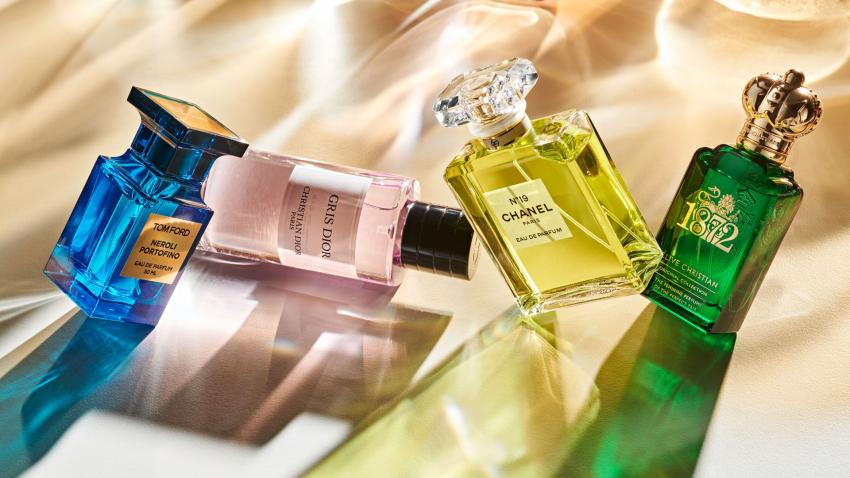
It is instructive to contrast this with a brand like Tom Ford perfume, which represents a very different philosophy — richly synthetic, unapologetically opulent, constructed for maximum impact and projection. Tom Ford's oud-based compositions and heavy oriental blends are masterclasses in what synthetic chemistry and natural materials can achieve together. But the fact that even luxury consumers are now weighing organic options alongside iconic synthetic powerhouses says something significant about how far the conversation has shifted.
The two philosophies are not mutually exclusive — many modern consumers own both. But the natural and organic segment has earned a seat at the table where it once would have been dismissed as an afterthought.
The Sri Lankan Connection
For consumers in South Asia, all of this has particular resonance. Sri Lanka has a rich botanical heritage — cinnamon, cardamom, cloves, blue lotus, sandalwood — ingredients that have been central to traditional medicine and ritual fragrance for centuries long before Western perfumery industrialised them.
The growing availability of natural and organic fragrances in the local market has prompted many consumers to look more critically at perfume price in Sri Lanka across different categories. Historically, imported synthetic fragrances dominated the mid-to-luxury market, with organic alternatives being niche, expensive, and hard to find. That is shifting. As global supply chains for natural fragrance ingredients become more sophisticated and as local interest in clean beauty deepens, organic and natural options are becoming more accessible, and the price gap between synthetic and natural has begun to narrow.
Sri Lankan consumers are also increasingly attuned to provenance — knowing where ingredients come from, how they are processed, and whether local botanical materials are being incorporated into formulations. This is a natural fit with the organic perfumery movement's emphasis on transparency and traceability.
Finding Your Natural Fragrance
Navigating the natural perfume space can feel overwhelming at first, partly because the industry is less standardised than conventional perfumery and partly because the scent experience itself is different. Natural fragrances tend to sit closer to the skin, evolve more dynamically over time, and reward close attention rather than long-distance projection.
The best approach is to treat it like getting to know a person rather than evaluating a product. Give a natural fragrance time to develop on your skin — the top notes will often burn off quickly, revealing a heart and base that may be richer and more complex than you initially expected. Don't judge in the first five minutes.
For women exploring this space, the natural perfume world offers everything from soft, powdery florals built on organic rose and jasmine to earthy, resinous compositions that feel ancient and grounding. The best perfume for women in the natural category will depend enormously on personal chemistry — literally, since natural ingredients interact with skin oils in ways that synthetic fragrances often don't, meaning the same perfume can smell distinctly different on two people.
Men's natural fragrances have also come into their own. The best perfume for men seeking an organic option will find a landscape rich in woods, mosses, spices, and aromatic herbs — compositions that feel genuinely connected to the natural world in a way that many synthetic fragrances simply don't. The natural woods category in particular — oud, cedarwood, vetiver, sandalwood — translates beautifully into natural formulation.
The Bigger Picture
The rise of natural and organic perfumes is part of something larger — a cultural recalibration around what we put on our bodies and what we value in the things we buy. Fragrance has always been intimate; we wear it on our skin, it mingles with our own scent, it becomes associated with our memories and identity in ways few other products do.
It makes sense that people would eventually want that intimate experience to be cleaner, more traceable, and more connected to the natural world that inspired perfumery in the first place. From ancient Egypt's kyphi incense to the rose waters of medieval Persia, fragrance has its roots in nature. The organic perfume movement is not a rejection of perfumery's past — it is, in many ways, a return to it.
What's genuinely new is the level of craft and scientific understanding that modern natural perfumers bring to this old tradition. The best of them are producing fragrances that don't ask you to compromise — scents that are beautiful, complex, long-lasting, and made with integrity from the ground up.
That is a combination worth paying attention to.