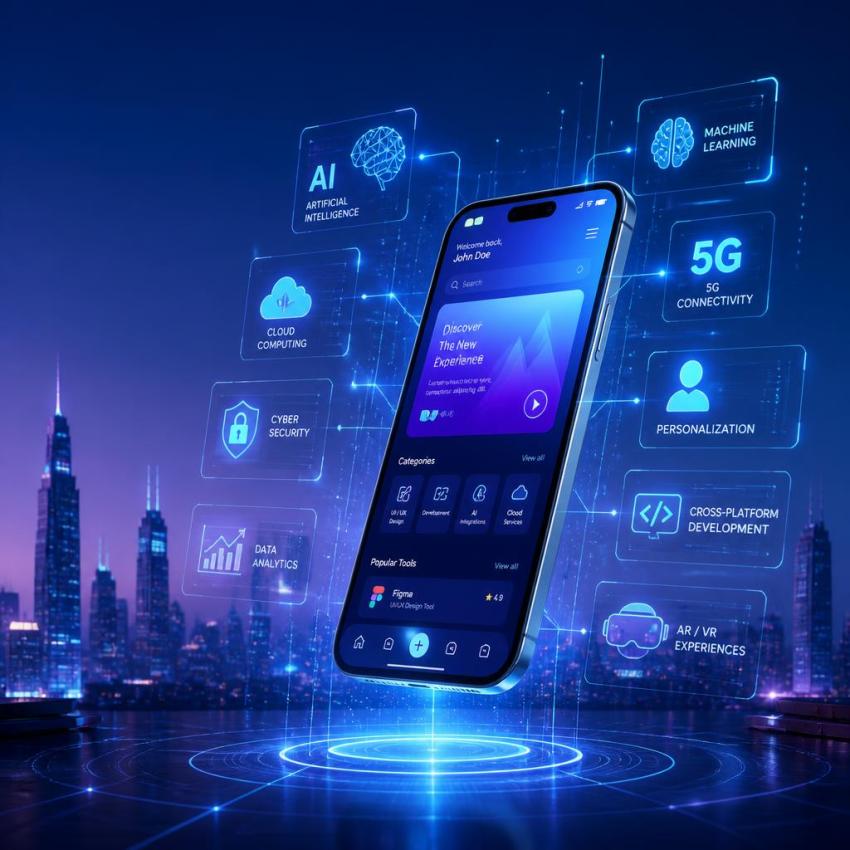
Mobile applications have become the backbone of digital experiences across industries. From eCommerce and healthcare to fintech and logistics, businesses are increasingly relying on mobile apps to engage customers, streamline operations, and create new revenue opportunities. As we move beyond mid-2026, the mobile app landscape continues to evolve rapidly, driven by advancements in artificial intelligence, user expectations, and emerging technologies.
For businesses planning their next digital product, understanding these trends can help them stay competitive and make informed decisions when investing in mobile solutions.
1. AI-Powered Apps Will Become the New Standard
Artificial Intelligence is no longer a premium feature reserved for large enterprises. In the second half of 2026 and beyond, AI will become a fundamental component of mobile applications.
Businesses are integrating AI to:
- Deliver personalized user experiences
- Improve customer support through intelligent chatbots
- Enable predictive recommendations
- Automate routine tasks
- Analyze user behavior in real time
Rather than treating AI as an add-on, successful companies will build AI-driven experiences directly into their mobile products from the start.
2. Hyper-Personalization Will Drive User Engagement
Users now expect applications to understand their preferences, habits, and needs. Generic experiences are becoming less effective as consumers gravitate toward apps that provide relevant content and recommendations.
Modern mobile applications are increasingly leveraging:
- Behavioral analytics
- Location-based experiences
- Dynamic content delivery
- Personalized notifications
- Customized user journeys
Businesses that prioritize personalization can significantly improve retention and engagement rates.
3. Cross-Platform Development Will Continue to Gain Momentum
Organizations are under pressure to launch products faster while managing development costs. This has increased the demand for cross-platform frameworks that allow businesses to build applications for multiple operating systems from a single codebase.
Benefits include:
- Faster development cycles
- Reduced maintenance costs
- Consistent user experiences
- Improved scalability
As frameworks continue to mature, cross-platform development is expected to remain a preferred approach for startups and enterprises alike.
4. Mobile App Security Will Become a Competitive Advantage
With cyber threats becoming more sophisticated, users are increasingly concerned about how their data is collected, stored, and protected.
Businesses will invest heavily in:
- Biometric authentication
- End-to-end encryption
- Secure APIs
- Multi-factor authentication
- Privacy-focused architecture
Security will no longer be viewed solely as a compliance requirement. Instead, it will become a key factor influencing user trust and brand reputation.
5. Super Apps Will Expand Across More Industries
The concept of a super app—where multiple services are available within a single ecosystem—continues to gain popularity.
Instead of managing several applications, users prefer platforms that combine services such as:
- Payments
- Shopping
- Messaging
- Booking services
- Customer support
As user convenience becomes a priority, businesses will increasingly explore integrated app ecosystems that deliver multiple functions from one platform.
6. Voice and Conversational Interfaces Will Grow
Voice technology is becoming more accurate and accessible, creating new opportunities for mobile experiences.
Future applications will increasingly support:
- Voice commands
- AI-powered virtual assistants
- Conversational search
- Hands-free navigation
This trend is particularly important for industries focused on accessibility, productivity, and customer service.
7. Low-Code and No-Code Integration Will Accelerate Innovation
Businesses are looking for faster ways to test ideas and launch digital products. Low-code and no-code platforms are helping organizations reduce development timelines while enabling rapid experimentation.
Although custom development remains essential for complex applications, low-code tools will continue to play a larger role in prototyping and workflow automation.
8. 5G Adoption Will Unlock New App Experiences
As 5G networks become more widespread, developers can create richer and more interactive mobile experiences.
This advancement enables:
- Faster data transfer
- Improved streaming quality
- Real-time collaboration
- Enhanced AR and VR experiences
- Reduced latency
Businesses developing mobile applications will have more opportunities to deliver high-performance features that were previously difficult to implement.
9. Sustainability Will Influence Mobile App Design
Sustainability is becoming a growing consideration in software development. Organizations are paying closer attention to how their digital products impact energy consumption and device performance.
Future app development strategies may include:
- Optimized code efficiency
- Reduced server usage
- Lightweight application architecture
- Improved battery performance
Sustainable app development can help businesses lower operational costs while supporting environmental goals.
10. User Experience Will Remain the Ultimate Differentiator
Regardless of technological advancements, user experience remains one of the most important factors in app success.
Businesses that focus on:
- Intuitive navigation
- Fast loading times
- Accessibility
- Consistent design systems
- Seamless onboarding
will continue to outperform competitors with feature-heavy but difficult-to-use applications.
How Businesses Can Prepare for the Future
The mobile app industry is entering a new phase where intelligence, personalization, security, and performance are becoming baseline expectations rather than optional enhancements.
Businesses planning to launch or modernize their applications should focus on building scalable solutions that can adapt to changing technologies and user demands. Partnering with experienced providers of mobile app development services can help organizations identify the right technologies, reduce development risks, and accelerate time to market.
Final Thoughts
The second half of 2026 is expected to bring significant changes to the mobile app ecosystem. AI integration, enhanced security, personalized experiences, cross-platform development, and 5G-powered capabilities are shaping the future of mobile applications.
Organizations that stay ahead of these trends will be better positioned to create engaging digital experiences, improve customer satisfaction, and maintain a competitive edge in an increasingly mobile-first world.