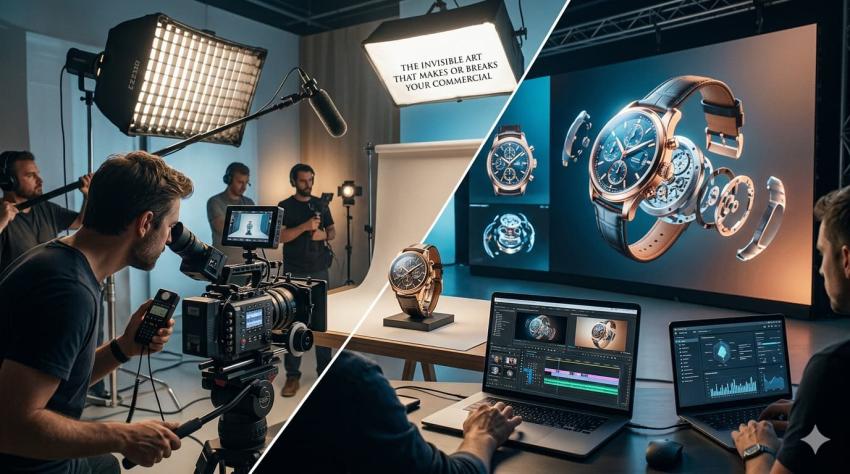
The Power Behind What You Don’t See
Why do some commercials instantly grab your attention while others fade into the background? The difference often lies in something most viewers never consciously notice—the invisible art behind the production.
This “invisible art” is the combination of visual precision, storytelling depth, and production quality that works silently to influence perception. It’s not just about what you show; it’s about how you show it.
From Corporate Product Photography to cinematic video production, animation, and 3D visuals, every element plays a critical role in shaping how audiences perceive a brand. Today, with the rise of AI video production services, the landscape is evolving faster than ever, enabling businesses to create compelling content at scale while maintaining quality.
Understanding this hidden layer of creativity is essential for any brand aiming to stand out in a crowded digital world.
What Is the “Invisible Art” in Commercials?
The invisible art refers to the behind-the-scenes creative and technical decisions that define the final output of a commercial. These elements include direction, lighting, framing, editing, sound design, and pacing.
Individually, these components may seem minor. Collectively, they determine whether a commercial feels professional or amateur.
For example, lighting can subtly influence mood and perception, while camera angles can make a product appear premium or ordinary. Editing controls the rhythm of the story, guiding viewer's attention without them realizing it.
The difference between amateur and professional production often lies in these details. While amateur content may communicate information, professional production communicates emotion, credibility, and trust.
The Role of Corporate Product Photography in Commercial Success
Corporate Product Photography is one of the most critical yet underestimated aspects of a successful commercial. It forms the visual foundation of how a product is perceived.
High-quality product photography instantly builds trust. When customers see clear, detailed, and aesthetically pleasing images, they associate the product with professionalism and reliability.
This is especially important in competitive markets where first impressions are everything. Whether it’s a digital ad, website banner, or TV commercial, strong visuals can significantly impact conversion rates.
Businesses offering product photography services in Karachi understand the importance of creating images that not only showcase the product but also align with brand identity. Similarly, ecommerce product photography ensures that products stand out in online marketplaces, where visual appeal directly affects purchasing decisions.
Incorporating professional product photography in Karachi into commercials ensures consistency across all marketing channels, reinforcing brand recognition and credibility.
Visual Storytelling: Turning Products Into Experiences
Modern commercials go beyond simply showcasing a product—they tell a story.
Visual storytelling transforms ordinary products into meaningful experiences. Instead of listing features, commercials evoke emotions, aspirations, and lifestyles.
Through carefully crafted visuals, brands can communicate identity, values, and purpose. A well-told story creates a connection, making the audience feel something rather than just understand something.
Consistency is key. From product photography to video and animation, every visual element should align with the brand’s message. This unified approach ensures that the audience receives a cohesive experience across all touchpoints.
The Rise of AI in Commercial Production
AI video production services are rapidly changing how commercials are created. Tasks that once required extensive time and resources—such as editing, scripting, and animation—can now be partially automated.
This brings several advantages:
Faster production timelines
Reduced costs
Scalable content creation
However, AI has its limitations. While it excels at efficiency, it lacks the nuanced creativity and emotional intelligence that human creators bring.
The most effective approach is a hybrid model—combining AI tools with human direction. This allows brands to maintain creative integrity while benefiting from technological advancements.
Motion Graphics & Animation: Making the Invisible Visible
Animation plays a powerful role in modern commercials, especially when explaining complex ideas.
Types of animation commonly used include:
2D animation
3D animation
Motion graphics
These formats help simplify information, making it easier for audiences to understand and retain.
For instance, motion graphics can highlight key product features, while animated sequences can demonstrate functionality in ways that live-action footage cannot.
Animation is particularly effective for explainer videos, advertisements, and product demonstrations, where clarity and engagement are essential.
The Impact of 3D Product Rendering on Commercials
3D product rendering is revolutionizing how products are presented in commercials.
Unlike traditional photography, 3D product rendering allows for complete control over every visual aspect, including lighting, angles, textures, and environments.
Product rendering services in Karachi provide businesses with the flexibility to create highly detailed and customizable visuals without the need for physical shoots.
Benefits of 3D product rendering include:
Cost efficiency
Creative flexibility
Hyper-realistic visuals
Easy modifications
These advantages make 3D rendering ideal for commercials, ecommerce platforms, and social media campaigns.
By integrating 3D product rendering into their marketing strategy, brands can produce visually stunning content that captures attention and enhances engagement.
Production Quality: The Fine Line Between Average and Exceptional
Production quality is often the deciding factor between a forgettable commercial and a memorable one.
Professional equipment, proper lighting, and skilled camera work ensure that visuals are sharp, balanced, and visually appealing.
Post-production is equally important. Elements such as color grading, sound design, and editing refine the final output, adding polish and depth.
Low-quality visuals can harm brand perception, making a business appear unprofessional. On the other hand, high-quality production builds trust, authority, and credibility.
Multi-Platform Optimization: One Commercial, Many Formats
Today’s commercials are no longer confined to a single platform. They must be adapted for television, social media, websites, and mobile devices.
Each platform has unique requirements in terms of aspect ratios, duration, and format. For example:
Vertical videos for mobile platforms
Short-form content for social media
High-resolution formats for TV
Consistency across all platforms is essential. While formats may vary, the core message and visual identity should remain the same.
Data and analytics also play a role in optimizing content. By analyzing performance metrics, brands can refine their visuals and improve engagement.
Audience Psychology: Why Visual Details Matter
Humans process visuals much faster than text, making visual content a powerful communication tool.
Elements such as color, motion, and composition influence how viewers feel and respond.
For example:
Warm colors can evoke excitement
Smooth motion creates a sense of calm
Balanced composition enhances clarity
Emotional triggers play a key role in commercials. When viewers connect emotionally, they are more likely to remember the brand and take action.
The invisible art lies in understanding these psychological factors and using them effectively to create impact.
Common Mistakes That Break a Commercial
Even with the best intentions, certain mistakes can weaken a commercial:
Poor lighting and composition
Weak or unclear storytelling
Overuse of visual effects without purpose
Ignoring the target audience
Inconsistent branding
Low-quality product visuals
Avoiding these pitfalls requires careful planning and professional execution.
The Future of Commercial Production
The future of commercial production is driven by innovation.
AI and automation will continue to play a larger role, enabling faster and more efficient workflows. At the same time, immersive formats such as 360 video and augmented reality are gaining popularity.
Personalized content is also on the rise, allowing brands to tailor visuals to specific audiences.
The integration of 3D product rendering and real-time technologies will further enhance visual storytelling, creating more dynamic and interactive experiences.
Why Investing in Professional Visual Content Matters
Investing in high-quality visual content is not just an expense—it’s a strategic decision.
The return on investment includes:
Increased engagement
Higher conversion rates
Stronger brand credibility
Professional visuals also provide long-term value. Assets such as product images, videos, and animations can be reused across multiple campaigns.
In a competitive market, quality content gives brands a significant advantage, helping them stand out and stay relevant.
Conclusion: Mastering the Invisible Art
The invisible art of commercial production is what separates ordinary content from extraordinary experiences.
From Corporate Product Photography and AI video production services to animation and 3D product rendering, every element contributes to the final result.
Success lies in combining creativity with technical precision, ensuring that every detail works together seamlessly.
In the end, it’s not just about being seen—it’s about being remembered.