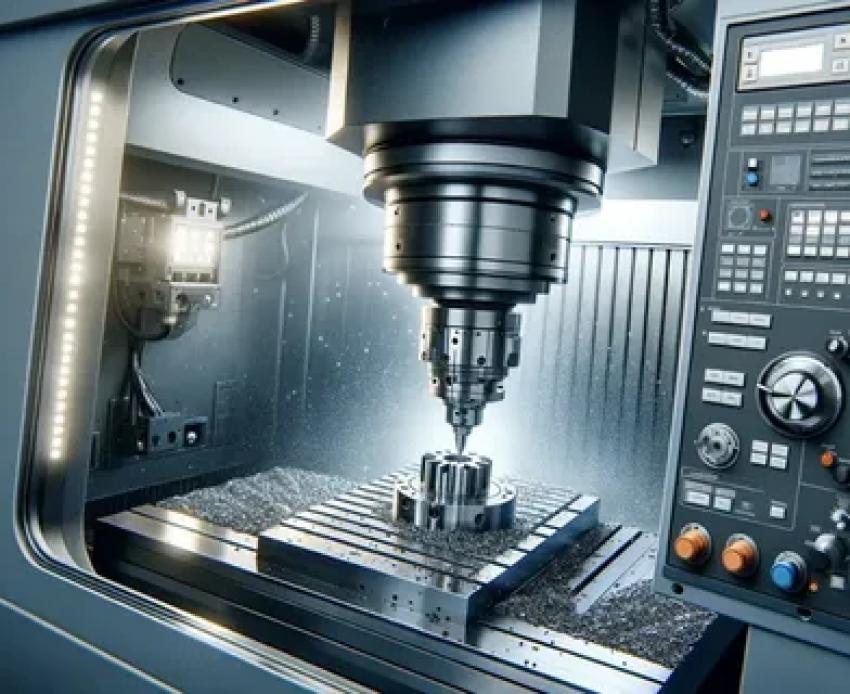
Modern manufacturing industries rely heavily on advanced production systems that deliver accuracy, consistency, and efficiency. Among these systems, cnc machining technology has become one of the most essential methods for producing high-precision components across aerospace, automotive, medical, and electronics sectors.
This article explores how cnc machining technology supports high-precision manufacturing, its core advantages, applications, and why it continues to shape the future of industrial production.
Understanding CNC Machining Technology in Modern Manufacturing
CNC machining technology refers to Computer Numerical Control systems that automate the control of machining tools using programmed instructions. These instructions guide cutting, drilling, milling, and turning operations with extreme precision, eliminating most manual intervention.
In modern production environments, CNC systems are widely used because they ensure repeatability and accuracy even for highly complex geometries. Engineers design parts using CAD software, which is then converted into CNC-compatible code (G-code) to control machines.
Key aspects include:
- Computer-controlled precision cutting and shaping
- Automated tool path execution
- Integration with CAD/CAM software systems
- Reduced human error in manufacturing
The adoption of cnc machining technology has significantly improved production speed and consistency, especially in industries where tight tolerances are critical.
In addition, CNC systems can operate continuously with minimal supervision, making them ideal for mass production and prototype development. This automation not only enhances productivity but also reduces manufacturing costs over time.
The Role of CNC Machining in High-Precision Engineering
High-precision engineering demands extremely tight tolerances, often measured in microns. CNC machining technology ensures that every component meets exact specifications, which is crucial in industries like aerospace and medical device manufacturing.
Unlike traditional manual machining, CNC systems eliminate variability caused by human operation. This consistency is essential when producing parts that must fit perfectly within larger mechanical systems.
Key advantages in precision engineering include:
- Micron-level accuracy and repeatability
- Consistent output across large production batches
- Ability to create complex geometries with ease
- Reduced material waste due to precise cutting
Moreover, cnc machining technology allows engineers to simulate and test machining operations before actual production begins. This reduces the risk of design flaws and improves final product reliability.
Another important factor is material versatility. CNC machines can work with metals, plastics, composites, and alloys, making them suitable for a wide range of precision applications.
Applications of CNC Machining Technology Across Industries
The versatility of cnc machining technology makes it a core manufacturing method across multiple industries. From automotive engine parts to medical implants, CNC systems ensure precision and durability in every application.
Industries rely on CNC machining because it can produce both simple and highly complex components with minimal variation. This makes it ideal for high-performance environments where failure is not an option.
Common industrial applications include:
- Aerospace components such as turbine blades and structural parts
- Automotive parts like engine blocks and transmission components
- Medical devices including surgical tools and implants
- Electronics housings and precision connectors
In aerospace manufacturing, cnc machining technology is used to produce lightweight yet durable parts that can withstand extreme conditions. In the medical field, it ensures implants and surgical tools meet strict safety and hygiene standards.
Additionally, CNC machining supports rapid prototyping, allowing engineers to test and refine designs before full-scale production. This significantly reduces development time and cost.
Advantages of CNC Machining Technology in Production Efficiency
One of the biggest strengths of cnc machining technology is its ability to improve production efficiency while maintaining high quality. Automated systems reduce manual labor and increase output speed, making manufacturing more cost-effective.
CNC machines can operate 24/7 with minimal downtime, which is a major advantage for industries requiring large-scale production. They also reduce the need for multiple machines, as one CNC system can perform several operations.
Key efficiency benefits include:
- Faster production cycles compared to manual machining
- Lower labor costs due to automation
- Reduced material waste and improved sustainability
- High repeatability for large production runs
Another important advantage is error reduction. Since CNC systems follow programmed instructions, the risk of human mistakes is significantly reduced. This ensures consistent quality across all manufactured parts.
Furthermore, cnc machining technology supports real-time monitoring and adjustments, allowing manufacturers to optimize performance and detect issues early in the production process.
Future Trends and Innovations in CNC Machining Technology
The future of cnc machining technology is closely linked to advancements in automation, artificial intelligence, and smart manufacturing systems. As Industry 4.0 continues to evolve, CNC machines are becoming more intelligent and interconnected.
Modern CNC systems are now integrated with IoT (Internet of Things), enabling real-time data exchange between machines and production systems. This allows manufacturers to improve efficiency and predict maintenance needs.
Emerging trends include:
- AI-powered machining optimization
- IoT-enabled smart factories
- Hybrid manufacturing combining CNC and 3D printing
- Advanced robotics integration for fully automated production
In addition, cnc machining technology is becoming more sustainable. Energy-efficient machines and optimized cutting strategies help reduce environmental impact while maintaining productivity.
As technology continues to advance, CNC systems will become even more precise, faster, and more adaptable, further strengthening their role in high-precision manufacturing.
Conclusion
CNC machining technology has revolutionized modern manufacturing by enabling high-precision, efficient, and scalable production processes. Its ability to deliver consistent accuracy across complex components makes it indispensable in industries such as aerospace, automotive, medical, and electronics.
From improved production efficiency to advanced automation and future innovations, CNC machining continues to evolve as a cornerstone of industrial progress. As demand for precision and performance increases, cnc machining technology will remain a critical driver of innovation and manufacturing excellence worldwide.