Which British Canal Was the Most Impressive Engineering Feat?: A Complete Guide
Introduction: The Age of Canal Mania
Prior to the winding rails of the railways or the asphalt of the M6, there was a different form of industrial vein that cut through Britain, the canal. Between the late 18th century and the early part of the 19th century, Canal Mania engulfed Britain like a mania. Engineers became superstars, navvies became legends, and water became the fuel for the industrial revolution. However, not all canals were the same; while some took the path of least resistance, others sought to challenge the back bone of England itself. This raises the question; what is the most impressive engineering feat on a British canal system?
In preparing for a modern day trip through the English countryside, one must consider efficiency—a principle akin to booking an efficient Luton Airport Taxi from Hemel Hempstead. Just as the taxi driver must be able to find his way around the network of roads, including A-roads and M1 junctions, the canal engineers had to maneuver their way around hills, valleys, and rivers using only picks, shovels, and intellect. The canals that were constructed during that time were akin to a modern day high-speed rail link, but there was one particular project that really outshone them all.
The Top Contenders: Bridges, Tunnels, and Staircases
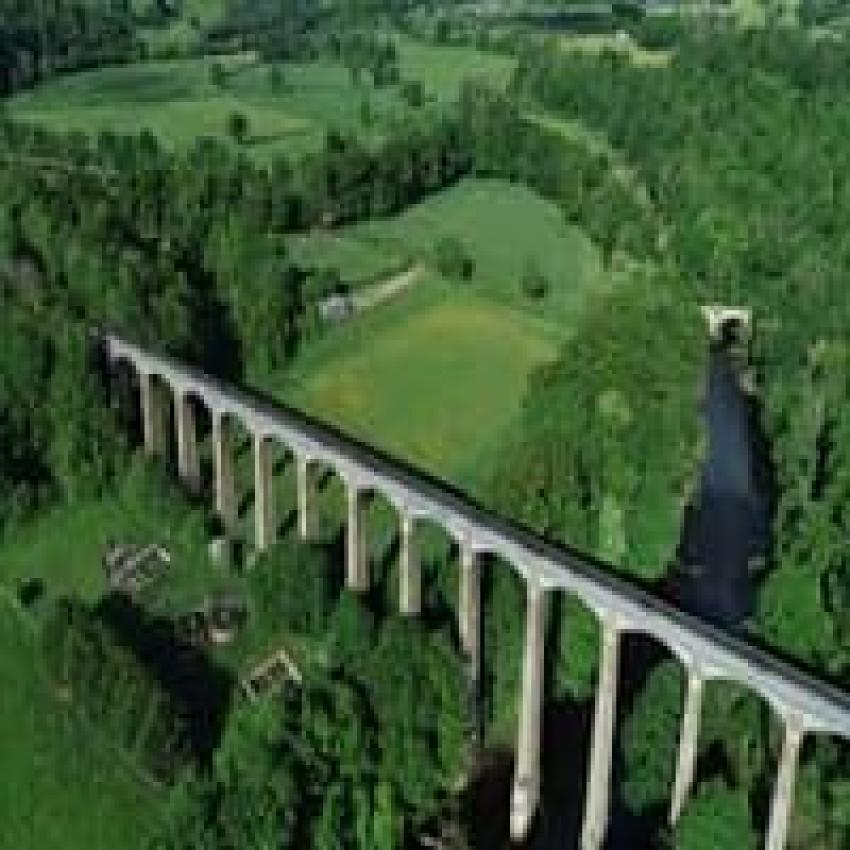
Several canals have remarkable backgrounds. The Bridgewater Canal, which is considered the first true canal of the Industrial Revolution period, was quite surprising in that it used an aqueduct to transport the canal itself across the River Irwell, and the local people were simply amazed by this construction. The Pontcysyllte Aqueduct on the Llangollen Canal is part of the UNESCO World Heritage Site. This is basically an iron trough that holds the boat at a height of 126 feet from the River Dee.
When it comes to the competition for the title of “greatest engineering marvel,” there are generally three contenders: the Huddersfield Narrow Canal (featuring the Standedge Tunnel, which is the longest, deepest, and highest canal tunnel in Great Britain), the Caen Hill Locks on the Kennet and Avon Canal (which includes no fewer than 29 locks crammed into a single mile of waterway), and the Anderton Boat Lift on the Weaver Navigation Canal. Yet, one canal features all three: the Rochdale Canal.
The Case for the Rochdale Canal: A Battle Through the Pennines
Whereas the subsequent railways managed to tame the Pennines, the Rochdale Canal was the first to do so. It was officially opened in 1804 and runs 32 miles from Sowerby Bridge in West Yorkshire to Manchester. To traverse the Pennine watershed, this canal needed to climb and drop 600 feet using 92 locks. However, what truly demonstrates the genius of this project is the Summit Level, a 3.5-mile-long canal tunnel that winds its way through a hill at a remarkable elevation of 600 feet above sea level.
What made the Rochdale Summit all the more challenging for engineers was its threefold nature. Not only did it involve building the Tuel Lane Tunnel (which, as the deepest canal tunnel in Britain, is 19 feet under ground), but then coming up with an effective way to ventilate the Summit Tunnel, which involved blasting holes in solid rock. The engineers John Rennie and William Crossley had to deal with the construction of colossal earthworks to ensure an adequate water supply for the tunnel, involving building three massive reservoirs in Chelburn, Hollingworth, and Piethorne.
Consider the logistics involved: each brick, each iron joint, and each navvy’s lunch needed to be transported up muddy tracks. Just as today, a passenger would use a quick and convenient Taxi Hemel Hempstead to Luton Airport rather than endure the confusion of changing trains and dealing with unknown roads, so too did the Rochdale canal planners create an uninterrupted course of water travel, which ignored the complications of packhorse routes across the Pennines. It was a bold declaration: water could travel anywhere if only one were prepared to carve out the route.
The Honorable Mention: The Anderton Boat Lift
Any review of excellent canal construction cannot fail to include the Anderton Boat Lift on the Weaver Navigation in Cheshire, which was finished in 1875. It was the very first boat lift ever built anywhere in the world. Though not itself a true canal, it was designed to overcome a vertical problem that otherwise would require a boring chain of locks. The boat lift can lift boats up 50 feet from the River Weaver to the Trent and Mersey Canal within five minutes using hydraulic rams (water or electrical-powered). This is a marvel of mechanical engineering from the Victorian age, not civil construction.
The Winner: Why the Standedge Tunnels Edge It
Despite the many arguments, the most spectacular engineering project on the canal system of Britain is not an entire canal, but rather one particular structure on the Huddersfield Narrow Canal: the Standedge Tunnel. Having opened in 1811, this tunnel has a distance of 3.25 miles (5,200 meters), lying under the Pennines between the villages of Marsden, Yorkshire, and Diggle, Greater Manchester. This tunnel is the longest and highest (636 ft above sea level) and deepest (636 ft below the hilltop) canal tunnel in the UK.
It was hell working on the construction of Standedge. Workers encountered problems with loose shale, with underground water springs and even carbon dioxide gas bubbles. They had no boring machine but only worked with hand drills and gunpowder in dim candle lighting. The construction lasted 17 years. What is surprising about the Standedge Tunnel, however, is that it lies along three railway tunnels built later and at some point, the canal passage becomes too narrow for ships to pass each other, and they have to use the traditional "legging" method.
Conclusion: A Legacy Carved in Stone and Water
So, what was the best engineered British canal? Taking into account the continuous length and pure hellish conditions during its construction, one would have to give the first place to the Standedge Tunnel constructed as a part of the Huddersfield Narrow Canal. However, as far as overcoming incredible obstacles and crossing an entire mountain range goes, the Rochdale Canal is not much behind. Those water routes are not only historical objects; they are symbols of people’s stubbornness and thirst for achievements and connections.
Today, it is quite possible to go through the Standedge Tunnel on foot or even on board a narrow boat or a specially organized boat tour through the tunnel darkness. Whenever you travel on a road through a mountain or see trains traveling through mountain passes, try to think about the water which traveled there many years ago due to the vision and hard work of engineers. When considering both the amazing sight of the 29 locks of Caen Hill as well as getting a safe passage from Hemel Hempstead to the airport, everything comes down to proper planning and great engineering efforts.