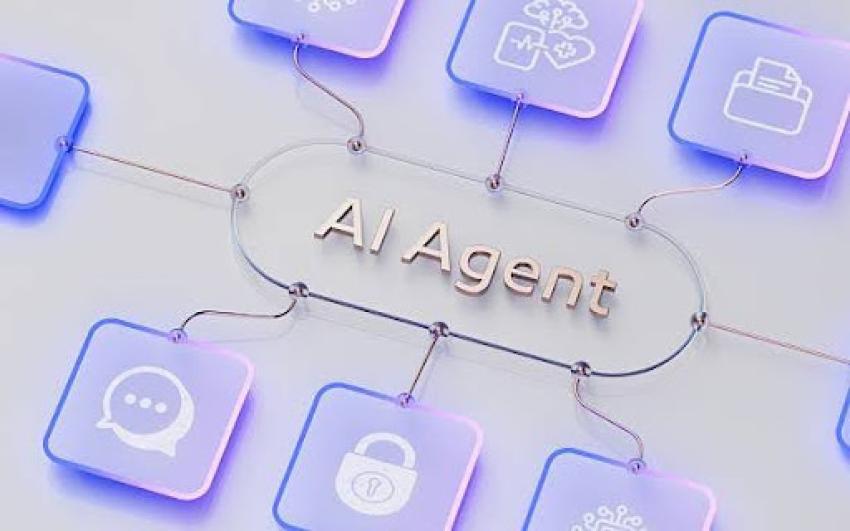
In the contemporary informational society, businesses have been enveloped by the mass amount of knowledge generated in the online platform, research databases, customer relations, and business operations. The issue of extracting meaningful insights of the data is an intricate one although there is no more problem of accessing the data. Research AI assistants are establishing themselves in this field.
Research AI assistants are high-tech devices, which are created to process vast amounts of data, detect patterns and come up with insights that can assist in making informed decisions. With these systems, raw data can be translated into understandable practical output versus hours of data collection and classification taken by scientists and experts. Research AI assistants are transforming the process of generating knowledge and applying it by closing the data-information gap.
AI assistants: Learning Research.
Research AI assistants are smart devices that apply technologies like artificial intelligence, machine learning, and natural language processing to aid in research. They are capable of processing structured and unstructured data that is found in different sources.
These assistants do not just retrieve data as is the case with the traditional research tools. They derive information, situation and express results in a manner that will be comprehended with ease. This assists users to focus on decision making rather than on manually operating data.
Research AI assistants can help make the research process more efficient and accurate by automating repetitive tasks and improving analytical abilities.
Multi-source Data Collection
The initial step to transforming data into actionable insights, is effective data collection. AI helpers of research collect data on a large variety of sources, such as online databases, reports, articles, and online platforms.
These systems are able to combine information of various formats including text, images and numerical data. This holistic approach will help to prevent any valuable information being omitted.
Research AI assistants may provide a multifaceted view of an object in research by compiling information from different sources. This assists users to view the big picture and make well-informed choices.
Statistics and Organization.
When data is gathered it needs to be processed and organized to be analyzed. Research AI helpers purify, categorize and arrange the data with the help of advanced algorithms.
This is to remove any irrelevant data, flatten and correct errors, and merge similar data points. It should be properly structured so that one can make the relevant analysis and meaningful conclusions.
Human error and time saving: Data processing is automated and saves time as well as reduces the probability of human error. It makes sure that the information is formatted in a uniform and trustworthy format ready to be analyzed.
Pattern Recognition and Trend Analysis.
Pattern recognition is one of the most efficient capabilities of research AI assistants. Such systems can identify trends, correlations and common motifs based on the large data.
Using an example, they can observe shifts in the consumer behavior, newly emerging trends in the market or even shifts in the opinion of people. This knowledge assists organizations to predict the future and change their strategies to be in line with future developments.
The trend analysis provides adequately good information supporting proactive decision making. Organizations can strategize and be competitive instead of reacting to change.
Data to Insights
Raw data has to be transformed into actionable insights by these research AI assistants, which is the most important thing it measures. This will entail analysis of the data under analysis and the formatualization of the same.
The AI systems generate summaries, reports and visualizations that highlight the most important findings. These outputs should be easy to understand even when the users who will be using them are not technically knowledgeable.
Ensuring clarity and relevance, the research AI assistants can ensure that the insights can be applied during the decision-making procedure.
Supporting Strategic Decision-Making
Actionable insights are practical given that they lead to good decisions. Research AIs are essential in aiding strategic planning by making evidence-based suggestions.
The insights also assist the organizations to improve their functions, develop new products, optimize the marketing efforts, and risk management. One becomes more successful due to the ability to make the decisions relying on the right data.
Deep Research AI assistants can enable decision-makers to take action confidently by minimizing uncertainty and offering clear guidance.
Making More Efficiency and Productivity.
Computer assistants, known as research AI, are quite useful in improving performance with the automation of time-saving practices. The process of data collection, processing and analysis can be done in a much shorter time than with manual data collection procedures.
This will be more efficient and will provide the researcher and the professionals a chance to perform advanced work that entails interpretation of the findings and the development of strategies. It also facilitates organizations to work with bigger datasets without having to work harder.
Improved productivity leads to greater perceptions and minimization of time in decision making processes, which is determinant in a competitive environment.
Unremitting Learning and Improvement
Research AI assistants are intended to improve and learn more as time goes by. With machine learning algorithms, these systems are capable of adjusting to new information and interactions between users.
The greater the amount of information they process, the more patterns they can spot, the better they are able to read the situation, and to come up with the right insights. This is a continuous improvement that makes the system effective and relevant.
Learning abilities are also designed to enable AI assistants to keep up with the shifting trends and changing data environment.
Challenges and Considerations
Regardless of the advantages, research AI assistants have certain obstacles. Data quality is probably one of the main concerns as incorrect or incomplete data can lead to incorrect conclusions.
The other problem is processing of information that is intricate or subtle. As much as AI is good at data analysis, human intelligence is still needed to verify the findings and provide context.
Privacy and ethical issues also should be taken into account. Companies must make sure that the data is utilized in a responsible and legal manner.
Future Research AI Assistants.
Future of research AI assistants The future of AI assistants is directly related to the progress of artificial intelligence and data analytics. With advancement in technology, these systems will be more advanced and will be able to perform even more intricate work.
It would be possible that in the future natural language processing will be more secure, predictive analytics will be more common, and the ability to integrate more with other digital tools is also possible. The innovations will enhance the ability of AI assistants to generate actionable insights further.
With the increasing role of data, research AI assistants will be more and more useful in assisting organizations to negotiate within the complex information landscape.
Conclusion
Research assistants are transforming the way organizations process data to actionable insights. These systems provide more meaningful information that is fast and more accurate as data collection, processing and analysis is automated.
They provide vital tools in the world of data as they help in identifying the patterns, trends, and make sound decisions across strategic levels. Some limitations (e.g., the quality of data) and ethical issues are present; however, the utilization of research AI assistants has great advantages.
These tools will become even more potent as technology keeps evolving so that, by the time this happens, organizations can access all the potential data that they have and make smarter and better-informed decisions.