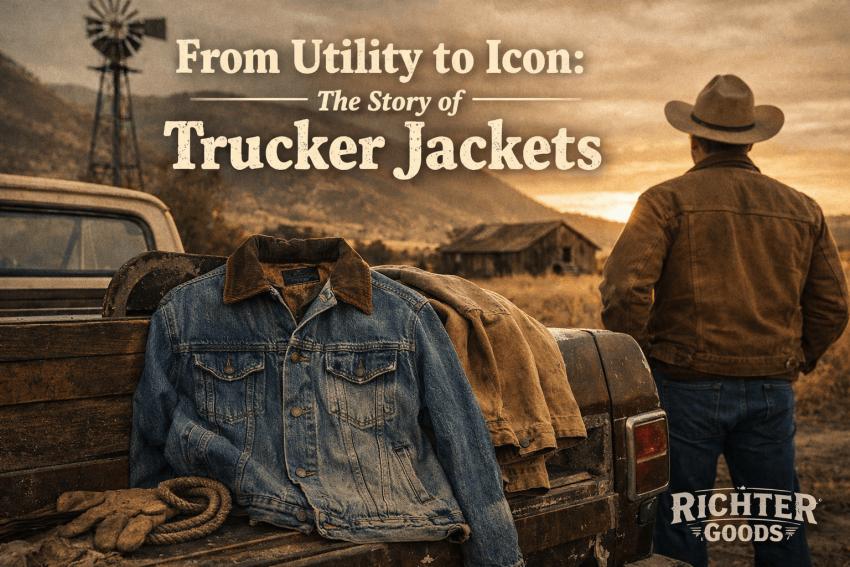
From Utility to Icon: The Story of Trucker Jackets
In the world of Mens Jackets, few pieces feel as steady and reliable as Trucker Jackets. They’ve picked up dust on open roads, hung off the back of old pickups, worked long hours on factory floors, and somehow crossed into high fashion without giving up their grit.
That’s not luck. That’s legacy.
I’ve spent years deep in American heritage wear, watching trends roll in loud and leave just as quietly. But Trucker Jackets? They don’t chase trends. They outlast them. Let’s take a walk through time and unpack how this rugged layer moved from blue-collar necessity to full-blown style icon.
The Birth of Trucker Jackets in American Workwear
Before runways and Instagram fits, Trucker Jackets were tools. Not accessories.
The early 1900s were shaped by physical work. Railroads expanded, factories stayed active, and ranch hands spent full days in tough weather.
Jackets had to hold up to real work, not fall apart after a short run. That is when tough, structured denim outerwear with strong seams started becoming a practical choice for working men. They weren’t designed to look cool. They were designed to last.
The rise of American Made Jackets during this era wasn’t just about patriotism—it was about practicality. Local mills produced sturdy denim and canvas. Tailors knew what hard work required. Buttoned fronts, flap pockets on the chest, and a shorter design made the earliest trucker jackets practical for hard work.
That cropped fit? It wasn’t fashion-forward thinking. It was functional design so men could sit, bend, and move without excess fabric getting in the way.
The guys digging, driving trains, and tending cattle were just getting the job done, not creating trends.
Denim, Canvas, and the DNA of Durability
Let’s talk fabric. Because Fabric tells the story.
Denim became the backbone of trucker jackets because it could take real work. Thick cotton twill, tightly packed, hard-wearing. Every fade, every crease grows into character over the years. And men loved that.
But denim wasn’t alone. Canvas Jackets also carved out their own legacy. For those working outdoors, canvas offered strength and water resistance. Waxed and sturdy, these jackets protected against rain and wind. They were rigid when new but gradually relaxed and formed to the wearer’s shape.
Think of denim as the road warrior and canvas as the ranch guardian. Both shaped the evolution of what we now recognize as classic trucker silhouettes. And both still influence modern designs today.
From Railroads to Rodeos
Here’s where things get interesting.
As the jackets spread through farming communities, Western workers made them their own with unique style details. Suddenly, utility met flair.
Western Jackets began incorporating embroidery, contrast yokes, and decorative stitching. And then came the detail that changed everything: Pearl Snaps. Originally used on Western shirts for easy breakaway safety (in case something got caught while riding), pearl snaps added a subtle shine and unmistakable character.
The emergence of Western Trucker Jackets was inevitable. Structured like traditional truckers but enhanced with Western detailing, they represented a bridge between grit and style. Ranch heritage met expressive individuality. That fusion still defines modern Western-inspired outerwear.
Hollywood’s Role in Iconic Status
Workwear might build the foundation, but pop culture builds the legend.
Hollywood helped turn the simple trucker jacket into a symbol of rebellion. Actors showed off grit and independence on-screen. Musicians followed, ripping and customizing them for self-expression. These jackets became icons of style and personality. It was identity.
By the time the 70s rolled around, the trucker jacket wasn’t a work uniform anymore. It was a badge of attitude.
The 80s and 90s Reinvention
Every classic piece faces a crossroads. The 80s and 90s could have buried Trucker Jackets under flashy trends. Instead, they reinvented them.
Street culture embraced oversized fits. Hip-hop artists layered denim truckers over hoodies. Skaters gravitated toward them because they didn’t fall apart easily. Designers experimented with acid washes and bold graphics. What once symbolized rural labor now represented urban creativity.
The beauty of Mens Trucker Jackets during this era was adaptability. The trucker silhouette stayed recognizable—button front, chest pockets, tailored waist—but proportions shifted. Cuts loosened. Shoulders widened. The jacket evolved without losing its DNA.
That’s rare. And powerful.
The Rise of Western Trucker Jackets
Right now, we’re seeing a love for true heritage pieces instead of the overly manufactured, polished alternatives. The real thing.
Western Trucker Jackets have surged in popularity again, especially among brands committed to craftsmanship. Picture solid denim, Western yokes, light stitching details, and hardware that won’t quit. Pearl snaps and ranch roots are still there, just handled with more restraint.
Mixing rough ranch style with clean tailoring simply works. In a market full of throwaway clothes, that kind of honesty stands apart.
Modern Interpretations and Premium Craftsmanship
Consumers have become more deliberate about their purchases. Quality matters again. Construction matters. Origin matters.
The revival of American Made Jackets speaks volumes about shifting priorities. Quality has taken center stage in fashion talks. People want heavy cloth, tight seams, and brands that build responsibly. Longevity wins over quick trends.
Modern canvas jackets feel tougher and more refined. Denim truckers trim down in fit but keep their backbone. And honestly? That’s where the magic lives.
Why Trucker Jackets Still Matter Today
Take a look at your closet. How many pieces belong at dinner, on a drive, and in a loud venue?
That’s the appeal of Trucker Jackets.
Keep it over flannel one day and a snap shirt next. Match boots or sneakers. It carries its past quietly.
With disposable fashion everywhere, the trucker jacket feels resistant. It tells people you choose substance over attention. Craft over speed. Story over spectacle.
That explains why it still stands in Mens Jackets history.
Conclusion
The story of Trucker Jackets mirrors America—built on hard work, constant change, and personal grit. Shaped by labor and later by culture, they show that real style takes time to earn. It’s built, worn, broken in, and passed down.
From early American Made Jackets stitched for railroad men to modern Western Trucker Jackets blending heritage with edge, this piece has earned its place in fashion history And if history confirms anything, it’s this: strong design returns again.
FAQs
Q: What sets a trucker jacket apart as classic?
A: The classic version has a solid structure, buttoned front, chest flap pockets, and tough denim or canvas material.
Q: Do Western truckers have unique details?
A: Yes, they feature yokes, stitching, and pearl snaps that standard truckers don’t usually have.
Q: Should you spend more on American Made Jackets?
A: Yes. Skilled production and quality materials ensure durability over the years.
Q: Are trucker jackets versatile for year-round wear?
A: Definitely. They suit cold months with layers and stand alone when it’s mild.
Q: How should I choose between denim and canvas?
A: Choose denim for comfort and fading style; canvas for protection and durability.