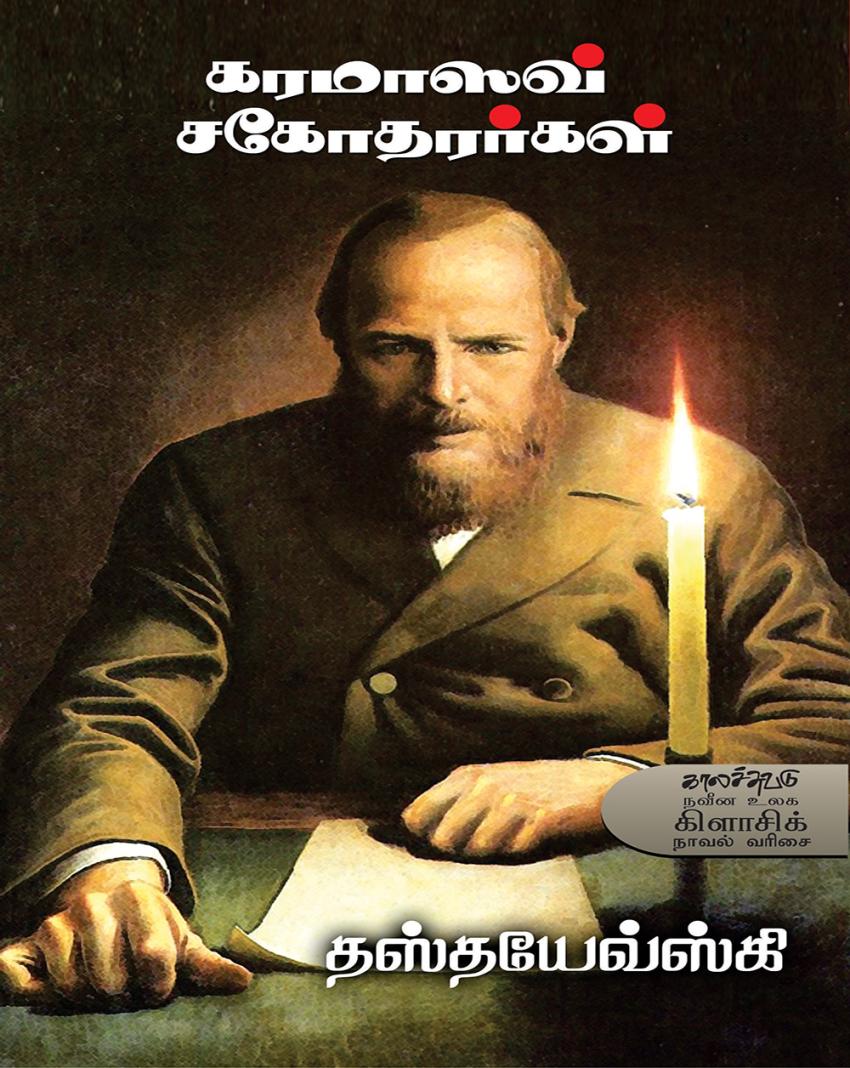
The Tamil translation of Karamaasav Sakothararkal (கரமாஸவ் சகோதரர்கள்) by Fyodor Dostoevsky is more than a translation of a literary work from one language to another – it is a cultural odyssey. When a classic work of literature, which has its roots in 19th-century Russia, comes alive through Tamil phrases, it shows how human emotions are universal and have no bounds of geography, religion, or time. The translator, who is well-versed in the Russian language and culture, has not only translated the work but has also captured the emotional framework of the story.
Dostoevsky’s works are never mere stories. His characters think, reason, doubt, and suffer. In this Tamil translation, the philosophical discussions, biblical overtones, and psychological struggles are as intense as in the original work. The story oscillates between belief and disbelief, morality and guilt, freedom and responsibility. Instead of making the complex philosophical discussions straightforward, the translation has retained them, so that Tamil-speaking people can go through the same turmoil of ideas that led to the creation of world literature.
One of the most important aspects of the work is the quality of characterization. The two brothers symbolize moral options: passion, reason, and spirituality. Their father symbolizes chaos and decay. The translation is done in such a way that speech habits are adjusted to make the personalities sound natural in Tamil, retaining the Russian cultural nuances. The language is a perfect blend of the classical beauty of Tamil and the modern readability that makes a nineteenth-century philosophical tale accessible without losing complexity.
This book is published by Kalachuvadu Publication in Nagercoil. This publication shows how regional publishing houses can make world literature a part of the local literary discourse. The book is meant to make the reader not only follow a story but also raise questions about life itself: justice, sin, forgiveness, and the weight of conscience.
The emotional depth of the novel is rooted in its honesty. Dostoevsky does not offer easy solutions. Rather, he puts the reader in the midst of a moral dilemma. Through suffering characters and gripping dialogues, the story raises questions about whether goodness is a function of faith, reason, or compassion. The Tamil translation does a great job of conveying this philosophical force. Even those who are not familiar with Russian history would find the questions raised in this novel to be very personal.
In today’s world of fast reading and short attention spans, this novel assumes great significance. It requires patience but repays the reader with interest. Literature in this case becomes a mirror to the soul rather than mere entertainment. The translator’s effort to make the narrative immersive rather than alien is greatly appreciated.
For those searching for novel books in tamil nagercoil or delving into international literature through local language publications, this book is a must-have. For those browsing tamil novels online in nagercoil as well, they will find that the classics provide far more depth than the modern-day thriller. Among these, கரமாஸவ் சகோதரர்கள் is a truly unique experience, not only a translation but a philosophical journey designed for the Tamil mind.
At the end of the day, this publication is a testament to the fact that great literature transcends translation when done with humility and an understanding of the subject matter. The tale may begin in Russia, but the questions of morality are universal. And in Tamil, the resonance is disturbingly familiar – as if the characters exist within our own minds.