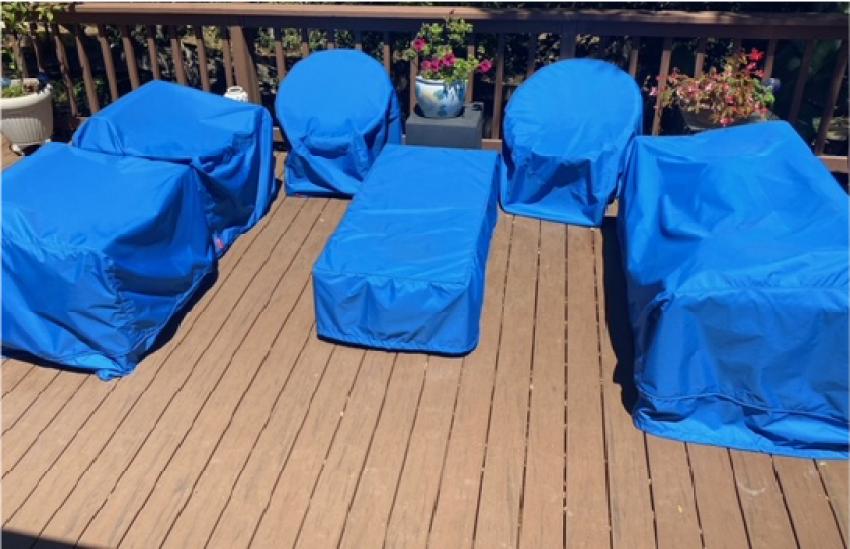
It is thrilling to invest in outdoor furniture until you find that sun, rain, dust, and seasonal weather begin showing their effects very fast. This is where patio chair covers come in. There are just too many different types of covers that one can purchase. The real trouble comes in the fact that many end up buying the wrong cover, resulting in faded cushions, moldy seats, or brittle material that starts to tear after a couple of months.
The good news? It is not hard to choose the appropriate patio chair covers as soon as you are aware of what not to do. You may be buying regular outdoor chair covers, tough waterproof covers, or custom Adirondack chair covers; this guide will help you learn the most frequent buying mistakes and the optimal way to purchase the products that will last a long time to protect the furniture.
10 Things To Keep In Mind While Purchasing Patio Chair Covers
Let’s explore the things to avoid when purchasing a cover that can assist you in choosing the ideal cover for the first time.
1. Choosing the Wrong Size Cover
This is by far the most prevalent mistake that homeowners commit. Most individuals believe that patio chair covers are universal, but outdoor chairs vary widely in terms of width, height, depth, and angle. Excessively tight cover may strain where it fits, whereas an excessively loose one may blow off in the wind or may allow rain to pool up.
It is particularly apparent in the case of Adirondack chair covers, as Adirondack chairs are slanted in the back and have thick armrests and deep seats, which generic covers cannot fit easily.
How to avoid it:
Before purchase, take measurements of your furniture in terms of length, width, height, and unusual angles, and compare the numbers with the dimensions on the size chart of the brand. Find covers that have been specifically denoted to suit your chair. The correct sizing also means that the cover is tight-fitted and covers the furniture completely.
2. Ignoring Material Quality
Not every cover of a patio chair is made equal. Homeowners pay attention to the lowest price offered and then find out that the fabric is prone to tearing or is not able to cover the furniture completely. Poor polyester might appear attractive initially, but it hardly holds up in high rainfall, hot weather, or frost.
With time, poor-quality fabrics will tear, form cracks in areas of stress, and wear out the protective layer, exposing your furniture to rain, dust, and sun damage.
How to avoid it:
Search for quality materials that can withstand external conditions like
High-density polyester
Strong, multi-layered woven cloth.
Waterproof coatings are made of PVC
The covers on the outdoor chairs used in the rainy season should have high-quality waterproof materials with reinforced stitches and a powerful inner lining. Never believe what products are supposed to be like simply by the product photos, since the photos might not be an accurate representation of how durable the product is.
3. Confusing “Water-Resistant” With “Waterproof”
This is a big one. It is not known by many buyers that there is a significant distinction between water-resistant and waterproof fabrics. Light dew or light moisture can be covered with a water-resistant one; however, it is not going to withstand heavy rain. Depending on the pressure, water ultimately leaks through and causes wet cushions, rusty metal frames, and mold.
"The term 'waterproof' is often misused, so it’s essential to understand what true protection looks like.
How to avoid it:
Search for signs that a cover is indeed waterproof, like
Heat-sealed or taped seams
Heavyweight waterproofing (such as PVC).
An excellent hydrostatic pressure rating.
Multi-layered fabric that keeps off heavy rain.
To be on the safe side, examine the interior lining; the real waterproof covers will always have a closed inner layer.
4. Overlooking Ventilation Features
There is a common belief that the more sealed the cover, the more protection the product has, and this is inaccurate. Without airflow, humidity is trapped within, and it becomes moldy, mildewy, and unpleasant. Additionally, in windy conditions, poor ventilation causes covers to swell like a balloon.
This is more important when it comes to chairs that easily retain moisture, like cushioned chairs or Adirondack chairs, which have deep seats that trap the humidity.
How to avoid it:
Select a patio chair cover that has an inbuilt vent or a breathable mesh fabric. These ventilation mechanisms enable air to flow in and keep the rain out and condensation away and also make your chairs and the cover last longer.
5. Not Checking for a Secure Fit
Your cover has a secure fit to make sure that it does not move even when there are storms or strong winds. Most of the buyers forget to check whether or not the cover has straps, buckles, or elastic hems. The cover will blow away or move about, revealing some sections of the chair uncovered.
On the other hand, very tight covers can lead to the stretching of the material or cause damage to the sensitive finishes.
How to avoid it:
Seek characteristics that will ensure the stability, including:
Adjustable buckle straps
Elastic drawcord hems
Leg-anchoring straps
Fastening mechanisms that are windproof.
Such design features make sure that the outdoor chair covers remain in their place accordingly, regardless of the weather.
6. Choosing the Wrong Design for Your Chair Type
Various types of covers are needed for different kinds of chairs. The dining chairs, lounge chairs, rocking chairs, and Adirondack chairs are different in dimensions and shapes. Smart covers designed to fit a straight-back dining chair will never fit a slanted Adirondack chair right.
The design may result in ineffective coverage and uneven protection, as some areas may be exposed to the rain and the damage caused by the UV.
How to avoid it:
The cover to use should always be a particular one, depending on the type of furniture. If you have Adirondack chairs, ensure that you purchase Adirondack chair covers that are higher at the rear and larger in size to accommodate the arms.
7. Ignoring UV Protection
Most individuals only concentrate on waterproofing and overlook that the sun is also equally harmful to both the furniture and the cover. The UV rays destroy the fibers of the fabric and fade it, as well as crack and wear it out. Even a waterproof cover cannot last long without being properly UV-resistant.
How to avoid it:
Search for covers that are UV-resistant or UV-stabilized or have anti-fade coating. The importance of UV protection is particularly significant in houses located in sunny areas where the outdoor furniture is left unprotected for long periods.
8. Overlooking Seasonal Weather Needs
Certain patio covers of chairs are meant to withstand mild climates, whereas others can resist snow, ice, heavy rain, and heavy winds. Many consumers choose a lightweight cover for year-round use or an extremely heavy cover that is difficult to handle on a daily basis, ignoring seasonal needs.
How to avoid it:
To be used year-round: Select waterproof and UV-protected covers that are heavy-duty.
To protect against summer dust, Lightweight covers are more convenient to take off and store.
Rainy or snowy climates: Sealed seam multi-layer covers are the most effective.
Your shopping choice needs to be affected by your climate.
9. Not Reading Reviews or Checking Warranty
Product listings can be deceptive, and many consumers choose not to read reviews only to later regret it. Reviews have an unbiased experience of the cover's durability even after several months of exposure. In the same way, a good warranty is a representation of the confidence of a manufacturer in their product.
How to avoid it:
Reviews to check before buying:
Fit accuracy
Waterproof performance
Durability over time
UV resistance
Material quality
An excellent warranty of 1-3 years adds to additional peace of mind.
10. Neglecting Maintenance and Storage
Even the best patio chair covers require care. Many people simply throw the cover on and forget about it, but dirt, moisture, and debris buildup can degrade the material over time. Failing to store your covers properly during the off-season also shortens their lifespan.
How to avoid it:
Maintenance doesn’t have to be difficult. Keep it simple:
Wipe the cover using mild soap and water every few weeks.
It should be allowed to air dry completely and then put back on the chair.
It should be kept in a cool, dry place when not in use.
It should not be folded when wet because it will get moldy, and the fabric will be ruined.
Maintaining allows the preservation of the waterproof cover and will make your cover last a long time.
Conclusion
When you are aware of the mistakes to avoid, selecting the appropriate patio chair covers doesn't have to be difficult. You can also secure your outdoor furniture over the years by considering the sizing, material quality, waterproofing, ventilation, and UV protection; the compatibility of the design; and how well the cover fits.
Whether you're looking for heavy-duty waterproof options, standard outdoor chair covers, or specialty Adirondack chair covers, making educated choices now will ensure that your patio stays lovely, long-lasting, and ready to enjoy throughout the year.