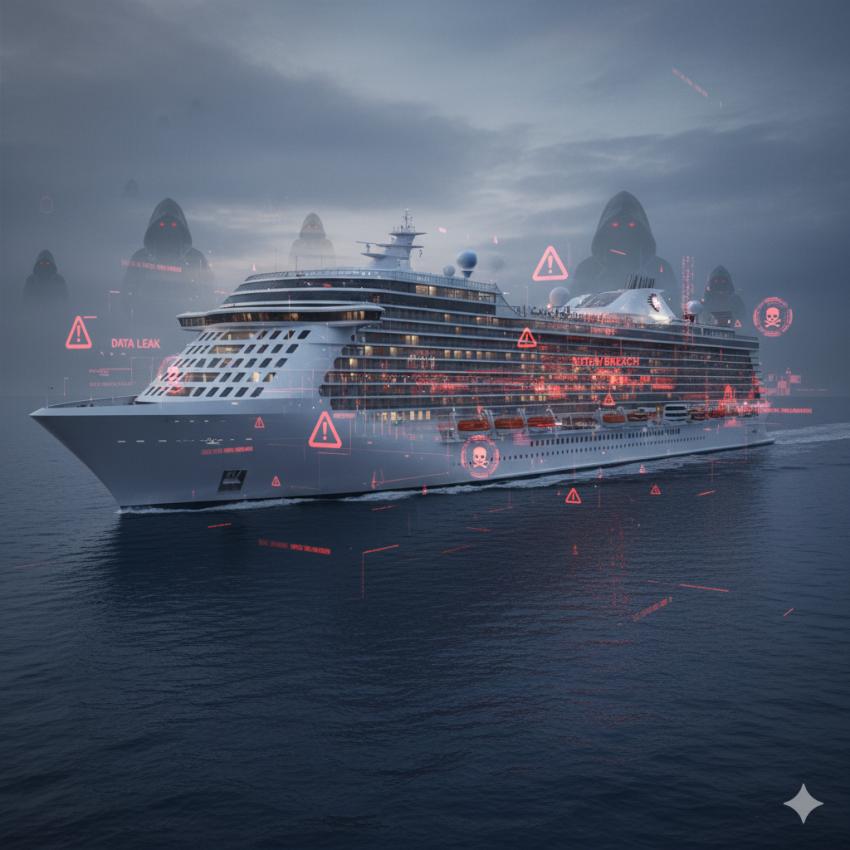
Over the years, cruise lines have developed into a sizable global marketplace, providing guests with abundant opportunities for onboard luxury and adventure. Even with this consumer-oriented focus, cruise lines operate complex digital ecosystems behind the scenes, including systems for reservations, onboard point-of-sale networks, health records, and various communications channels. In fact, the interconnected aspects of cruise operations, in large part, has supported the growth and resilience of cruise lines to meet passenger demands, but has also added an additional level of risk for a cybersecurity attack across their systems.
This risk was evident earlier in the spring of 2023 when Margaritaville at Sea experienced a Data Breach that exposed passenger data to potential exposure outside the lines. RESILIENT provided timely notice of the incident; however, while the attack only immediately affected one cruise operator, it is indicative of a burgeoning trend where cybercriminals are targeting the travel sector for storing a high value of personal, financial, and health information that can be used for ransom, identity theft, or return on the dark web.
Why Cruise Lines Are Especially Vulnerable
1. Extensive Amounts of Sensitive Data
Cruise operators collect large amounts of personally identifiable information, such as names, addresses, passport data, health information, and payment transactions. The strength of personal identifiers, plus travel information, makes a passenger database an incredibly valuable target for cybercriminals.
2. Legacy Maritime Technology IT Systems
Many cruise lines operate on legacy IT systems that were procured before the emergence of modern cybersecurity threats. Deck networks often contain legacy hardware and software, exposing vulnerabilities that ransomware actors can leverage remotely.
3. Complex Vendor Ecosystems
Cruise operations rely on tens of operational 3rd party vendors for catering, entertainment, booking platforms, and technical support. Each connection represents another attack surface that can be exploited. Whether due to negligence or malicious intent, one compromised account in a connected services provider can serve as the backdoor to sensitive embedded onboard systems or the cruise line’s network.
4. Difficulty with Real Time Network Monitoring
Cruise ships spend most of their time at sea. This makes real time network monitoring both physically and technologically burdensome. The way cruise ships operate, remote operations supported by satellite internet and segmented ship to shore communications delay when deploying the incident response process effectively, resulting in more time for an adversary to encrypt systems or exfiltrate sensitive data.
5. Pressure to Respond and Operate
Operations of cruise lines are often governed by schedule requirements. While a cruise can last days or weeks, passengers expect onboard commercial systems, such as point of sale or important vessel information, to operate flawlessly. Any failure to systems onboard can undermine the safety of guest health, navigation, or commerce. Operational pressure can lead to delayed security updates or workarounds that are taken advantage of by attackers.
Mitigation and Cybersecurity Best Practices
Cruise lines should use multi-layered defenses to lower their vulnerability to ransomware attacks:
- Ongoing systems updates and patch management for both onboard systems and those on the shore side.
- Critical networks (passenger data, navigation, operational controls, etc.) should be segmented.
- Mandatory multi-factor authentication (MFA) for crew and vendors that are accessing any systems.
- Real-time monitoring and intrusion detection of the systems, with ideally some sort of automated alerting.
- Vendor risk assessments to manage third party vendors cyber practices.
- Training to recognize phishing and social engineering requests.
Conclusion
The cruise industry contains multiple data points and continues to grow as its operational complexity increases over time. A result of this ongoing development is that crews and attackers now view cruise lines as high-value targets due to the combination of sensitive passenger data, legacy IT structures, and operational pressure. The incident with Margaritaville at Sea highlighted this reality, but this incident is part of a larger trend impacting the travel sector across the marine domain. Moving away from a reactive model of cybersecurity and into strengthening cyber intelligence safety programs, investing in fundamentally modern systems, and actively monitoring is no longer a question of investment; it is necessary for protecting passengers and sustaining trust within the industry.