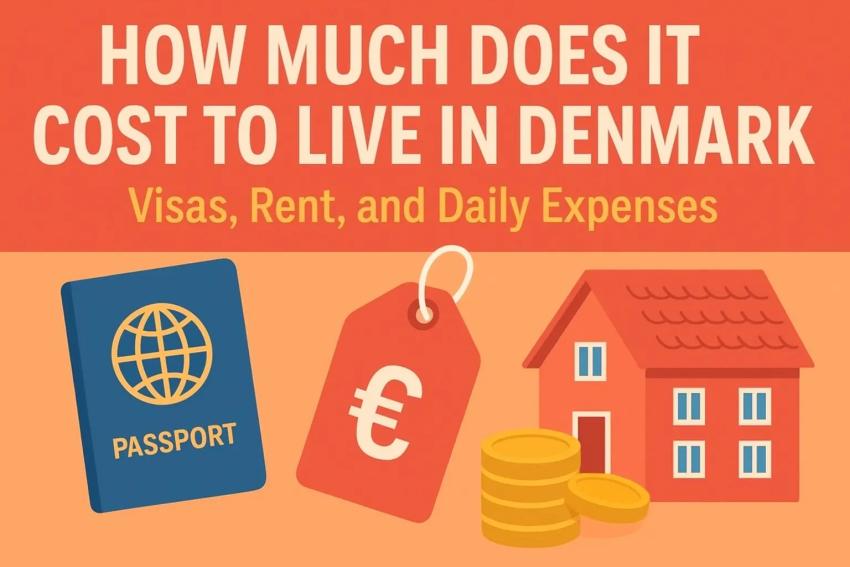
How Much Does It Cost to Live in Denmark? Visas, Rent, and Daily Expenses
The charm of living in a country that values quality of life, health, and work-life balance is something else. If you're looking for such an experience, then you shouldn't miss Denmark. A country with high living standards, good transportation, and a strong social system. But all these facilities come with some cost, and the cost of living is too high in Denmark.
To make an informed decision about moving to Denmark, you must carefully analyze the living expenses. In this article, I am going to cover every major expense you will face in your daily life in Denmark. So, let’s jump in.
Visa & Residence Requirements
Let’s not start our discussion with groceries and rent. First, we have to figure out the visa & residence requirement cost. If you are a European citizen, then you don’t need to apply for the visa. You can simply move, and you can live, work, and study there.
Meanwhile, if you are outside of a Non-EU and EEA country, then you must apply for the visa type: it's work, study, or business. You will spend an estimated 430-650 USD, and you also need to show proof of sufficient funds, which is around $1000.
Average Rental Cost
So you are in a completely new place, and one thing is sure: you don’t own a house here, which is why you need to find a house for rent. And it's a fact that house rent will likely take up the biggest part of your monthly expenses. The monthly rent in Copenhagen in the city centre is around $1400-$2100, while if you are looking outside the city centre, you must pay around $980-$1400.
Travelling Tips: If you are moving from the UK to Denmark, don't forget to book cheap airport parking by Ezybook.co.uk.
People who come here on jobs or a student visa usually prefer to live in a shared apartment, which costs around $500 or more. While Aarhus and some small towns and suburbs are slightly cheaper. So if you are on a tight budget, you can always move to the cheaper option.
Utilities Cost
The cost in Denmark is not too high; they are reliable. For electricity, heating, and garbage collection costs, an estimate of $170- $280 for an average-sized apartment. While the internet costs you around $35-$50. I would suggest you look for the rentals that include these costs in the rental charges. If it's so, then don’t forget to double-check it.
Food & Grocery Prices
In Denmark, food prices are higher than the average prices in the European Union. You have to spend at least $350-$240 per person on groceries. If you are a food lover and love dining out, then it will eventually cost more; for instance, a simple meal at a restaurant that is not very inexpensive will cost around 18-25 USD. As for groceries, the cost will be around $160-$180 for milk, bread, eggs, and chicken.
Transportation Cost
There is an efficient transportation system in almost all European countries. You actually don’t need your car to roam around. Similarly, in Denmark, you only need a bus or train pass, which costs you around $55-$105 depending on your travel routes.
Let me give you a tip if you want to save money. Try to ride your bicycle. It is very common in Denmark, and you will feel a part of the culture.
One more thing, if you are working on a lower budget, then try to avoid having a car. Because then we have to cover fuel costs, road tax, maintenance costs, as well as insurance costs.
Health Insurance
If you are a resident of Denmark, then you don’t really care about the cost of healthcare. It will be covered by the Danish public health care system. This is an efficient system that runs through your tax money.
This system will help you to cover the majority of the hospital visits, but some dental care and prescription drugs are not covered in this system. Suppose you are not a resident, then don’t worry at all, you still get the best health care treatment. In this scenario, there is a mandatory private health insurance that costs you around $40-$85.
Final Thoughts
Honestly, Denmark is an expensive country. The rental, groceries, transportation, education, and other sorts of taxation will extract a large sum of your monthly income. But it is worth spending if you can enjoy a state-of-the-art living standard, strong workers' rights, and excellent public services. So, before you move, make sure to calculate your monthly budget and other expenses.