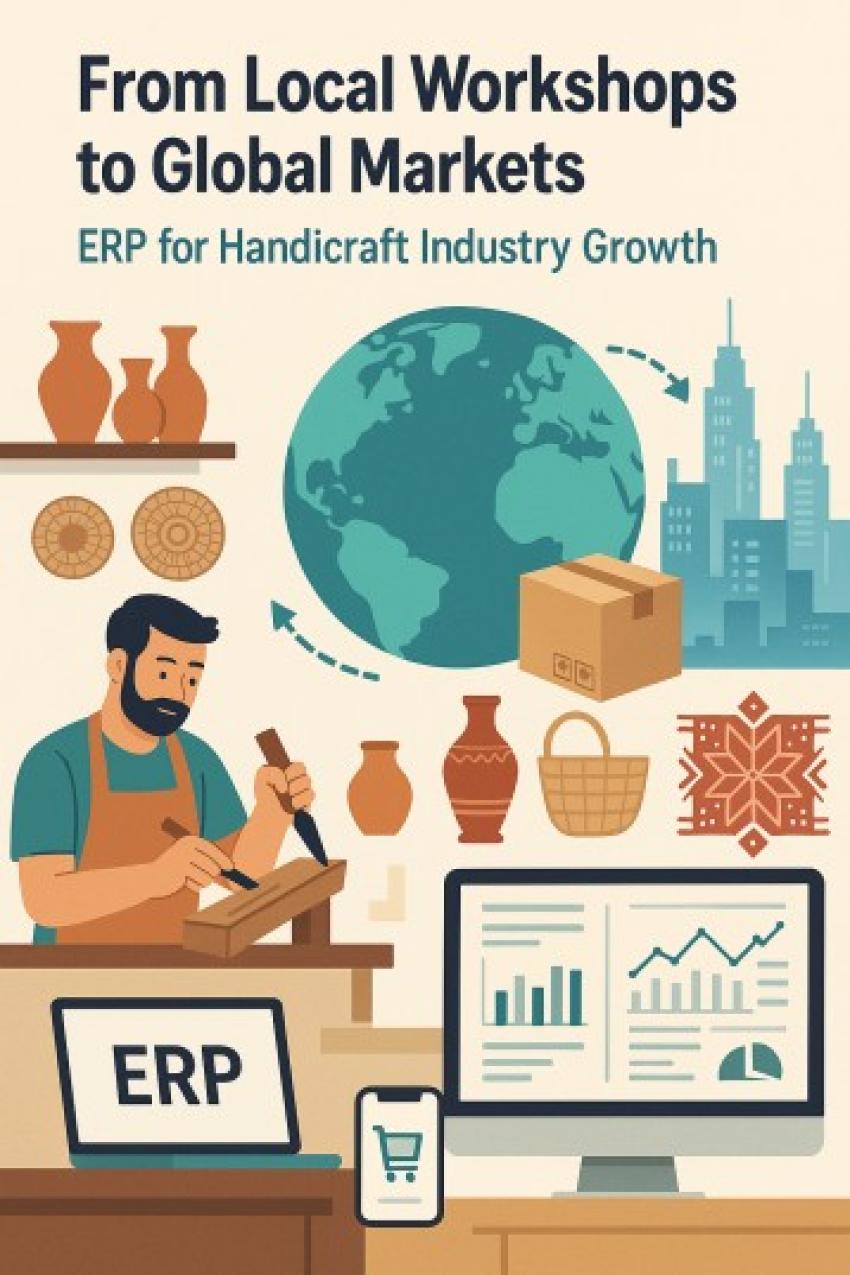
handicraft work has always carried a story — hands shaping raw materials into art. but when these small workshops try to grow, they often face big problems. orders pile up. materials get lost. exports take time. and somewhere in between, creativity turns into confusion. that’s where ERP software makes a real difference.
ERP for the handicraft industry connects everything — from raw materials to exports — in one place. it helps local makers manage what they already do, but in a better way. instead of tracking things on paper or spreadsheets, they can see stock, sales, and production in real time.
imagine a small wooden toy workshop in jaipur. they receive a big export order from germany. before, they might have spent days preparing documents, checking material, and tracking each shipment manually. with ERP, that process becomes simple. the system shows what’s available, what needs to be produced, and even generates export documents automatically. less time on admin means more time on craft.
ERP also helps control costs. it shows where money goes — materials, labor, transport. small mistakes that once went unnoticed now stand out clearly. and when costs are under control, profit improves naturally. this kind of clarity gives small workshops the confidence to take on bigger markets.
another big benefit is consistency. handmade products often vary in size, color, or finish. ERP tracks production steps so that each piece matches standards. it doesn’t change the craft; it helps maintain quality across orders. and when quality stays high, trust grows — both locally and internationally.
for exporters, ERP software is almost a backbone. it manages export documentation, shipment tracking, and compliance in one place. no missing forms. no delayed payments. everything is recorded and accessible anytime. for handicraft businesses working with multiple buyers and regions, that’s not just convenient — it’s essential.
ERP also gives small artisans a way to compete with larger manufacturers. automation doesn’t remove craftsmanship; it supports it. it helps a potter in khurja, a weaver in kachchh, or a woodcarver in saharanpur reach customers across the world with fewer errors and faster delivery.
the growth of the handicraft industry depends on visibility. and ERP brings visibility through reports and analytics. owners can see which products sell best, which regions demand more, and when to scale production. this data helps make smarter decisions — something that paper records could never offer.
when small workshops use technology like ERP, they move from surviving to growing. they stop reacting and start planning. they stop worrying about managing things and focus again on creating.
the global market is changing fast. buyers expect transparency, faster delivery, and better communication. ERP software gives handicraft businesses the tools to meet those expectations.
it’s not just about software. it’s about helping traditional makers find a place in a digital world. from local workshops to global markets — that’s how the handicraft industry grows with ERP.