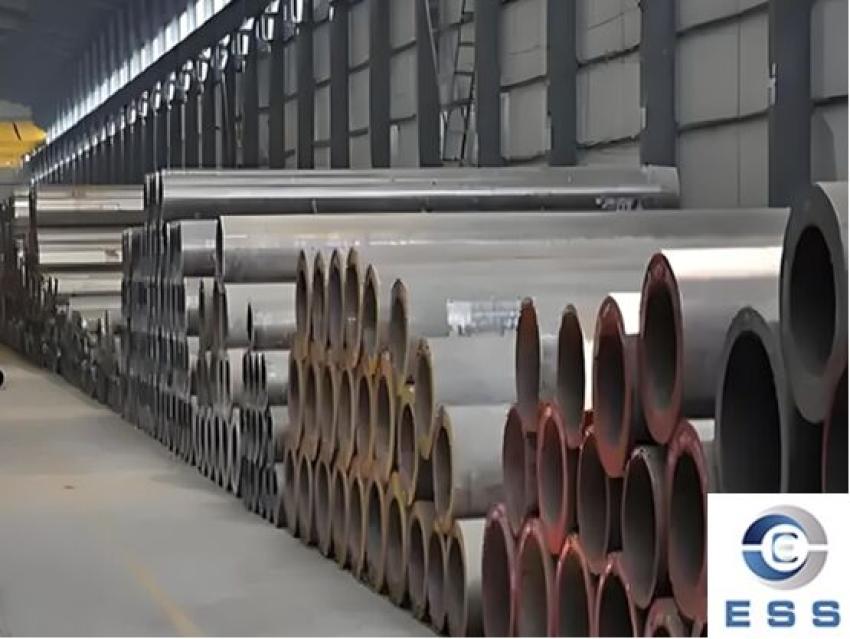
Mild steel pipe is a kind of pipe widely used in various fields, and its production process is related to the quality and performance of the product. This article will introduce the production process of mild steel pipe, including raw material preparation, steel pipe rolling, welding and heat treatment.
1. Raw material preparation
The main raw material of mild steel pipe is low carbon steel plate. In the production process, the steel plate needs to be cut first and cut into plates of appropriate size. Then, the slab needs to be rust-removed and surface-treated to remove oxides and impurities on the surface, providing good conditions for subsequent processing.
2. Steel pipe rolling
The rolling of steel pipe is the process of forming a pipe shape by rolling and stretching the steel slab for multiple passes. First, the steel slab is heated to an appropriate temperature, and then the steel slab is gradually formed into a pipe shape through multiple passes of rolling. During the rolling process, the size and wall thickness of the pipe need to be controlled according to the requirements of the product. At the same time, the rollers need to be regularly maintained and replaced to ensure the quality and production efficiency of the product.
3. Welding
The welding of mild steel pipes is the process of connecting rolled steel slabs. According to different welding methods, it can be divided into long welding and spiral welding. Long welding is to weld the two ends of the steel slab to form a long tube, while spiral welding is to spirally weld the steel slab around the central axis to form a tube. During the welding process, it is necessary to select appropriate welding methods and welding materials according to the requirements of the product to ensure the quality and strength of the weld.
4. Heat treatment
The heat treatment of mild steel pipes is to improve their organization and performance. Generally, heat treatment includes annealing, normalizing and quenching. Annealing is to heat the steel pipe to an appropriate temperature and then slowly cool it to soften the steel and improve its plasticity and toughness. Normalizing is to heat the steel pipe to an appropriate temperature and then control the cooling rate to make the steel reach a certain hardness and strength. Quenching is to heat the steel pipe to an appropriate temperature and then quickly cool it to make the steel reach high hardness and strength.
In addition to the above-mentioned main links, the production process of mild steel pipes also includes pickling, cutting, forming and surface treatment:
Pickling is to remove oxides and rust on the surface of steel to improve the surface quality of the product.
Cutting is to cut the steel pipe according to the length required by the customer to meet different needs.
Forming is to form the rolled steel slab through a forming machine to form a specified pipe shape.
Surface treatment is to improve the surface quality and corrosion resistance of the steel pipe. Common surface treatment methods include galvanizing, spraying and plastic plating.
The production process of mild steel pipes includes raw material preparation, steel pipe rolling, welding and heat treatment. Through reasonable process flow and strict quality control, high-quality mild steel pipes can be produced to meet the needs of all walks of life.