Over the past decade, lab-grown diamond producers have revolutionized the high-end jewelry market, offering a socially conscious, environmentally friendly, and value-driven option compared to natural diamonds. With the consumer demanding more transparency, sustainability, and modern luxury, producers of lab-grown diamonds are being pushed to the forefront, melding innovative technology with precision craftsmanship. So what is it that is so propelling lab-grown diamond producers to such a high level, and why are they suddenly so popular?
This article explores the evolution of lab-grown diamond production, how it's produced, the advantages over conventional diamond mining, and the players dominating this glittering new sector.
The Science Behind Lab-Grown Diamonds
Synthetic, cultured, or lab-grown diamonds are produced in highly controlled labs with the assistance of sophisticated technological processes. The processes are such that they can mimic the process through which natural diamonds are created under the Earth's crust, and therefore, the final product is chemically, physically, and optically identical to a diamond obtained through mining.
The two main ways lab-grown diamond producers do their business
1. High Pressure High Temperature (HPHT): The HPHT process replicates the pressure and temperature of the deep levels of the earth. The seed diamond is embedded in carbon and subjected to high pressure and temperature until diamond grows around the seed.
2. Chemical Vapor Deposition (CVD): Here, a diamond seed is put in a gas chamber filled with carbon-rich gases. The gas is ionized, and carbon atoms are deposited layer by layer on the seed, which develops into a diamond crystal.
Both processes produce good-quality diamonds, and companies use both interchangeably based on the shape, color, and clarity desired.
Why Consumers Are Turning to Lab-Grown Diamonds
One of the most compelling drivers of demand for lab-grown diamonds is their ethically sourced nature. Conventional diamond mining has been criticized for its environmental record and link to conflict regions for decades. Lab-grown diamond producers provide a conflict-free and green alternative.
Some of the most significant advantages that compel consumers to buy are:
•Eco-Friendliness: Lab-grown diamonds use much less land and water and produce fewer carbon emissions than conventional mining.
• Priced-to-Compete: Lab-grown diamonds are 20-40% lower on average in cost compared to equivalent quality mined diamonds.
• Quality and Purity: Lab-grown diamonds have fewer inclusions and more brilliance due to the controlled growing conditions.
• Customized: Firms can produce diamonds to individual size, shape, and color specifications, and therefore enable consumers to customize their experience.
The Emergence of Lab-Grown Diamond Producers
With increasing demand, increasing numbers of companies are investing in technology to cultivate diamonds and venturing into the marketplace. Not only are manufacturers of lab-created diamonds producing excellent gems, but also extending the boundaries of design, innovation, and sustainability.
1. Sustainability as a Core Value
Today's consumers are greener than ever. Businesses are meeting that demand by becoming carbon neutral, running on renewable energy, and designing sustainable packaging. Being green is attracting a new, younger, ethically aware consumer base.
2. Technology Meets Tradition
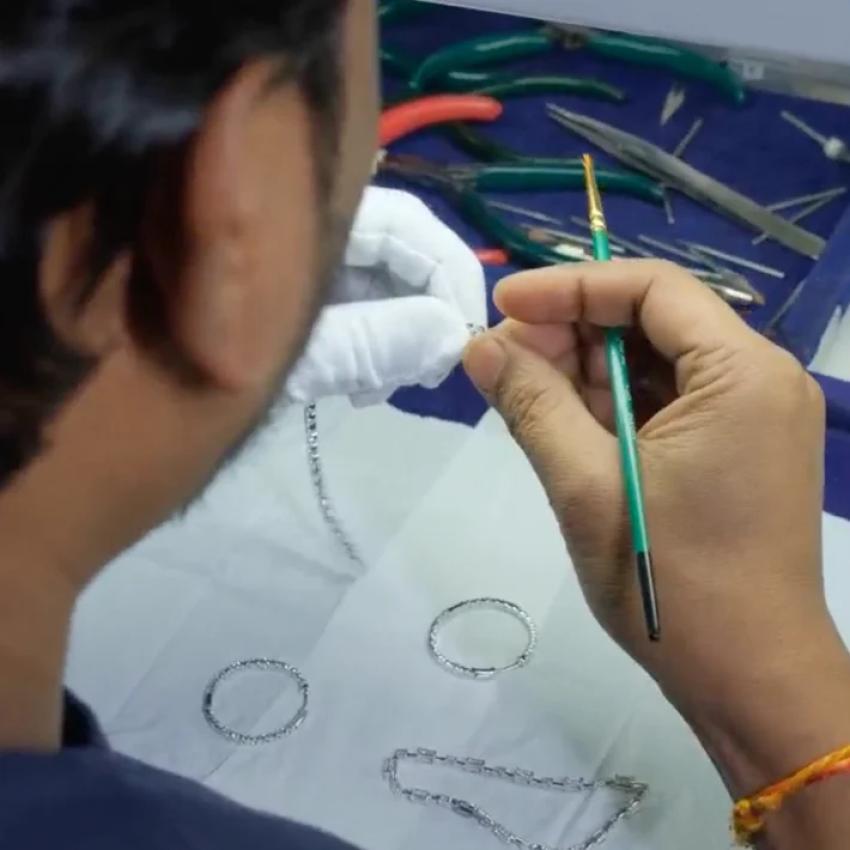
Though diamond cultivation technology is highly developed, lab diamond makers usually work hand in hand with traditional jewelers and designers. The synergy of such skill ensures that the ultimate product retains the same everlasting beauty and artistry that quality jewelry should provide.
3. Transparency and Certification
Ethical manufacturers provide long certificates for their diamonds, providing full transparency in the grade and provenance. Certificates from well-known gemological labs such as IGI (International Gemological Institute) or GIA (Gemological Institute of America) classify the quality and authenticity of the gemstone.
Big Lab-Grown Diamond Manufacturers
There are certain firms that are dominating lab-grown diamond manufacturing, establishing industry standards in ethics, quality, and innovation.
• Diamond Foundry (USA): Praise for being 100% carbon neutral, Diamond Foundry grows high-quality diamonds in California and has been backed by iconic designers and investors.
• Vera Bijou: The new business whiz kid, Vera Bijou, marries cutting-edge technology with elegant, classic design. Its lab-created diamonds are made ethically, precision-cut, and set into stunning pieces of jewelry that speak to the contemporary luxury buyer.
•De Beers Lightbox Jewelry (UK): Groundbreakers of selling mined diamonds, De Beers ventured into the lab-created category with Lightbox to deliver fashion-forward diamonds at mass-appeal pricing.
•ALTR Created Diamonds (USA): Another category pioneer, ALTR grows diamonds and assembles finished diamond jewelry, with full control over quality from lab through finished jewelry.
The Manufacturing Process: From Lab to Luxury
Lab-grown diamond's seed-to-shining-ring process entails a series of complex processes. Producers like to adopt this streamlined process:
1. Culturing Diamonds: A Rough diamond is cultivated within a laboratory through HPHT or CVD for weeks.
2. Cutting and Polishing: Every rough diamond is analyzed by skilled gem cutters to choose the finest cut. Specialized equipment is employed so as to achieve maximum brilliance.
3. Grading and Certification: The completed diamond is certified according to its 4Cs—cut, color, clarity, and carat—similar to naturally mined diamonds.
4. Jewelry Designing: The certified diamond is then set into beautifully designed jewelry, waiting to enchant.
The Future of Lab-Grown Diamond Production
The future is bright beyond recognition for lab-grown diamond manufacturers. Improved technology makes runs cheaper and more efficient for producing larger, higher-quality diamonds. Growing demand stimulates innovation in all, from growth methods to AI-graded systems.
In addition, sustainability will be the priority. Look for solar-powered growth facilities, water recycling facilities, and other green ventures that help toward the world's environmental targets.
Final Thoughts: A New Era of Refinement
Not only are lab-created diamond makers offering a substitute for natural diamonds, but they are also redefining luxury. By integrating science, ethics, and beauty, these makers are setting a new benchmark for the jewelry world.
For consumers, this shift is empowering. No longer does one have to choose between beauty and ethics. With lab-created diamonds, one can now have both.
With the knowledge spreading and the technology developing, lab-created diamond producers will further increase market share, restructuring the jewelry world for generations to come. When buying an engagement ring, an eternally appealing pendant, or a strong style statement, a lab-created diamond is a brilliant option, both literally and in every way else.