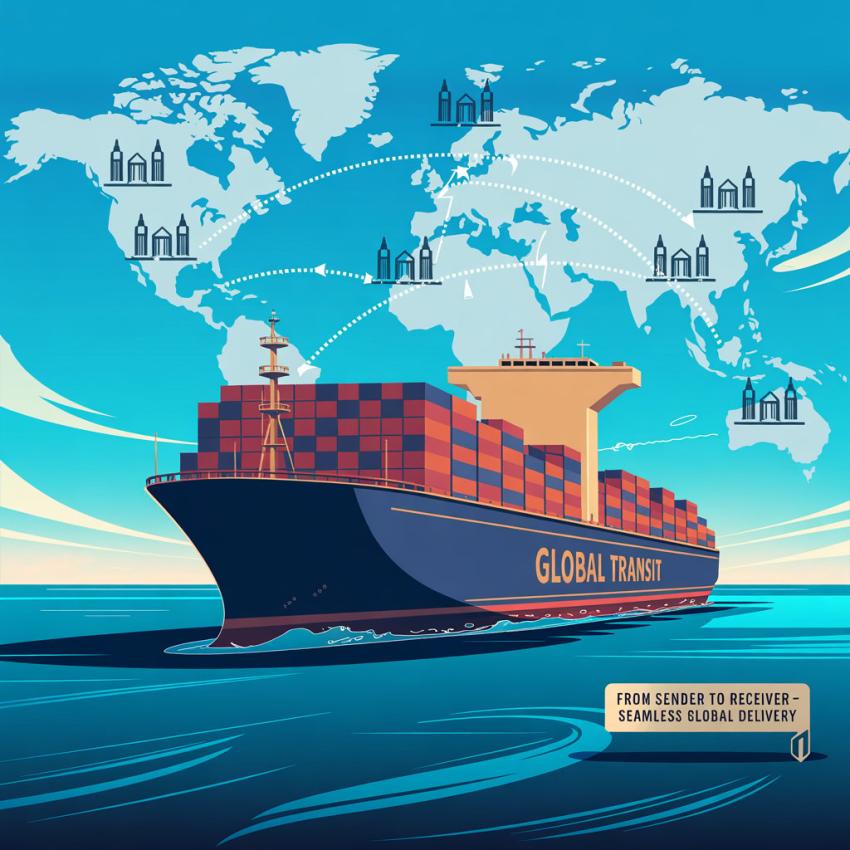
As global supply chains evolve, pressure on container availability and movement patterns only mounts. The biggest challenge for logistics managers now is not just securing space on ships, but securing it at low cost, reasonable lead times, and trade flows uninterrupted. Sea freight logistics are squarely in the middle of this balancing act, namely addressing the uneven distribution of containers due to global trade imbalances.
In the first 100 words, businesses that rely on sea freight logistics have to deal with more than transit times they have to coordinate for repositioning containers, port delay, and fluctuating shipping rates. These logistics issues are compounded by macroeconomic drivers like demand surges, export-import imbalances, and regulatory constraints, which leave it so important that specialists understand how trade imbalances drive capacity planning.
The Dynamics of Trade Imbalances and Container Shortage
Trade imbalances occur whenever the quantity of containers exported from an area significantly exceeds or falls short of its imports. Exporters like China are likely to export significantly higher numbers of containers than it imports, while countries experiencing trade deficits receive empty containers which take time to bring back.
It creates a chain reaction in the sea freight operations:
Empty Container Repositioning: Carriers are forced to reposition the empty containers from low-demand terminals to high-export zones, consuming valuable space and contributing to operating cost.
Imbalanced Port Utilization: Excess ports (e.g., North America) suffer from congestion in yards because of idle empties, while deficit ports (e.g., some Southeast Asia) suffer from inadequate equipment.
Higher Freight Rates: Capacity tightness with inefficient container circulation leads to rate volatility, especially during peak periods.
For the logistics manager, that translates into careful planning not only for the products in transit, but also the containers in which they travel. Ignoring these dynamics can result in the loss of sailings as well as per-unit shipping costs.
Strategic Capacity Planning in Volatile Trade Lanes
To navigate through the volatilities that are accumulated from the global imbalances, business organizations must ensure that they possess an anticipatory, data-driven, and location-centric capacity planning process. The following are some of the best practices of doing it:
Demand Forecasting Based on Trade Flow Data: Integrated demand planning with live export-import data with shipping schedules enables the company to position itself ahead of time in anticipation of where the container shortage can occur.
Multi-Port Diversification: Instead of relying on one port or one region, firms can enjoy some flexibility by spreading their volumes across different gateway ports. This reduces exposure to local disruptions.
Advanced Booking Arrangements: Carriers become committed through long-term contracts or space reservations for dealing with companies, which helps to secure space even if market tightens though it requires predictability and commitment of volume.
Sea freight logistics experts are increasingly controlling capacity as a strategic asset—one that requires ongoing attention, route flexibility, and carrier negotiation.
The Role of Technology in Supply and Equipment Balance
Technology has proven to be a good balancer in reversing the ripple effect of trade imbalance. Logistics platforms now provide visibility not only into whereabouts of cargo but also into inventory and movement of containers across the networks of the globe.
Key accomplishments are:
Smart Container Tracking: IoT-enabled containers capture real-time location, temperature, and movement data, allowing carriers and shippers to improve repositioning needs.
AI-Powered Route Optimization: Computer technology that analyzes vessel schedules, port operating efficiency, and equipment availability allows for faster and more intelligent routing decision-making.
Integrated Booking Platforms: Web freight marketplaces allow logistics staff to instantly view carrier prices and capacity and act on capacity issues more quickly.
With greater digitization of the logistics sector, those with access to quality real-time information will be far better equipped to make their sea freight logistics plans even more effective amidst sustained global imbalances.
Working Together Throughout the Supply Chain Towards Sustainable Solutions
Container imbalance effects cannot be reduced by the port or the carrier—it's something to be tackled by the whole supply chain through cooperation. Container utilization can be maximized by manufacturers, forwarders, ports, and retailers.
A few eco-friendly practices are:
Consolidated Shipping: Making shippers agree to consign LCL (less than container load) shipments in bulk will increase container utilization and reduce repositioning needs.
Reverse Logistics Planning: Use of empty container as backhaul return merchandise, recycling, or substitute trades minimizes wasted moves and offers cost-saving opportunities.
Turnaround Incentivized Programs: Certain carriers and ports reward the return of containers or quicker clearance, which offers better container rotation.
Sea freight logistics is optimally optimized and more sustainable if all the stakeholders are held accountable and collaborate for end-to-end planning.
Conclusion
As international trade becomes more complex and dynamic, companies can no longer react to shipping logistics. Throughout the world, trade imbalances will still influence where and under what circumstances boxes move, how much they cost, their availability, and transit reliability.
The professionals who understand these trends—and who integrate data analysis, strategic alliance, and digital platforms into their operations—will be well placed to develop a solid competitive edge. Sea freight logistics of the future consists of flexibility, transparency, and collaboration. To be ahead of the curve means not just to react to trends, but to shape them by careful planning and innovation.
Would you like to have a visual infographic or checklist summary to accompany this blog for additional engagement?