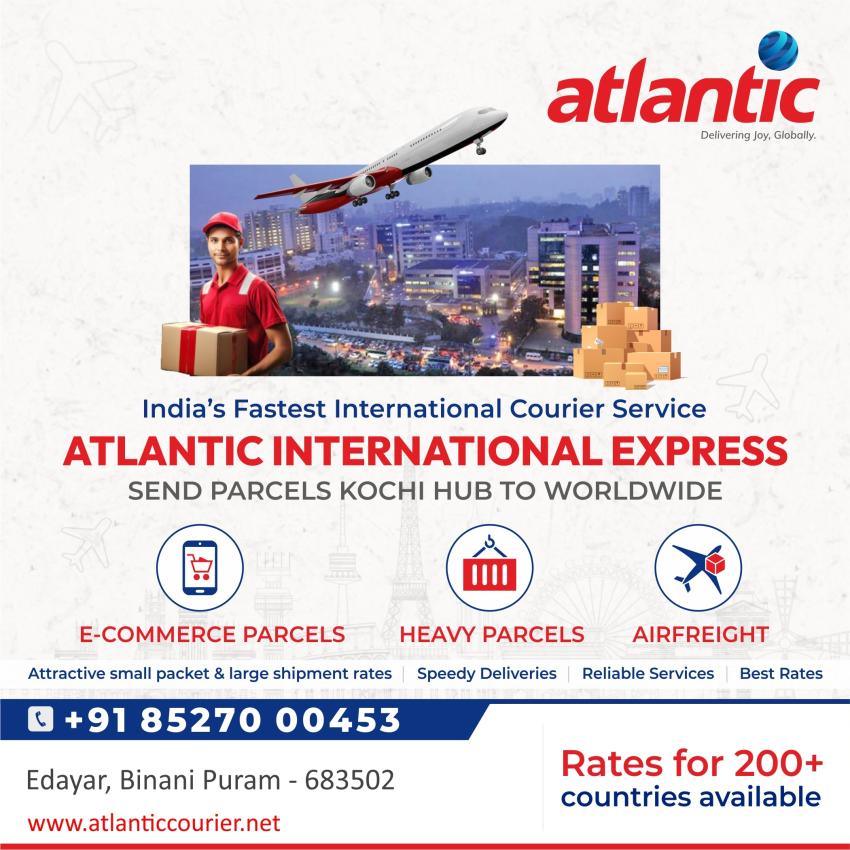
In the dynamic supply chain and logistics environment, the last-mile delivery segment has been revolutionized. Nowhere is this better seen than in emerging urban hubs like Kochi. For businesses employing an international courier service in Kochi Hub, digital transformation is not so much a cause of competitive leverage—it's the cornerstone of operational efficiency and customer satisfaction. As this sea port city is becoming more strategic, particularly for e-commerce businesses and technology start-ups, understanding how digitization is revolutionizing last-mile logistics is imperative for decision-makers.
Let's demystify the technological shifts behind last-mile delivery, and how businesses can ride this wave to scale operations wisely.
Real-Time Visibility: The Cornerstone of Modern Logistics
Gone are the days of “in transit” as the only update customers or operations teams receive. Real-time visibility—powered by GPS tracking, IoT-enabled sensors, and cloud-based logistics platforms—has become non-negotiable. Companies operating in Kochi’s logistics corridor are increasingly deploying digital twins and RFID tagging to monitor packages, anticipate delays, and reroute in real-time.
This technology-driven approach is particularly critical when dealing with cross-border consignments that enter Indian ports prior to traveling inland. For instance, a foreign courier company in Kochi Hub can now employ predictive analytics to alert customers on customs delays or rescheduling owing to regional transport strikes. Such transparency fosters trust and allows business leaders to strategize backup plans without speculation.
Route Optimization and the Role of AI
Successful last-mile logistics is a juggling act: speed versus cost versus customer experience. In cities like Kochi, where infrastructure ranges from high-tech highways to congested lanes, AI-based route optimization software is changing the game.
These systems consider traffic, road conditions, weather, and even chances of customer availability within time windows. On-the-fly route adjustment not only conserves fuel and wear-and-tear on the vehicle but also improves on-time delivery rates. For a third-party logistics (3PL) service provider or any business that relies on an international courier channel going through Kochi, AI route optimization translates to immediate operational ROI.
There is a green benefit as well. As increasing pressure mounts to decarbonize supply chains, optimized routing has an important role in sustainability KPIs—something that is becoming more and more important in procurement decisions.
Smart Warehousing as an Enabler of Fulfillment
Far too frequently underemphasized in last-mile efficiency discussion is what is taking place before the last mile even begins. Intelligent warehousing—characterized by automation, robotics, and advanced warehouse management systems (WMS)—has emerged as a key enabler of faster fulfillment cycles.
In Kochi, where land space is tighter than in Tier II cities but demand is rising, micro-fulfillment centers and dark stores are a new choice. These centers, powered by intelligent inventory systems, allow international courier companies and local logistics players to reduce order-to-dispatch time by far.
Technology integrations support split shipments, intelligent packing suggestions, and even drone-based stock audits. For executives managing omnichannel retail or high-volume e-commerce business models, the investment in warehousing technology in a hub like Kochi can be the key to scaling successfully or facing logistics bottlenecks.
Customer Experience: Where Tech Meets Loyalty
Last-mile logistics is not just the physical movement of goods—it's a critical brand touchpoint. With heightened expectations driven by consumer platforms like Amazon and Flipkart, B2B buyers now demand the same convenience and control.
Features like live tracking of deliveries, flexible rescheduling, and ePoD are becoming table stakes. Businesses partnering with an international courier service in Kochi Hub that provides such experiences are seeing better NPS scores and retention of customers.
In addition, delivery performance metrics are increasingly being ingested into CRM and ERP systems to inform sales strategy, customer segmentation, and even product demand forecast. Logistics and customer intelligence are becoming ever more conflated—and that's good news for forward-thinking organizations.
Looking Ahead: The Strategic Edge in Tech-Driven Logistics
The digitization of last-mile logistics is not an upcoming trend but is already shaping the competitive arena. Businesses operating in or through growing logistics nodes such as Kochi need to change their attitude from viewing logistics as a cost center. Instead, logistics has to be a strategic function—something that, with the appropriate technologies, can drive direct leverage over customer satisfaction, scalability, and profitability.
Decision-makers must determine whether existing logistics partners are holding their own with the digital wave. Is real-time transparency? Are they optimizing routes with AI? How fluid is their warehousing model? These are not niceties, they are requirements.
Conclusion: Digitize or Be Left Behind
In a digitally transforming economy, logistics is increasingly becoming the bond between customer experience and business strategy. Kochi, a city that is emerging, is not just a shipping hub—it's a strategic point within a global network. If you're an e-commerce scale-up growing cross-border or a multinational optimizing your supply chain, collaborating with a digitally enabled global courier service at Kochi Hub could be your next growth turning point.
The future of last-mile logistics is data-driven, automation-first operators. And for those who do it right, the reward—operational efficiency, customer loyalty, and sustainable scaling—is already in their reach.