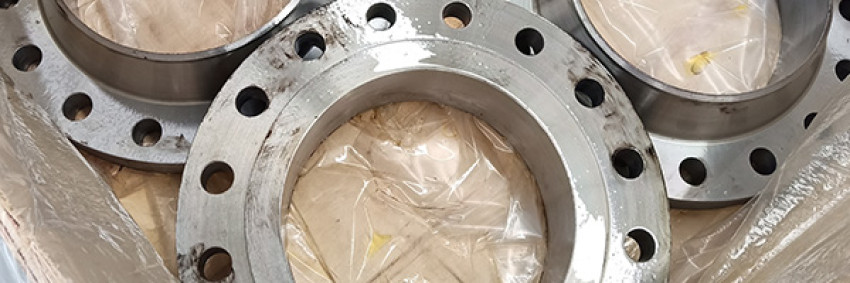
Flange is a common disc-shaped part in pipeline engineering, used to connect pipelines, usually used in pairs. In pipeline engineering, flanges are mainly responsible for the function of pipeline connection. Install a flange on the pipelines that need to be connected. Wire flanges can be used for low-pressure pipelines, and welding flanges can be used for pressures above 4 kg. The step of flange connection is to add a sealing point between the two flanges and then fasten them together with bolts. Flanges of different pressure levels have different thicknesses and use different diameters and numbers of bolts.
In addition to being used in pipeline connections, flange connections are also suitable for connecting water pumps, valves and other equipment. Parts of these equipment will also be made into corresponding flange shapes, also known as flange connections. Flange parts refer to connecting parts that are connected and closed simultaneously using bolts on the periphery of two planes. However, this connection is only a partial connection of the equipment. For example, the connection between the flange and the water pump cannot be called "flange parts" alone, while smaller equipment such as valves can be called "flange parts".
Flange connection is an important connection method in pipeline construction. Flange connection is to fix two pipes, pipe fittings or equipment on a flange plate, add flange pads between the two flange plates, and fasten them together with bolts to complete the connection. Some pipe fittings and equipment already come with flanges, which are also flange connections. Flanges are divided into threaded (wired) flanges and welded flanges. Low-pressure small-diameter wired flanges, high-pressure and low-pressure large-diameter welded flanges are used. The thickness of the flange plate and the diameter and number of connecting bolts are different for different pressures. According to different levels of pressure, flange pads are also made of different materials, ranging from low-pressure asbestos pads, high-pressure asbestos pads to metal pads.
Flange connections are easy to use and can withstand greater pressure. In industrial pipelines, flange connections are widely used. Inside the home, pipes are small in diameter and low pressure, with no visible flange connections. If you are in a boiler room or production site, there are flange-connected pipes and equipment everywhere.
Flanges serve several important functions in piping systems:
Connection: Flanges are used to connect various components in a piping system, such as pipes to valves, pumps, heat exchangers, and other equipment, creating a complete fluid transportation system.
Sealing: Flanges provide sealing for the piping system, preventing fluid leaks and ensuring the system operates safely and efficiently.
Ease of Maintenance: Piping systems with flange connections are easy to disassemble and maintain, allowing for quick replacement or repair of pipes, valves, and other components, thus improving equipment reliability and lifespan.
Adaptability: Flange connections can accommodate different specifications, materials, and pressure requirements, offering flexibility for various industrial and residential piping systems.
Load-bearing Capacity: Flanges can withstand specific pressures and temperatures, and the selection of appropriate flange types and materials ensures the stable operation of the system according to project requirements.
In summary, flanges play a crucial role in piping engineering by providing connection, sealing, maintenance convenience, adaptability, and load-bearing capabilities, making them an indispensable component of piping systems.
Generally speaking, flange connection is an important connection method in pipeline construction. It has the advantages of easy use and ability to withstand large pressure, and is widely used in industrial pipelines.
www.baowi-steel.com