Businesses must decide between subscription billing and software for creating invoices.
Given the need to have the best software, it's critical to understand your company's requirements before deciding which option is best for you.
Or choose a product that combines both of these (yes, such products exist).
The phrases billing and invoicing are distinct even though they might be used interchangeably.
Depending totally on whether you are the sender or the recipient of the transaction, there are some circumstances.
It goes without saying that we must comprehend the functions of these software programs as well as the billing and invoicing procedures.
Let's examine what these two phrases signify for businesses in order to clear up any confusion.
What are billing and invoicing?
Invoicing
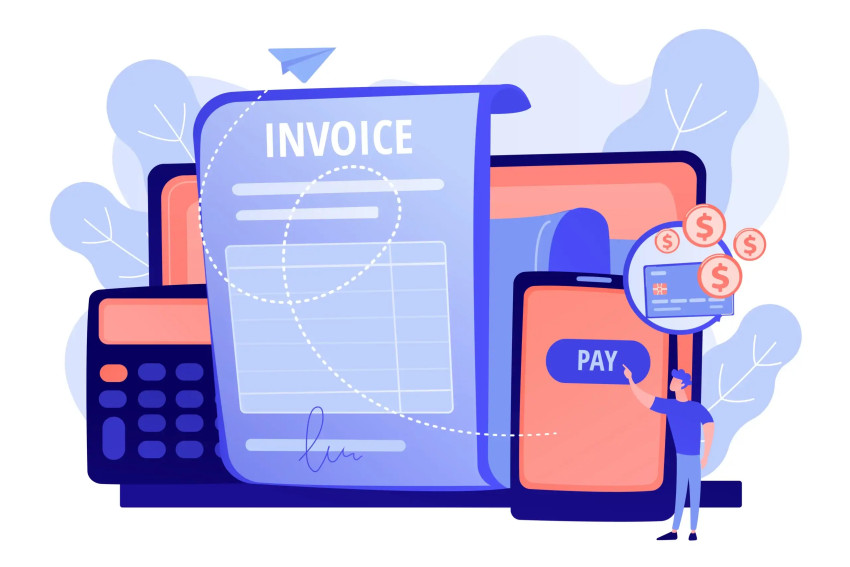
Sending a business document outlining all the goods and services provided to a receiver is known as invoicing.
The amount owed to the recipient and the due date are also listed in this document.
The most recent payment the recipient made to the firm may also be included in this document.
Billing
The phrase "bill" is just a commercial document that normally merely emphasizes the recipient's obligation to pay the stated amount.
To provide you with the complete amount due, this paper lists the goods or services offered along with their prices.
The bill does not specify a due date because it is assumed that you should pay the balance as soon as you get the bill.
To comprehend billing, one can compare their encounter with a commercial institution to that of a restaurant. A bill cannot be paid after the due date, unlike an invoice.
Billing and invoicing aren't interchangeable terms, right?
Despite the fact that they are similar, the fundamental distinction between billing and invoicing may be noticed in terms of the actual transaction.
It may depend on whose side of the transaction you are on, as was said above. For instance, after delivering goods or providing services, a business might send an invoice. Although it is an invoice from the originating company, the recipient is the one who must pay it.
How Does Subscription Billing Work?
If we don't take the transaction procedure into account when it comes to subscription billing, the conditions can get convoluted.
Let's examine the subscription billing model and consider how it differs from invoicing, keeping in mind that an invoice is something a firm starts for the recipient of the goods or services.
Despite their apparent similarity, organizations that sell subscriptions must start invoices that eventually become past-due bills for subscribers.
As a result, if you use a subscription billing program, you create invoices for clients who use recurring billing.
While if you're using an invoicing application, you probably only produce invoices. Many purely invoicing software's do not offer comprehensive requirements like proration and recurring automation.
Software for invoices versus software for subscription billing
To put it briefly, a company that uses a subscription billing model will require subscription billing software. Businesses that solely handle one-time payments, however, can use invoicing software.
However, some firms need both products' capabilities and services.
However, it should be noted that an invoicing program could not always offer the capabilities that a subscription billing program does. (And the reverse)
The capabilities that an invoicing software and a subscription billing software offer are what ultimately matter.
What functions does a software program for invoices offer?
Custom invoices can be created with the aid of an invoicing program.
To maintain the integrity of your brand's image and identity, you can customize and embellish your invoices.
Of course, a prosperous company cannot afford to risk its name by distributing uninteresting bills.
You also have the option to schedule your invoices for regular periods in addition to this.
It should be noted that while this can be configured for returning customers, subscription billing is not totally automatable. (See additional details below)
You may create and share invoices using invoicing software online.
You can also accept and process payments online by using products like DocuSign and interfaces with payment gateways.
There are certain invoicing applications on the market that additionally have capabilities for reminders and receipts.
As a result, you can keep track of payments made and remind clients to make their payments when they're due.
What Functions Are Offered by Subscription Billing Software?
On the other hand, recurring billing procedures are streamlined by subscription billing software.
Additionally, recurring bills that are planned for regular intervals must be created.
Subscription billing programs provide smooth proration, account reconciliation, sophisticated dunning, and customer management functions in addition to invoicing software.
Subscription billing essentially includes automating every step that makes recurring billing complicated.
While this also applies to invoicing, many available choices might not have extras like customization and payment reminders.
Additionally, subscription billing software must include analytics for client management and retention, such as ARR, MRR, churn rate, CLV, CAC, etc.
These functionalities are not available unless you use a top-tier, cutting-edge subscription billing system.
Why Strictly Limit Yourself to One?
Recurring billing and invoicing software, which combines all the characteristics of the two fields and presents them to businesses in a tidy dashboard, is available, as was already noted.
You can obtain all the capabilities necessary for automated invoicing for any subscription-based business with a solution like Work 365.
Work 365 is a subscription management system and usage based billing software for Microsoft partners to streamline recurring billing and invoicing process.