An immersive experience is a digital world or space that fully engages the senses and creates a feeling of being in a different environment or situation. It pulls the viewer into an imaginary world, enabling them to interact and manipulate each other. An immersive environment uses technology, such as virtual and augmented reality, to create a realistic and engaging user scenario. This post will explore an immersive experience and its functionality, goals, and benefits.
Types of immersive experience and goals
There are two types of immersive experiences- one when you are actually in a physical world and the other where you are shown around a real or an imaginary environment via a tablet, mobile, or virtual headset (VR headset).
The goal of an immersive experience is to create a sense of presence and engagement that allows the user to forget their real-world surroundings and become fully absorbed in the experience. This can be achieved through visual, auditory, and sometimes even haptic (touch-based) feedback.
Terminology of the immersive and interactive world
While explaining the term immersion, many other terms are used. Though they are used sometimes, there are quite a few differences among them.
Virtual reality
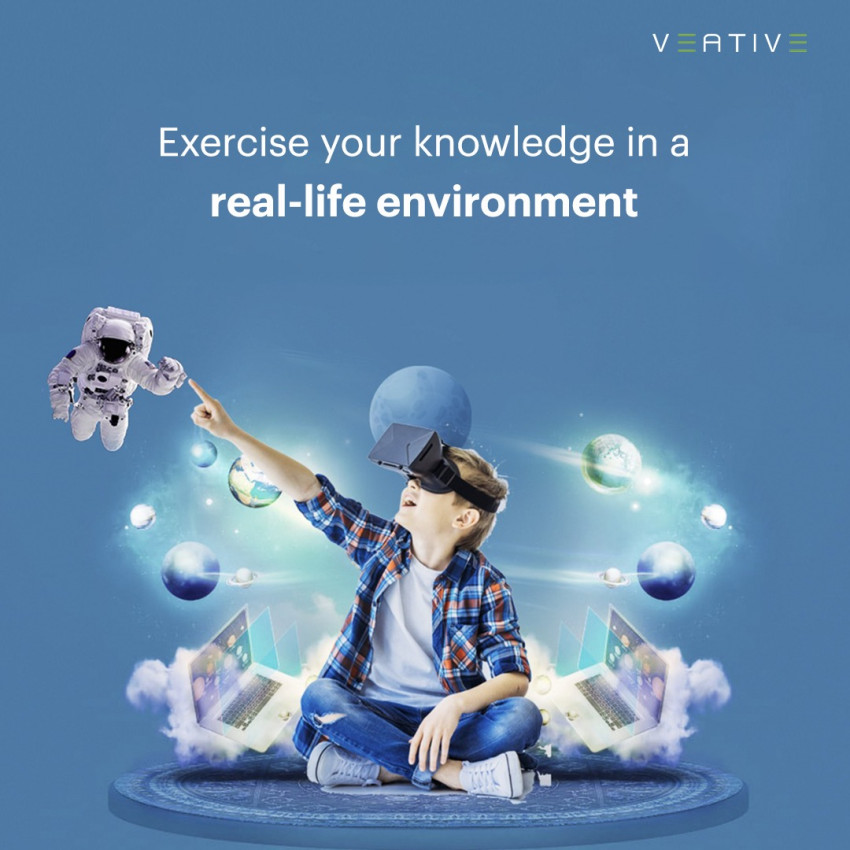
(VR) technology creates a digital, 3D environment to explore and interact with. It is a simulated experience designed to feel as real as possible. To experience VR, you typically wear a headset with a screen. The screen displays a 360-degree view of the digital environment that surrounds you. As you move your head, the view changes to match your movements, giving you the feeling of being inside the environment.
In addition to visual immersion, VR experiences can include audio and even haptic feedback, which is touch-based feedback that can make it feel like you are touching or interacting with objects in the virtual world.
Augmented reality, on the other hand, allows objects to be superimposed onto the real world. It blends digital elements with the physical world, creating a hybrid experience that can be viewed through a smartphone or tablet camera.
For example, AR can overlay digital images, videos, or animations onto a real-world environment. When you point your smartphone camera at an object, AR can recognize it and display additional information about it on your screen. This can include things like product details, reviews, or interactive features.
Mixed reality
is a mix of holographic and virtual images, where the users wear glasses to see it. It blends the characteristics of virtual and augmented reality. Unlike AR, which simply overlays digital information onto the real world, MR allows digital objects to appear as if they are physically present in the real world. It can also track the user's movements and adjust the virtual things accordingly, creating a more immersive and interactive experience.
Digital twins
These are virtual representations of physical objects, systems, or processes, created using data from sensors, IoT devices, and other sources. The digital twin is a software model that simulates the behaviour of the physical entity in real-time or near real-time. By continuously updating with data from the physical entity, the digital twin provides a real-time understanding of the physical entity’s state, performance, and behaviour.
Digital twins are used in various industries, such as manufacturing, healthcare, and transportation, to monitor and optimize performance, predict and prevent potential problems, and support decision-making. They can also be used to test new designs, predict future outcomes, and simulate scenarios in a virtual environment before implementing changes in the physical world.
Ways to use immersive technologies
Here are some following sectors where immersive technology can be used.
Gaming: One of the most popular uses of immersive technology is gaming. Virtual reality (VR) and augmented reality (AR) provide gamers with an immersive and interactive experience.
Education and Training: Immersive technology can be used in education and training to create simulations and scenarios that help learners acquire new skills and knowledge.
Healthcare: Immersive technology can be used in healthcare to simulate surgeries, train medical professionals, and provide therapeutic experiences.
Architecture and Design: Architects and designers can use immersive technology to create virtual models and simulate the environment in which a building or product will be used.
Marketing and Advertising: Immersive technology can create immersive experiences for customers, promoting products and services more engagingly.
Tourism: Immersive technology can be used to create virtual tours of destinations, providing potential visitors with an immersive and interactive experience.
Art and Entertainment: Immersive technology can be used to create new forms of art and entertainment, such as immersive theatre or interactive installations.
Overall, immersive technology has the potential to transform various industries by providing new and innovative ways of experiencing and interacting with the world around us.