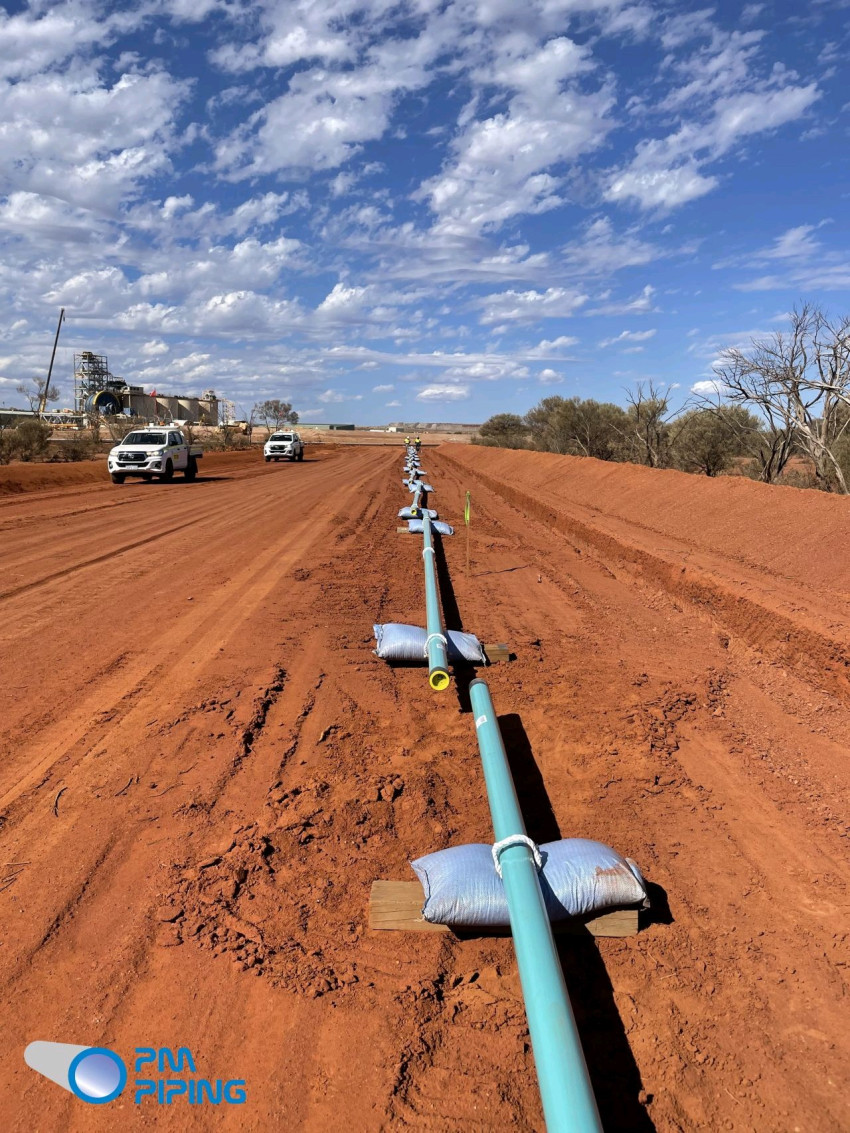
Compared with road transport, rail transport, water transport, and air transport. Pipeline transportation has become the main means of oil and gas transportation due to its advantages of low transportation cost, less loss, less permanent land occupation, fast construction speed, large oil and gas transportation volume and high safety performance.
Pipeline transportation is a long-distance transport method of liquid and gas materials using pipelines as a means of transportation. It is a transportation method that transports petroleum, coal and chemical products from the production place to the market, and is a special part of the trunk transportation in the unified transportation network. Sometimes a pneumatic tube can do a similar job, conveying the solids chamber with compressed gas while the cargo is inside. Pipeline transportation of petroleum products is more expensive than water transportation, but still cheaper than rail transportation. Most of the pipelines are used by their owners to transport their own products.
Related technologies:
1) Welding technology: From manual welding to semi-automatic welding to automatic welding, from single welding torch to double welding torch to the research and application of more welding methods, from technology introduction, equipment import to independent research and development of technology and equipment. Today, China's energy pipeline welding technology is fully comparable to the international advanced level. In the future, digital, automated, and intelligent welding technologies will be the development direction of long-distance pipeline welding, and advanced welding technologies such as friction stir welding, plasma welding, and electron beam welding will become the focus and focus of research in the field of pipeline welding.
2) Monitoring technology: The data acquisition and monitoring control system SCADA used in the pipeline is a production process and scheduling automation system based on computer technology. It can detect and control the pipeline transportation process and field equipment, so as to realize the functions of data collection and processing, equipment control, operation analysis, parameter adjustment and alarm.
3) Auscultatory technology: Long-distance oil and gas pipelines are usually corroded by internal and external environments during operation. Internal corrosion is mainly caused by the combined effects of the conveying medium, liquid accumulation in the pipe, and internal stress in the pipe; external corrosion is usually caused by the aging and failure of the coating in the environment. With the need for safe operation of pipeline transportation, pipeline corrosion detection technology has been developed at home and abroad, which is mainly divided into pipeline external detection and internal detection. Through auscultation of the inside and outside of the pipeline, regular physical examination of the pipeline is carried out to judge the operation status and ensure the safe operation of the pipeline.
Seamless pipes are widely used in corrosion-resistant pipes, structural parts and parts in chemical, petroleum, textile, medical, food, machinery and other industries.