Medical laboratories need processes to produce accurate, consistent results. A structured quality management system (QMS) helps ensure that activities are consistent, responsibilities are clear, and risks affecting patient care are controlled. For ISO 15189 implementation, documentation guides employees in performing and improving their work.
ISO 15189 specifies requirements for the quality and competence of medical laboratories. It covers laboratory activities, including point-of-care testing, and requires a documented, implemented management system. Documentation should reflect the laboratory’s actual services, processes, resources, and responsibilities.
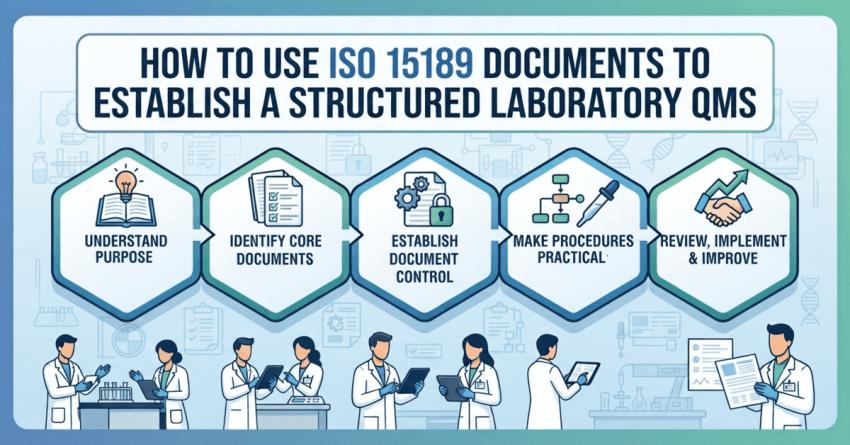
Understand the Purpose of ISO 15189 Documentation
ISO 15189 documentation requirements translate policies and technical requirements into controlled working practices. Documents explain how activities should be performed, while records provide evidence that they were completed as intended.
A medical laboratory quality management system connects policies, procedures, work instructions, forms, and records. It should address pre-examination, examination, and post-examination activities, alongside supporting processes such as personnel competence, equipment management, information management, risk management, complaints, and nonconforming work.
Identify the Core Documents Your Laboratory Needs
Review the laboratory’s scope, test menu, and accreditation requirements. Identify the documented information needed for each activity. This may include quality policies and objectives, role descriptions, examination procedures, equipment maintenance and calibration records, quality control records, training and competency records, internal audit reports, and management review records.
An ISO 15189 quality manual can describe the QMS structure, responsibilities, and process relationships. However, ISO 15189 does not make a quality manual mandatory. Laboratories may organize management system information in another suitable format, provided it is documented, accessible, and controlled.
Establish Effective Document Control
Laboratory quality documentation must be accurate and available where needed. Each controlled document should have a clear title or identification code, version number, approval details, issue date, and review status. Define who can prepare, review, approve, revise, and distribute documents.
A reliable laboratory document control process prevents staff from using obsolete instructions. Maintain a master list, provide current versions at relevant work areas, and withdraw outdated copies. Records also need controls for identification, storage, access, backup, retention, retrieval, and disposal. These practices support traceability.
Make Procedures Practical for Daily Work
ISO 15189 procedures should explain what staff must do, who is responsible, and which records are required. Use clear language and ensure instructions match actual equipment, methods, risks, and workflows. Avoid adopting generic text without checking its suitability for the laboratory.
To reduce the effort involved in developing documentation from scratch, laboratories can use structured reference resources. A professionally prepared set of ISO 15189 documents can provide a starting point, including a quality manual, procedures, SOPs, templates, and audit questions. Adapt each document to the laboratory’s scope and verify it against current practices before approval and use.
Review, Implement, and Improve the ISO 15189 Quality Management System
Effective ISO 15189 implementation depends on ensuring that personnel understand and follow documented procedures in their daily activities. Provide appropriate training, evaluate staff competency, and maintain records as evidence of completed activities. Conduct internal audits to identify gaps in ISO 15189 documentation requirements and laboratory practices. Management reviews should evaluate QMS performance, risks, resources, audit findings, and opportunities for improvement.
Regularly review ISO 15189 documents whenever laboratory processes, equipment, examination methods, responsibilities, or applicable requirements change. Maintaining accurate medical laboratory QMS documentation, effective document control, and consistent implementation helps laboratories demonstrate technical competence, improve operational consistency, and support continual improvement.