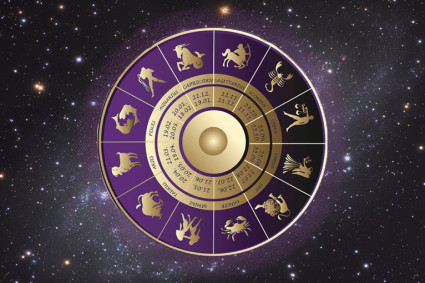
Search for astrology services and you will find a long menu: birth chart readings, forecasts, matching, remedies, name advice. The list looks like a dozen different products, but most of them grow from one idea. Each one starts with a chart of the sky drawn for a specific moment and place.
This guide explains that idea in plain terms. It then sorts the common services by the question each one tries to answer, so a first-time reader can tell what is on offer before booking anything.
The one idea behind almost every service: the birth chart
In Vedic astrology, the chart is called a kundli (also written kundali or janam kundli). It is a diagram of where the Sun, Moon and planets stood at the moment and place of a person's birth. Practitioners read it using a set of traditional rules that go back many centuries in India.
Three terms come up in almost every session, so it helps to know them early:
Lagna: the rising sign, meaning the zodiac sign that was rising on the eastern horizon at birth. It sets the frame for the whole chart.
Nakshatra: one of 27 lunar mansions. The Moon's position in a nakshatra is used to describe temperament and to calculate timing.
Dasha: a planetary period. Vedic astrology divides a life into long stretches, each linked to a planet, and uses them to talk about timing.
Western astrology also uses birth charts, but the two systems measure the zodiac differently. Vedic astrology uses the sidereal zodiac, which tracks the fixed stars. Western astrology uses the tropical zodiac, which follows the seasons. This is why a person's Sun sign can differ between the two systems.
Five common types of astrology services
Most providers group their work into a handful of categories. The names change from one website to the next, but the content is similar.
Birth chart reading. A general review of the kundli: personality patterns, strengths, areas of tension. This is the usual first booking.
Timing and forecast reading. Uses the dasha periods and the current positions of the planets (called transits) to discuss a particular phase of life, such as a change of job or a move.
Compatibility matching. Compares two charts. The traditional method, kundli milan, scores a pair out of 36 points across eight categories.
Muhurta, or choosing a date. Picks a favourable day and time for an event such as a wedding, a business opening or a house purchase.
Remedies. Suggestions that follow a reading, such as mantras, prayers, gemstones or small rituals.
Some providers add spiritual healing, feng shui, vastu advice for homes, or name and numerology consultations. These are separate traditions that are often sold under the same roof.
What a first session usually involves
A first session starts with three facts: the date, time and place of birth. The time matters more than most people expect. A difference of a few minutes can shift the lagna, and the lagna shapes the rest of the reading. If the exact time is unknown, a birth certificate or a hospital record is the best place to check.
The astrologer builds the chart, then talks through it. A good session has room for questions, and the reader should leave knowing why each point was made, not just what the conclusion was. Sessions can run in person, by phone or by video. Length and price vary widely by provider, so ask both before booking.
Format, cost and time: what to ask before you book
Price is the part most beginners ask about last. Fees for astrology services differ from one provider to another, and a website often leaves the figure out. Ask for the price of the session in dollars, and ask whether any follow-up call is included or billed separately.
Three other practical questions save trouble later:
How long is the session, and does it include time for questions?
Is it held in person, by phone or by video, and is a recording or written summary provided?
Are remedies, such as gemstones or rituals, optional and priced separately from the reading?
The last question matters most. A reading and a remedy are two different purchases. A provider who keeps them apart lets the buyer decide at each step.
A hypothetical example: how one question shapes the session
Take an invented case. A reader in her thirties is deciding whether to leave a stable job for a business of her own. She books a general chart reading and asks, "What should I weigh up about the next three years of work?"
The astrologer would likely look at the tenth house, which Vedic astrology links with career, and at the dasha running at that point. The talk would then follow the question: which periods suit risk, which suit patience, and what the chart says about her working style. She would still need a budget, a customer list and savings. The reading adds a way of thinking about timing and temperament. It does not replace those practical steps.
The example shows why a focused question gives a better session than an open one. It also shows where the reading ends and the planning begins.
Matching the service to the question you bring
The fastest way to choose is to start from the question, not the product name.
"Who am I and what patterns repeat in my life?" A birth chart reading fits best.
"Is this a good time to change jobs or start a business?" Ask for a timing reading based on dasha and transits.
"Is this partner a good match before a long commitment?" Ask for matching, and ask how the scoring works.
"Which date suits a wedding or an opening?" Ask for a muhurta recommendation.
"I feel stuck and want a framework to reflect on." Start with a general reading and see where the conversation goes.
Practices in the city offer most of these under one roof. For example, some provide Vedic astrology consultations in Sydney that cover chart reading, timing and remedies in the same sitting. Check which of these a provider lists on its own site, and read the descriptions before assuming the service is a fit.
What astrology can and cannot do
Astrology is a traditional system of interpretation. It is not a branch of science, and no controlled study has shown that planetary positions predict personal events. Many people still use it for reflection, cultural connection and a sense of structure at a hard moment. That is a fair reason to book a session, as long as the expectations are realistic.
A few limits are worth stating clearly:
A reading is not medical advice. Health concerns belong with a doctor.
A reading is not legal or financial advice. Contracts, tax and court matters belong with a licensed professional.
No honest practitioner can guarantee an outcome, whether it is a job, a partner or a payout.
If a hard moment is weighing on mood or sleep, a GP or a counsellor can help alongside any astrology session. In Australia, Lifeline answers calls at any hour on 13 11 14.
Signs of a trustworthy provider
The industry has no single licensing body in Australia, so the buyer has to do the checking. These signs point in the right direction:
Clear pricing, stated before the session starts.
A real address and phone number that match across the website and the booking page.
Willingness to explain how a conclusion was reached.
No pressure to buy expensive items, gemstones or rituals on the spot.
No language that guarantees results or claims to fix serious problems quickly.
The warning signs are the reverse. Pressure, fear-based wording and requests for large payments in the first conversation are reasons to walk away. Scamwatch, the government site run by the Australian Competition and Consumer Commission, collects reports of scams and explains how to spot them.
One more check is cheap and quick: read recent reviews on more than one platform, and look for details rather than praise. A review that names the type of reading, the length of the session and how the booking went tells a buyer far more than a line of general thanks.
How to prepare for a first session
A little preparation makes the hour more useful. Write down the exact birth details and check them against a document. Then write one or two specific questions, such as "What should I understand about the next two years of work?" Specific questions get specific answers, while "tell me everything" produces a general talk.
It also helps to decide in advance what would count as useful. Some people want a new way to think about a decision. Others want comfort or a cultural link to family tradition. Knowing which one applies makes it easier to judge afterwards whether the session was worth the money.
A calm way to take the first step
The range of astrology services runs from one general chart reading to a full set of timing, matching and remedy sessions. A beginner does not need all of them. Pick the one question that matters most, choose the matching type of reading, and keep the first booking small.
Readers in the city who want to compare options can look at how Divine Destiny Vedic Astrology describes its consultations and process, then weigh that against two or three other providers. Ask the same three questions of each: what the session covers, what it costs, and what happens if the reading does not help. The answers will say more about a provider than any list of services.