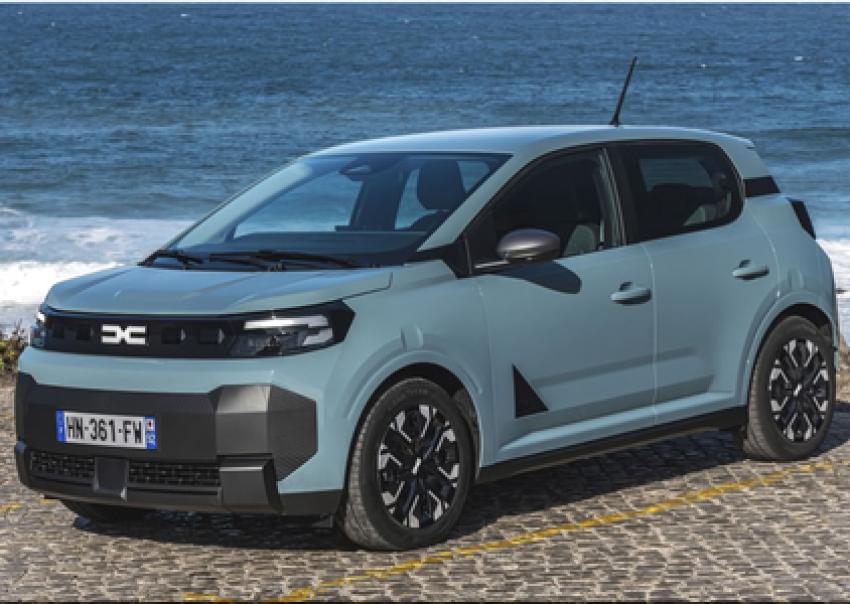
The latest Dacia Spring arrives with a refreshingly simple idea: make an electric car that everyday people can afford, charge quickly, and drive without needing a financial adviser to explain the monthly payments.
That sounds obvious. Yet much of the EV industry appears convinced that every battery must support a transcontinental expedition and every dashboard should resemble the control room of a space agency.
The new Dacia Spring electric car heads in the opposite direction. It weighs less, consumes less energy, uses a smaller battery, and costs less to run. In a market crowded with increasingly heavy electric vehicles, Dacia's lightweight approach feels almost rebellious.
Dacia Spring 80hp: Key Specifications
At the centre of the new Spring sits an upgraded electric motor producing 80hp (60kW) and 175Nm of torque.
Those numbers will not cause supercar manufacturers to lose sleep. They will, though, make urban driving noticeably easier. Electric motors deliver maximum torque immediately, giving the Spring brisk responses at traffic lights and busy junctions where drivers actually spend most of their time.
The key specifications include:
- 80hp (60kW) electric motor
- 175Nm torque
- Front-wheel drive layout
- 27.5kWh LFP battery
- Up to 250km WLTP range
- Top speed of 130km/h
- Optional 50kW DC fast charging
- Charging from 15% to 80% in 28 minutes
Looking at the data, the real headline is efficiency rather than performance. Dacia focused on reducing energy consumption instead of chasing acceleration figures that owners rarely use outside internet arguments.
Why Dacia Chose a Smaller Battery
Battery size has become the automotive version of smartphone camera megapixels. Bigger numbers attract attention regardless of whether they improve everyday ownership.
Dacia chose a different path.
The Spring uses a 27.5kWh lithium iron phosphate battery, commonly known as LFP. This battery chemistry provides excellent durability, strong thermal stability, and lower manufacturing costs.
From an engineering perspective, a smaller battery creates several advantages.
Less battery mass means the vehicle requires less energy to move. Lower weight also reduces tyre wear, braking loads, and charging times. The result is a car that consumes remarkably little electricity during daily use.
Most drivers travel far less than 50km per day. For those journeys, carrying a battery pack twice as large makes about as much sense as bringing camping equipment to collect a takeaway pizza.
Range and Real-World Efficiency
The Dacia Spring EV delivers up to 250km of WLTP driving range from its compact battery pack.
Efficiency remains one of the car's strongest selling points. Official consumption figures sit between approximately 12.7 and 12.9kWh per 100km, placing the Spring among the most energy-efficient electric vehicles available in Europe.
That figure deserves attention because battery size alone tells only part of the story. An efficient EV extracts more distance from each kilowatt-hour consumed.
In simple terms, the Spring achieves respectable driving range without carrying hundreds of kilograms of extra battery cells.
28-Minute Charging Changes the Ownership Experience
Charging remains one of the biggest concerns for first-time EV buyers.
Dacia addresses that concern through its optional Fast-Charge Pack, which introduces 50kW DC charging capability.
Charging performance varies depending on the power source:
- A standard domestic socket requires roughly 9 hours to charge from 15% to 80%.
- A reinforced household socket reduces that time to approximately 5 hours and 40 minutes.
- A 7kW home wallbox completes the same charging session in around 2 hours and 55 minutes.
- An 11kW AC charger lowers charging time further to approximately 1 hour and 55 minutes.
- A 50kW DC fast charger replenishes the battery from 15% to 80% in only 28 minutes.
A 28-minute charging stop is conveniently short. It is enough time to stretch your legs, buy a coffee, discover the coffee costs more than expected, and return to find the battery nearly ready to go.
Running Costs: Where the Spring Shines
The most attractive feature of the Dacia Spring electric car may not be visible from the driver's seat.
It appears on monthly electricity bills.
Using an electricity rate of approximately €0.25 per kWh, operating costs remain impressively low.
A distance of 100km requires about €3.18 worth of electricity. Covering 500km increases that figure to roughly €15.88. Driving 1,000km costs about €31.75, while an annual distance of 10,000km requires approximately €317.50 in electricity.
By comparison, a petrol-powered supermini consuming 5.5 litres per 100km at €1.70 per litre would cost around €935 for the same annual mileage.
Petrol stations have their strengths. Keeping money in your bank account is not always one of them.
Interior Technology Without Screen Overload
The Spring's interior mirrors the efficiency-focused philosophy found throughout the vehicle.
Dacia included technology that drivers genuinely use while avoiding unnecessary digital gimmicks.
Equipment highlights include:
- 7-inch digital driver display
- 10.1-inch infotainment touchscreen
- Wireless Apple CarPlay
- Wireless Android Auto
- Rear-view camera
- Smartphone connectivity functions
- USB charging ports
One refreshing detail involves physical controls. Drivers can still access important vehicle functions without navigating multiple touchscreen menus.
That might not sound revolutionary. Modern vehicle design occasionally suggests otherwise.
Practical Dimensions for City Driving
Compact dimensions remain one of the Spring's strongest advantages.
The vehicle measures 3,855mm in length, 1,722mm in width, and 1,519mm in height. The wheelbase spans 2,492mm, while the turning circle measures 9.9 metres.
These dimensions deliver several practical benefits.
The short overall length simplifies parking in crowded urban environments. The relatively long wheelbase helps maximise interior space. Four passengers fit comfortably for city journeys, while cargo space remains surprisingly useful for a vehicle in this class.
Boot capacity reaches 245 litres, and folding the rear seats creates considerably more storage volume when needed.
For a vehicle shorter than many family sofas, the packaging efficiency is genuinely impressive.
Dacia Spring vs Key Electric Rivals
Affordable electric cars continue attracting attention across Europe.
Compared with competitors such as the Leapmotor T03, Hyundai Inster, and Renault Twingo E-Tech, the Spring occupies a unique position.
The Hyundai Inster offers more battery capacity and longer driving range. The Leapmotor T03 provides additional power. The Renault Twingo E-Tech delivers similar output and range characteristics.
The Spring counters with lower energy consumption, lower ownership costs, lighter weight, and a simpler value proposition.
Where the Spring Wins
- Lower operating expenses
- Excellent efficiency
- Lightweight construction
- Fast charging relative to battery size
- Competitive entry pricing
Where Rivals Hold an Advantage
- Greater maximum range
- Higher power outputs
- Larger battery reserves for extended journeys
The trade-off is clear. Rivals offer more range. The Spring asks a simple question: how often do most drivers actually need it?
Pro Tip: Should You Buy the Fast-Charge Pack?
Drivers who charge primarily at home can comfortably live with the standard charging system.
The optional Fast-Charge Pack makes more sense for owners who:
- Rely on public charging networks
- Regularly drive beyond urban areas
- Live in apartments without dedicated home charging
- Take frequent weekend trips
The extra flexibility improves long-distance usability and can increase resale appeal later in the ownership cycle.
Verdict
The new Dacia Spring 80hp stays focused on the things that matter: efficiency, affordability, ease of charging, and low running costs.
Rather than stuffing the chassis with a battery large enough to power a small neighbourhood, Dacia concentrated on creating a lightweight electric city car capable of travelling up to 250km, charging from 15% to 80% in 28 minutes, and consuming remarkably little energy.
No, it will not dominate drag-race videos.
No, it will not impress that neighbour who treats horsepower figures as a personality trait.
What it will do is carry four people around the city quietly, efficiently, and affordably while demanding very little from the owner's wallet. For many buyers entering the EV market, that is a surprisingly compelling formula.