A handshake can tell you more than a first impression. Researchers have spent decades measuring how hard people can squeeze a handheld device called a dynamometer, then following those people for years. The pattern that keeps appearing is that weaker grip goes with poorer health outcomes later.
That finding is real and well replicated, but it is easy to misread. Grip strength is a signal, not a switch. Here is what the major studies found, why it matters, what it can't tell you, and how a sensible person might use the information, including where the best grip strengthener fits.
Why doctors and researchers use grip
A grip test is quick, cheap and repeatable, and it works as a stand-in for overall muscle strength. Muscle strength matters for mobility, independence and recovery, which is why a ten-second squeeze has become a popular research and screening measure.
What the big studies found
The PURE study measured grip strength in 139,691 adults aged 35 to 70 across 17 countries and followed them for a median of about four years. For every 5 kg lower grip strength, the risk of death from any cause was 16% higher and the risk of cardiovascular death 17% higher. Grip strength was a stronger predictor of all-cause and cardiovascular death than systolic blood pressure.
UK Biobank confirmed and extended the picture in 502,293 people aged 40 to 69, followed for about seven years on average. Each 5 kg lower grip strength was linked to a higher hazard of all-cause death (1.20 in women and 1.16 in men), as well as higher incidence of and mortality from cardiovascular disease, respiratory disease and several cancers. The associations were slightly stronger in younger participants, and adding grip strength modestly improved the prediction of an office-based risk score. The authors said more work was needed to establish whether it is useful in clinical practice.
The Honolulu Heart Program looked at the long game. It measured grip in 6,089 healthy men aged 45 to 68, then followed them for 25 years. Men in the weakest third at baseline had roughly two to three times the risk of developing disability later than men in the strongest third. That study covered only Japanese-American men living in Hawaii, so it can't be assumed to apply to everyone.
Why would grip predict health?
Nobody knows for certain. The most common explanation is that grip reflects overall muscle strength and reserve. The Honolulu researchers suggested that good strength in midlife may give a bigger safety margin above the threshold where disability begins, which helps when illness or inactivity causes strength to fall.
The PURE authors noted something similar for survival: low grip strength was linked to greater vulnerability to dying once a person developed a serious illness. A researcher who reviewed the field wrote that the mechanism linking strength to mortality remains to be explored. In plain terms, weak grip is probably a marker of something broader, such as low fitness, poor nutrition, frailty or underlying disease, and not a cause on its own.
What grip strength can't tell you
It doesn't diagnose anything. These are population findings. A single reading can't tell you whether you are ill.
It isn't proof that squeezing more will extend your life. These studies were observational. PURE's lead author said further research was needed to establish whether efforts to improve muscle strength reduce the risk of death and cardiovascular disease.
Numbers depend on you. Healthy grip varies with body size and weight, and PURE saw differences by ethnicity, so there's no single universal cut-off.
Technique matters. Posture, arm position and the device used all change the reading.
Where clinicians do use it
Grip strength is a first-step screen for sarcopenia, the age-related loss of muscle strength and mass. The European consensus (EWGSOP2) flags probable sarcopenia when grip strength falls below 27 kg for men or 16 kg for women, measured with a dynamometer. Researchers debate whether those cut-offs are set right, since some studies suggest higher ones catch more people at risk. This is a task for a clinician. Don't diagnose yourself from a home device.
What to do with this information
Treat low grip as a prompt, not a verdict. If your grip feels weak, has changed noticeably, or comes with other symptoms such as unexplained weight loss or weakness, mention it to a doctor.
Build overall strength. Because grip reflects whole-body strength, the best things you can do are general resistance training, regular movement and good nutrition, not squeezing a device alone.
Train your hands directly if you want stronger hands. Carries, hangs and a hand gripper all help, and progressive loading works the same here as elsewhere.
Measure consistently. If you track your grip, test the same way each time: same device, seated, elbow bent and tucked at your side, best of a few attempts, and ideally both hands.
Where the best grip strengthener fits
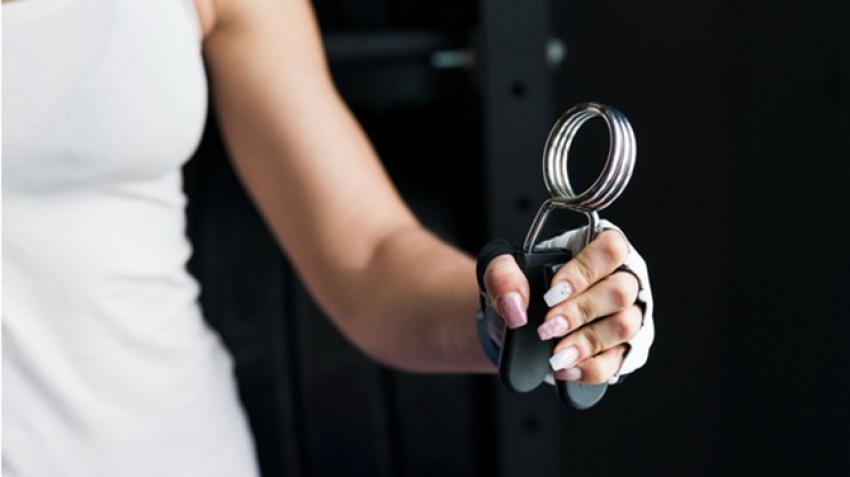
A grip strengthener is a training and tracking tool, not a health treatment. The best grip strengthener for most people has adjustable or graded resistance so you can keep progressing, a handle that fits your hand, and, ideally, some way to see your squeeze force so you can compare sessions over weeks and months. Some digital models log force, which makes your trend visible.
Keep expectations realistic. Using one can build hand strength and give you a number to follow. It can't turn a weak grip into a guarantee of good health, so pair it with general fitness and, where relevant, medical advice. If you have arthritis, a past injury or pain, ask a clinician or physiotherapist before starting.
The takeaway
Grip strength is a simple, inexpensive window into overall strength and resilience, and large studies tie weaker grip to higher risk of disability, disease and early death. It is a marker, though, not a mechanism. Use it to start a conversation with yourself, or your doctor, about fitness. Then build strength where it counts, hands included, with whatever training you will actually keep up.