How Debate, Extempore and Group Discussions Build Confident Communicators
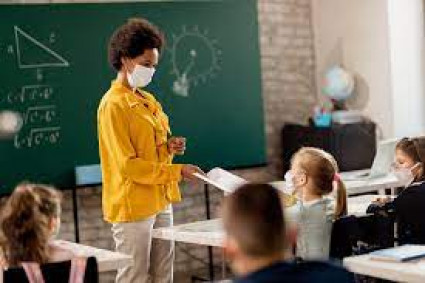
A class 7 student is asked to read out her answer in front of the class. She knows it well. She wrote it herself the night before. But halfway through the first line, her voice goes soft, she rushes the rest, and sits down before the teacher can say anything.
Teachers see this every week. It’s rarely about how much a child knows. More often, the child has just never had to speak in front of people often enough for it to feel normal.
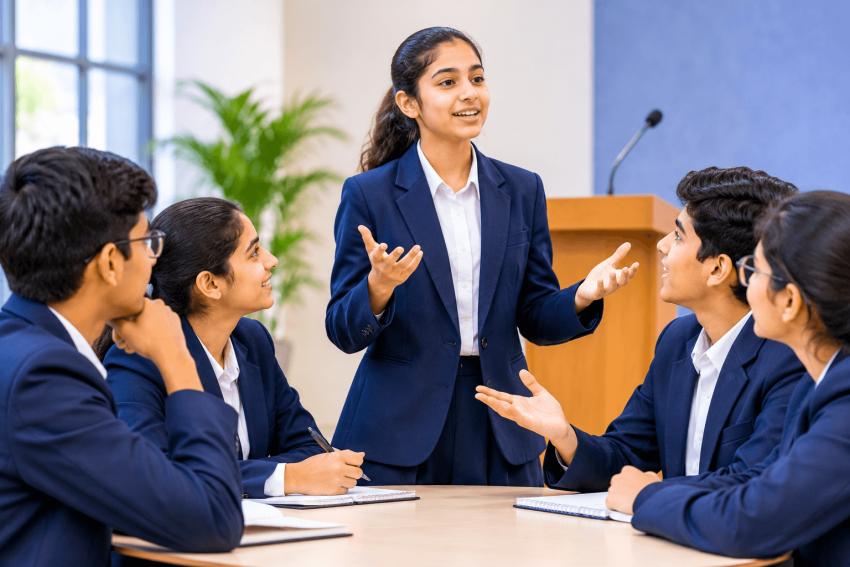
What actually happens in a debate
From the audience, a debate looks like a few students taking turns at a mic. The real work starts days earlier.
Students read up on the motion, often one they didn’t pick. They decide which points are strong enough to use and which will fall apart under a question. Sometimes they’re put on the side they personally disagree with, and that’s when they really have to understand an issue, because they can’t rely on gut feeling.
Then there’s the rebuttal. No notes help much here. A student has to listen to what the other side said, pick out the weak spot and answer it in a minute or so. It’s tough the first few times. By the fifth or sixth debate, most students handle it surprisingly well.
They also learn to disagree without getting rude about it, which is harder than it sounds.
For parents shortlisting the best CBSE school in Ballia, it’s a fair thing to ask whether debates happen throughout the year or only at the annual function.
Extempore, the one everyone dreads
Pick a chit. Read the topic. Maybe “Should homework be banned?” or “Is online learning as good as classroom learning?” One minute to think, two minutes to speak.
Students usually hate it at first. Their minds go blank, they repeat the topic back to the audience, and they say “so” and “basically” far too often. Teachers let them stumble, then give them a few pointers. Start with a clear opinion. Back it up with one example. End on purpose instead of trailing off.
After a few rounds, something clicks. They stop panicking at the start and begin using that one minute properly. It’s good preparation for viva exams and interviews later on, where questions come without warning.
A best CBSE school in Ballia that brings extempore into ordinary class periods, rather than saving it for competitions, makes sure the shy students get their turn too. They’re often the ones who benefit most.
Group discussions
A GD has no queue. Six or eight students, one topic, and fifteen minutes. Whoever wants to speak has to find a gap and step in.
New students tend to either stay silent the whole time or talk over everybody. Neither works. The ones who do well usually listen more than they speak, pick up something another student said, and push it further. Evaluators notice that.
GDs show up later in college admissions, management entrance rounds, and some company interviews. Students who’ve sat through a few dozen in school don’t find them nearly as intimidating.
A note on language
In Ballia, most students move between Hindi and English all day. Speaking activities help with both. Many families choose English medium schools in Ballia Uttar Pradesh because English matters so much in higher studies and jobs, and regular speaking practice is one of the quickest ways to make a student comfortable with it.
The effect outside the hall
Teachers often notice that once students start doing well in debates, other things shift too. They put their hands up more. They don’t mind presenting a project. They’re happier to lead a group or go to an inter-school event.
It’s not so different from what happens on the field. The attention given to sports in Ballia schools in recent years has shown how much children learn from losing close matches and showing up again. A debate lost by two points does something similar.
For parents comparing schools
Lists of the Top 10 CBSE schools in Uttar Pradesh give a general idea of reputation, but sitting through one morning assembly can reveal more.
Check that the school is among recognised CBSE affiliated schools in Ballia Uttar Pradesh; the affiliation number is listed on the CBSE website. And for Classes 11 and 12, the best senior secondary school in Ballia will keep these activities going even as board exams get closer, since that’s exactly when interviews and admissions start.
At Gyan Peethika, speaking activities are part of the regular routine, and more of the top CBSE Schools in Ballia city are moving the same way.
That class 7 student, given a year of this, will probably still feel a little nervous before she speaks. She just won’t sit down halfway through anymore.