

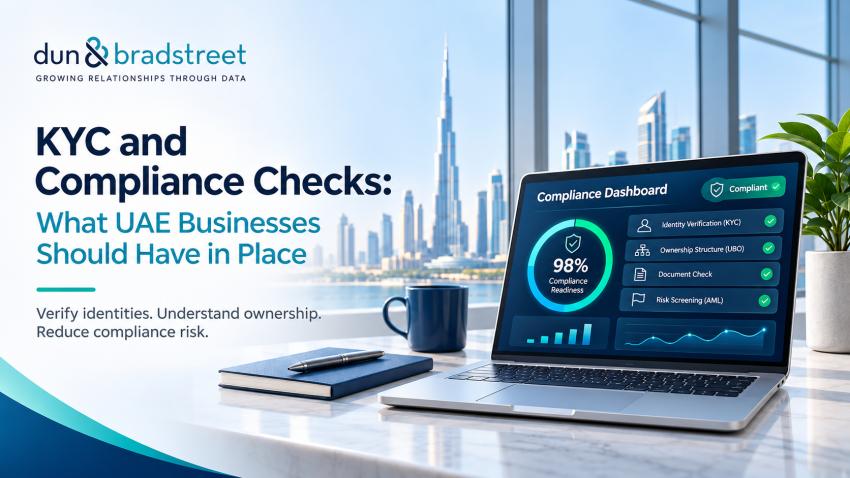
Building reliable business relationships begins with knowing who you are dealing with. For companies operating in the UAE, verifying customer identities, understanding ownership structures, and identifying potential compliance risks are essential parts of responsible business operations.
KYC and Compliance processes help organisations establish customer legitimacy, prevent financial crime, and maintain transparency throughout business relationships. A structured approach to Know Your Customer procedures and Anti-Money Laundering Checks also helps businesses identify potential risks before they develop into serious compliance concerns.
What Is KYC and Why Does It Matter for UAE Businesses?
Know Your Customer (KYC) is the process of identifying and verifying customers before establishing a business relationship and reviewing their information when necessary.
In the UAE, regulated financial institutions and designated non-financial businesses and professions must implement applicable customer due diligence and anti-money laundering controls. The requirements depend on the organisation's activities, regulatory classification, and risk exposure.
Effective KYC procedures help businesses:
Verify customer identities and business legitimacy.
Identify beneficial owners and controlling individuals.
Detect potential financial crime and compliance risks.
Support regulatory compliance and internal governance.
Establish more transparent business relationships.
What Customer Verification Checks Should Businesses Conduct?
Customer verification is the foundation of effective KYC and Compliance procedures.
For individual customers, verification may involve checking identification documents and relevant personal information.
For corporate customers, businesses should consider reviewing:
Trade licences and company registration details.
Registered business addresses and operational information.
Corporate ownership and management structures.
Ultimate Beneficial Ownership (UBO) information.
Authorised representatives and signatories.
Information should be verified using reliable, independent sources where appropriate.
These checks help organisations determine whether customers are legitimate and whether their declared business activities align with available records.
What Compliance Checks Should Be Included During Onboarding?
Customer onboarding should involve more than collecting identification documents. Businesses subject to relevant AML obligations need a risk-based assessment before accepting or continuing certain relationships.
Important onboarding checks include:
Sanctions Screening: Screening customers and relevant connected parties against applicable sanctions lists to identify potential restrictions.
Politically Exposed Person (PEP) Screening: Identifying individuals whose public positions or associations may create heightened compliance risks.
Anti-Money Laundering Checks: Reviewing customer backgrounds, business activities, and relevant financial information to identify potential money laundering concerns.
Customer Risk Assessment: Evaluating risks associated with geographic exposure, industry, ownership complexity, and expected transaction activity.
Higher-risk relationships may require enhanced due diligence and additional verification.
Why Is Ongoing Compliance Monitoring Important?
KYC and Compliance responsibilities do not necessarily end when customer onboarding is completed.
Business circumstances can change. Ownership structures may be updated, companies may enter new markets, and customers may become associated with sanctions or other risk indicators.
Ongoing compliance monitoring should therefore include:
Periodic customer information reviews.
Updated sanctions and PEP screening.
Monitoring relevant transactions and business activities.
Reviewing changes in ownership or company status.
Investigating unusual activity and escalating concerns.
Monitoring frequency and intensity should reflect customer risk and applicable regulatory requirements.
How Can UAE Businesses Strengthen Their KYC and Compliance Framework?
An effective compliance framework combines reliable business information, documented procedures, employee training, clear responsibilities, and consistent monitoring.
Businesses should also maintain appropriate records, review their risk assessment practices, and ensure compliance procedures evolve alongside regulatory requirements.
By integrating customer verification, structured onboarding, Anti-Money Laundering Checks, and ongoing monitoring, UAE businesses can strengthen risk management, support regulatory compliance, and build more trustworthy commercial relationships.