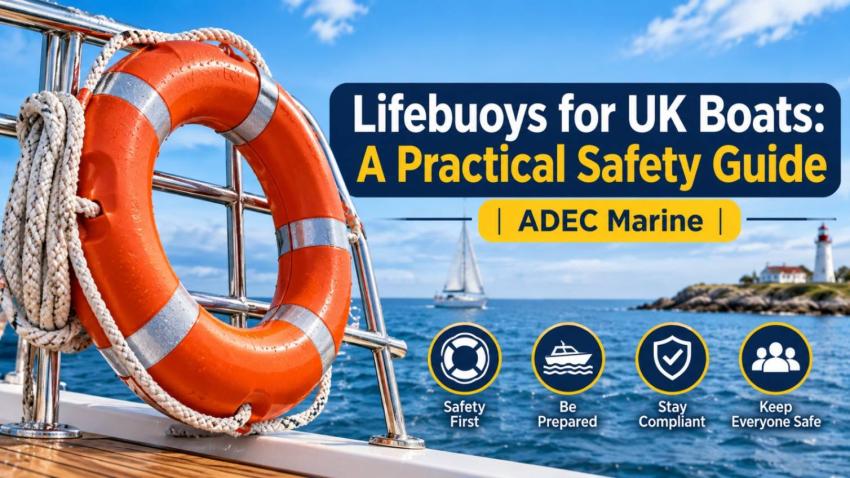
A lifebuoy is one of the most recognisable pieces of marine safety equipment, but its importance goes far beyond simply having a flotation ring onboard. In a man-overboard emergency, a readily accessible lifebuoy can provide immediate support to someone in the water while the crew prepares a recovery.
For UK boat owners, yacht operators, fishing crews and commercial vessel professionals, choosing suitable Lifebuoys is an important part of preparing for unexpected situations at sea. Conditions around the UK coastline can change quickly, and cold water, strong tides and poor visibility can make an emergency particularly challenging.
However, a lifebuoy should never be considered in isolation. It needs to form part of a wider collection of Marine safety equipment, supported by regular inspections and a crew that understands how to use it. This guide explains the different types of lifebuoys, what to consider when choosing one, where to position it and how to maintain it for safer boating.
What Are Lifebuoys and How Do They Work?
Lifebuoys are flotation devices designed to be thrown or deployed towards someone who has fallen overboard. Their buoyant construction helps support a person in the water while the vessel's crew carries out a recovery procedure.
During a man-overboard incident, every moment matters. A crew member should raise the alarm, maintain sight of the person in the water where possible and deploy suitable flotation equipment. A lifebuoy can help mark the person's position and provide something to hold while assistance is arranged.
Most conventional lifebuoys have a circular shape with a central opening and an outer grabline. Their bright colours make them easier to see against the water, while additional features such as reflective tape, lights and buoyant lines can improve their usefulness in particular conditions.
It is important to remember that a lifebuoy is a rescue aid, not a substitute for a properly fitted lifejacket. It is also not a replacement for a planned man-overboard procedure or appropriate crew training.
Different Types of Lifebuoys Used on UK Boats
Not every vessel has the same requirements. A small recreational boat, a sailing yacht and a commercial fishing vessel may need different arrangements depending on their size, design and operating area.
Here are some common lifebuoy types and features to consider.
1. Traditional Ring Lifebuoys
Ring-shaped Lifebuoys are widely recognised on boats, ships, marinas and waterfront facilities. Their circular design provides a buoyant aid that can be thrown towards someone in the water.
When selecting a ring lifebuoy, consider its visibility, construction, suitability for the vessel and whether it needs additional fittings such as a buoyant line or light.
2. Horseshoe Lifebuoys
Horseshoe-shaped flotation aids are commonly associated with recreational sailing and yacht use. Their open design can make them convenient to handle and deploy from certain vessels.
However, buyers should check the product's intended use and applicable standards. A lightweight horseshoe buoy is not automatically equivalent to a certified ring lifebuoy for every vessel or operating category.
3. Lifebuoys with Buoyant Lines
A buoyant line can help connect the lifebuoy to the vessel or assist with bringing the flotation aid towards someone in the water. Its length and suitability should match the vessel's requirements.
The line must be stored so it can be deployed without becoming tangled or obstructing other equipment.
4. Lifebuoys with Lights and Reflective Markings
Visibility becomes especially important during darkness, poor weather or reduced visibility. Some lifebuoys can be fitted with self-igniting lights, while reflective markings can help make equipment easier to identify.
Whether a light or another attachment is required depends on the vessel's applicable rules and intended operation.
How to Choose the Right Lifebuoy for Your Vessel
Choosing suitable Lifebuoys involves more than comparing prices or selecting a familiar design. The equipment should be appropriate for the vessel, the conditions in which it operates and the people responsible for using it.
Consider these factors before purchasing:
Vessel type: A recreational motorboat, sailing yacht, fishing vessel and commercial craft may have different equipment requirements.
Operating area: Consider whether the vessel operates on inland waterways, in coastal waters or further offshore.
Visibility: Look for suitable high-visibility colours and reflective features where appropriate.
Construction: Check the product's durability, buoyancy and suitability for regular exposure to marine conditions.
Deployment: Make sure the lifebuoy can be released and thrown quickly when required.
Additional fittings: Check whether a buoyant line, light, drogue or other attachment is required.
Storage: Choose a position where the equipment is protected but remains easy to reach.
Before buying, check the manufacturer's specifications and confirm that the product meets the requirements applicable to your vessel. This is particularly important for commercial operators and owners of vessels subject to specific safety codes.
UK Lifebuoy Regulations and Marine Safety Requirements
UK requirements for life-saving appliances depend on factors such as vessel length, classification, intended use and area of operation. It is therefore important not to assume that every boat has identical legal obligations.
The Royal Yachting Association (RYA) explains that equipment requirements for UK pleasure vessels vary according to vessel size and type, as well as where the boat operates. Its guidance also distinguishes pleasure vessels from vessels in commercial use.
The Maritime and Coastguard Agency (MCA) provides guidance on pleasure vessel regulations and exemptions through MGN 599. Commercial vessels, including fishing vessels and small commercial craft, may be subject to separate codes and requirements.
Before selecting or replacing Marine safety equipment, vessel owners should:
Identify the vessel's classification and operating category.
Check the relevant MCA code or applicable regulations.
Confirm the required number and type of lifebuoys.
Check whether buoyant lines, lights, reflective markings or other fittings are specified.
Keep relevant inspection and maintenance records where required.
For example, the UK Code of Practice for small fishing vessels under 15 metres includes specific provisions for lifebuoy numbers, buoyant lines, identification and accessibility. These requirements should not be assumed to apply to every recreational boat.
When in doubt, consult the relevant MCA guidance or a suitably qualified marine safety professional.
Where Should You Position Lifebuoys on a Boat?
Having suitable equipment onboard is only useful if the crew can reach it quickly. Lifebuoys should be stored in visible, accessible positions where they can be released without delay.
Consider the following good practices:
Position lifebuoys where crew members can reach them quickly from working and open deck areas.
Avoid placing them behind locked compartments, stored supplies or other equipment.
Use suitable mounting arrangements that keep them secure during normal operation but allow rapid release.
Make sure crew members and regular passengers know where the equipment is kept.
Check that attached lines and fittings do not become tangled or obstruct deployment.
The exact positioning should take account of the vessel's design and applicable requirements. On commercial and fishing vessels, equipment placement should also support the vessel's documented emergency procedures.
How to Inspect and Maintain Lifebuoys
Marine conditions can be demanding. Saltwater, sunlight, temperature changes and repeated handling can gradually affect equipment. Regular checks help identify problems before the equipment is needed.
A practical inspection should include the following:
Check the buoy itself: Look for cracks, damage, deterioration or signs that the material has lost its intended condition.
Inspect grablines and attachments: Check for loose fittings, worn sections, knots or damage that could interfere with use.
Test lights according to manufacturer instructions: Check expiry dates, battery condition and activation arrangements where applicable.
Examine reflective markings: Make sure they remain secure and visible.
Check storage arrangements: Confirm that the lifebuoy can be released quickly and is not obstructed.
Follow manufacturer guidance: Replace or service components according to the manufacturer's instructions and any applicable inspection requirements.
Keep a record of checks where required by the vessel's safety management arrangements. If equipment is damaged or its condition is uncertain, do not assume it is ready for emergency use.
Other Marine Safety Equipment Every UK Vessel Should Consider
Lifebuoys are an important part of onboard preparedness, but they work best alongside other suitable Marine safety equipment. Different products serve different purposes, helping crews respond to emergencies, communicate with rescue services and protect people onboard.
Depending on the vessel and its operating conditions, important equipment may include:
Lifejackets: Provide personal flotation support and should be suitable for each person onboard.
Liferafts: Offer emergency survival capacity when abandoning a vessel becomes necessary.
VHF marine radios: Allow communication with other vessels and coastguard services.
Marine flares and distress signals: Help attract attention during an emergency, subject to appropriate carriage and use requirements.
First aid kits: Provide supplies for dealing with injuries and medical incidents.
EPIRBs and PLBs: Help transmit distress alerts and support the location of vessels or individuals.
Dan buoys: Can help mark a man-overboard position and improve visibility.
The correct combination depends on the vessel's category, voyage and applicable regulations. Equipment should be maintained, accessible and supported by suitable training.
Marine Safety Supplies for Different Types of UK Vessels
The requirements of a recreational boat owner are not necessarily the same as those of a commercial operator. When sourcing Marine safety supplies, consider the vessel's purpose and the conditions in which it operates.
Recreational boats: Owners should focus on accessible flotation aids, suitable lifejackets, communication equipment and emergency supplies appropriate to their trips.
Sailing yachts: Man-overboard arrangements, lifebuoys, lights, dan buoys and other recovery aids deserve particular attention, especially when sailing with a small crew.
Commercial vessels: Operators should check the relevant safety code, certification requirements, equipment specifications and inspection arrangements.
Fishing vessels: Working on deck can create additional man-overboard risks. Accessible rescue equipment, clear procedures and regular crew familiarisation are important.
A well-planned selection of Marine safety supplies should reflect real operating conditions rather than relying on a generic checklist.
Choosing Reliable Marine Safety Supplies from ADEC Marine
Sourcing suitable equipment is an important part of maintaining a safe vessel. Boat owners, yacht operators and marine professionals should consider product specifications, intended applications, durability and relevant standards before making a purchase.
ADEC Marine is a relevant point of contact for readers looking into marine safety products and supplies. When reviewing available options, consider how each item fits into your vessel's wider safety arrangements, whether it is appropriate for the intended use and what maintenance it may require.
Whether you are replacing existing Lifebuoys or reviewing your wider Marine safety equipment, take time to check the requirements that apply to your vessel. A suitable product, correctly stored and regularly inspected, is more useful than equipment that is difficult to access or unsuitable for the conditions.
Conclusion: Make Lifebuoy Safety a Priority on Every Voyage
A suitable lifebuoy can play an important role in a man-overboard emergency, but having one onboard is only the starting point. It must be appropriate for the vessel, stored where it can be reached quickly and maintained in a condition that supports reliable use.
For UK boat owners, yacht operators, fishing crews and commercial vessel professionals, reviewing Lifebuoys, Marine safety equipment and Marine safety supplies should be part of routine safety planning. Check the requirements that apply to your vessel, familiarise the crew with emergency procedures and inspect equipment regularly.
With suitable preparation and dependable equipment from suppliers such as ADEC Marine, vessel operators can take a more informed approach to onboard safety and emergency readiness