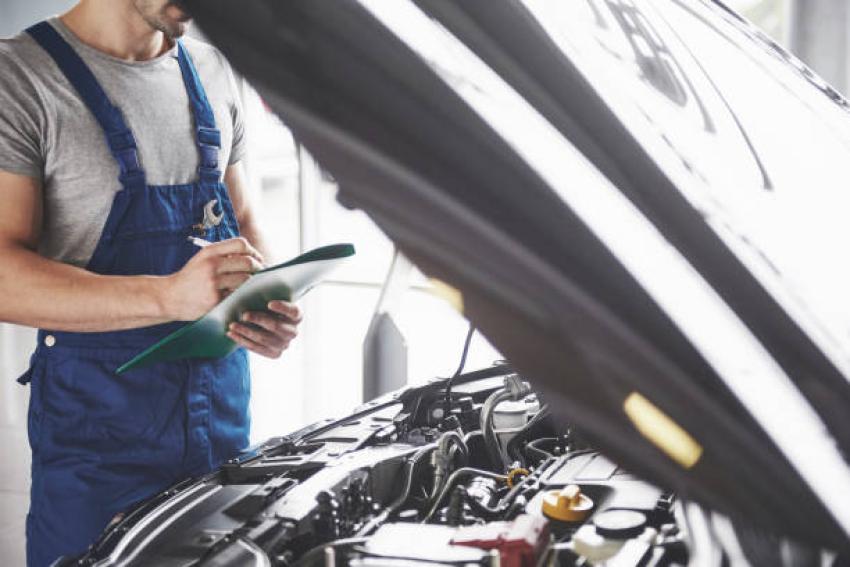
What goes on under the vehicle during an MOT? Booking an MOT in Reading gives drivers peace of mind that their car complies with the UK's basic safety and environmental regulations. It's a legal requirement from the age of three. It checks that the car's essential parts work properly before a small fault becomes a major one.
A valid inspection certificate confirms the car was roadworthy at the time of inspection. It doesn't replace regular maintenance, but it does set a standard of mechanical soundness. If you skip the test, you make the vehicle illegal to drive and could face a fine of up to £1,000. The annual test keeps unsafe cars off the road and protects everyone else.
The Role of the MOT in UK Road Safety
The Driver and Vehicle Standards Agency has very clear rules for every test centre. An MOT test checks all key safety systems in a vehicle (seatbelts, airbags, body structure, steering linkages, etc.). Technicians carry out the test in accordance with a standard manual, so every car is subject to the same level of scrutiny, regardless of make or model. The end result is that every car is tested to the same basic standard of highway safety.
During the MOT in Reading, the tester looks for anything that would compromise active control or passenger protection. Rust near a suspension mount is a classic example of something that could weaken the chassis during cornering. A damaged seatbelt web would not hold a passenger properly in a sudden impact. The point is to find these issues early so you don't end up in an accident because of a broken component.
Structural Soundness and Corrosion Checks
Can a small patch of rust right under the sills actually result in an MOT failure? The test checks the chassis's load-carrying areas, the floor pans, and the suspension mounts for severe corrosion. The inspector will measure any rust within 30 cm of any safety-critical mounting point. Rusty, weak metal can cause a fail on the test, as it can allow the chassis to bend too easily in a crash. Thin metal is the problem.
Technicians use a specialist blunt tool to tap lightly and confirm the metal is solid and sounds. Surface rust is noted as an advisory, warning the driver that further rusting is likely. Severe rot that flakes away will, of course, leave the suspension unstable and compromise crash energy absorption. Catching rust early is key to keeping the chassis strong and protecting occupants in a crash.
Braking Performance and Hydraulic Efficiency
Brakes are the most important safety system to test. The wheels are mounted on a calibrated roller brake tester that measures each wheel's effort and the total stopping force. Brake effectiveness is then calculated as a percentage of the vehicle weight. The tester will also check for brake imbalance (one side biting harder than the other and pulling the car sideways).
The tester performs a close visual inspection of the hydraulic hardware under the ramp. The tester checks the flexible brake hoses for cracks, bulges, and leaks. The rigid metal pipework has to be free of excessive corrosion. A soft pedal clearly indicates fluid contamination, and the MOT driver can address it by booking in for an MOT in Reading and a car service in Reading.
Suspension, Steering, and Tracking Controls
The steering and suspension systems determine how well a car handles bumps and stays on its line. In the test, a fitter uses hydraulic shaker plates to put the joints under stress and reveal any hidden play. The steering rack ends, track rod ends, and ball joints all have to be solid, with no play. Any play will result in vague steering, and the car will wander at dual carriageway speeds.
Rubber suspension bushes isolate the metal arms from the subframe, but they all go bad with age. Once they've torn, they alter the camber, and the tyre sits at an angle to the vertical. That will take the camber away from the factory specification and reduce the contact patch on the asphalt. An MOT in Reading will check the steering linkages to confirm the handling.
Tyre Standards and the Science of Wet Grip
Tyres link the vehicle chassis to the road surface. The MOT in Reading requires a minimum of 1.6 mm of tread across the central three-quarters of the tyre's circumference. The tread grooves pump water away from the contact patch. Once the tread wears down, you get aquaplaning and lose all steering control.
Inspectors run a number of key checks on every tyre:
Testers measure the tread depth in the middle of the tread to ensure it's legal.
Inspectors check the tyre sidewalls for deep cuts, tears, and exposed structural cords.
Technicians check the rubber carefully for bulges that indicate internal carcass failure.
Testers verify that tyres fitted on the same axle share the same construction type.
Such damage leaves the tyre susceptible to a sudden blowout at motorway speeds. Testers ensure the matching tyres are the same build. Matching tyres will of course keep the car stable on the slick.
Emissions Standards and Environmental Health
The MOT test also serves a public health purpose by checking exhaust fumes. A probe in the tailpipe measures CO and hydrocarbon levels and checks lambda sensor performance at a range of engine speeds. For diesel vehicles, an opacity meter measures soot density in the exhaust gas. Too much soot or unburnt petrol indicates poor combustion, a clogged particulate filter or leaking fuel injectors.
Exhaust that escapes through cracked joints prior to reaching the catalytic converter will fail the test. The catalytic converter contains hot metal that cleans the exhaust gases (turning noxious fumes into water vapour and CO2). The emissions test ensures older, high-mileage vehicles aren't a source of urban pollution. It also helps drivers reduce fuel consumption by ensuring the fuel burns completely.
Final Takeaway
The annual MOT is a key factor in preventing mechanical accidents on our roads. The tester checks the structure, brakes, steering, tyres, and emissions. If you sort out the advisories quickly, you'll avoid a test failure. Regularly checking your fluids and tyre pressures will also help prevent a breakdown on the road. It's all about passenger safety, reducing the repairs you have to do, and keeping the car running reliably.
Book an inspection at reading-garage.co.uk to keep your car safe throughout Reading.
Frequently Asked Questions
Can a driver use a grace period after an MOT expires?
The UK has no grace period on an expired MOT. Once it's expired, you're not allowed to drive the car on the road. The only exception to that is if you're driving to a pre-booked test or to a garage for pre-booked repairs.
What is the difference between major and dangerous defects?
A serious fault which would fail the vehicle at either a safety or emissions test. You can still drive the vehicle if the current MOT is valid. A dangerous fault is one which presents an immediate and direct risk to road safety. A vehicle with a dangerous fault must not be driven away from the test centre in any circumstances.
Does an MOT certificate in Reading prove that a car is completely mechanically sound?
The test simply confirms that the vehicle met the minimum statutory requirements at the time of the test. It doesn't in any way assess the internal condition of the engine, the state of the gearbox, the condition of the clutch or the life of the fluids. Cars still need servicing to stay reliable and avoid premature mechanical failures.
When should a car have its first MOT test?
A brand-new car needs its first MOT exactly three years after its first registration date. After that, it is tested every twelve months. Drivers can test up to one month early to keep the renewal date, often booking alongside a car service at a workshop.