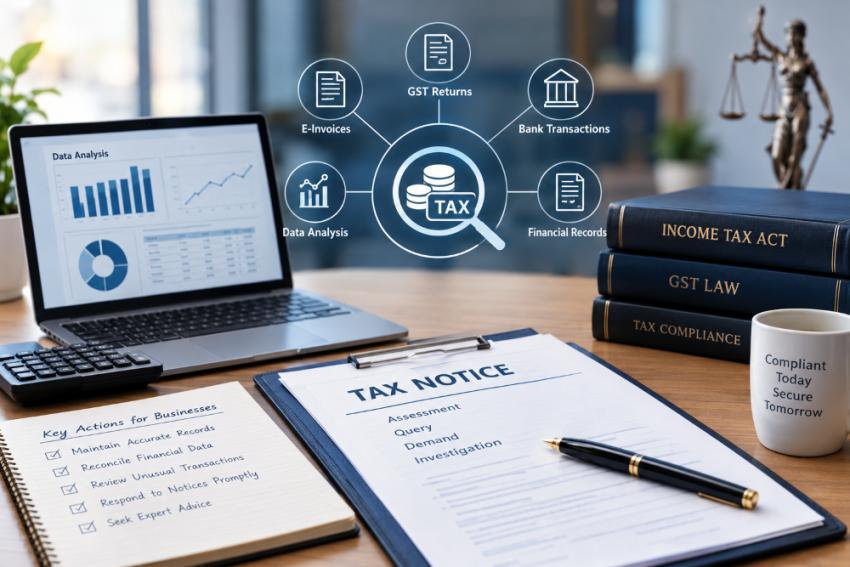
Tax enforcement is becoming increasingly dependent on digital records, automated systems and data analysis. Tax authorities can now compare information from multiple sources to identify inconsistencies, detect unusual transactions and assess whether businesses are meeting their tax obligations. As a result, companies may face scrutiny even when they believe their tax returns and financial statements are in order.
For businesses operating in India, this shift has important implications. The use of Goods and Services Tax (GST) data, income tax information, electronic invoices and financial transaction records allows authorities to examine business activities more closely. A mismatch between two records may lead to a query, a notice or further investigation. Understanding how data driven tax enforcement works can help businesses improve their compliance processes, respond to tax queries and reduce the risk of avoidable disputes.
What Is Data Driven Tax Enforcement?
Data driven tax enforcement refers to the use of digital information, analytical tools and technology to identify potential tax irregularities. Instead of relying solely on manual reviews or conventional audits, authorities can examine large volumes of information to identify transactions or reporting patterns requiring further scrutiny. In India, the GST system provides several examples of this approach. Tax authorities can compare details reported in GST returns with information available through the e invoice system, e way bills and other relevant records. Differences in reported turnover, input tax credit claims or transaction details may attract attention.
Income tax administration also relies on information received from banks, financial institutions, employers and other reporting entities. Information available through the Annual Information Statement and Form 26AS can help taxpayers and authorities examine reported income, tax deducted at source and certain financial transactions. However, an inconsistency does not automatically establish tax evasion. Differences may arise from reporting errors, timing differences, amendments or legitimate commercial arrangements. Data analysis can identify potential risks, but the facts and applicable law remain important when determining whether a tax liability or violation exists.
Why Are Tax Authorities Increasingly Using Data Analysis?
Digital tax reporting has created substantial amounts of structured information. Reviewing every transaction manually would require considerable time and resources. Data analysis helps authorities identify cases requiring closer examination and allocate enforcement resources more efficiently. For example, a business may report a particular level of turnover in its GST returns, while its electronic invoices indicate a different figure. Such a difference may require an explanation. Similarly, input tax credit claims may be examined against the relevant supplier information and statutory conditions.
Authorities may also look for unusual patterns in refund claims, repeated return amendments, unexplained differences between financial statements and tax filings, or transactions involving businesses whose registrations have been cancelled. These indicators are not conclusive evidence of wrongdoing. Their significance depends on the circumstances, supporting records and applicable legal provisions. For businesses, the important change is the need to maintain consistency across reporting systems. Accounting entries, invoices, tax returns and supporting documents should provide a coherent explanation of the company's commercial activities.
Which Business Activities May Attract Greater Scrutiny?
Businesses with complex supply chains, high transaction volumes or multiple registrations may face greater challenges when reconciling their tax information. Even a relatively small reporting error can become difficult to resolve when it affects several returns or transactions. Input tax credit is one area requiring particular attention under GST law. Businesses must satisfy the applicable statutory conditions before claiming credit. They should also maintain appropriate tax invoices, records of receipt of goods or services and evidence supporting the relevant transactions.
Differences between the books of accounts and GST returns may also require investigation. For instance, a credit note recorded in the accounting system but omitted from a relevant return could create an inconsistency. Likewise, incorrect classification of supplies or errors in reporting taxable turnover may affect the tax position. Cross border transactions can create additional complexity. Import and export records, foreign remittances, customs documentation and tax reporting may need to be reviewed together, depending on the transaction and the applicable law. Businesses should therefore assess the accuracy of their records before filing returns rather than relying entirely on notices or queries to reveal discrepancies.
How Can Businesses Prepare for Data Based Tax Scrutiny?
A reliable compliance process begins with accurate record keeping. Businesses should regularly reconcile their accounting records with GST returns, electronic invoices, e way bills and other relevant documents. The frequency of these checks should reflect the volume and complexity of their transactions. Automated accounting systems can help identify missing entries, duplicate invoices and differences in reported figures. However, automation is not a substitute for professional review. Incorrect source data or poorly configured software can produce misleading results.
Companies should also establish clear responsibilities for reviewing tax filings. Finance teams need to understand how transactions are recorded, who approves adjustments and how errors are corrected. Supporting documents should be stored securely and remain accessible when an explanation is required. Another useful measure is to maintain a documented record of material tax decisions. Where a transaction involves an unusual structure, a disputed classification or an uncertain interpretation of the law, the business should preserve the relevant contracts, calculations and reasoning. These practices make it easier to explain discrepancies and demonstrate how tax positions were determined.
What Should a Business Do After Receiving a Tax Notice?
Receiving a tax notice does not necessarily mean the business has committed an offence. Authorities may seek clarification, request documents or ask the taxpayer to explain a difference identified through data analysis. The first step is to examine the notice carefully. The business should identify the issuing authority, the legal provision cited, the relevant tax period, the issue under examination and the deadline for responding. The underlying information should then be checked against the company's books, invoices, returns and other supporting records. If the discrepancy arises from an error, the business should determine whether correction is legally available and whether any additional tax, interest or penalty consequences may follow.
A response should address the specific questions raised and include relevant evidence. General explanations without supporting records may not resolve the concern. Equally, businesses should avoid making unsupported admissions or submitting documents without understanding their relevance. Where the notice raises a substantial liability, involves several tax periods or alleges deliberate suppression, obtaining advice from tax enforcement dispute lawyers can help the business assess its legal position and prepare an appropriate response. Businesses should also retain copies of the notice, the response, supporting documents and proof of submission. Missing a statutory deadline may limit available options or complicate the proceedings.
Can Data Driven Tax Enforcement Lead to Disputes?
Yes. Disputes may arise when authorities interpret a transaction differently from the taxpayer, rely on incomplete information or draw conclusions from discrepancies without considering the full commercial context. For example, a difference between financial records and tax returns may result from a timing issue rather than an attempt to conceal turnover. Similarly, a transaction appearing unusual in an automated analysis may have a legitimate commercial explanation supported by contracts and payment records.
Taxpayers are entitled to respond in accordance with the applicable procedure. Depending on the nature of the proceedings, relevant safeguards may include an opportunity to explain the facts, access to material relied upon where legally required, and a reasoned decision by the competent authority. The precise remedies available depend on the legislation, the type of notice and the stage of the proceedings. A business should distinguish between a routine information request, an assessment proceeding, a demand for tax and an investigation involving allegations of fraud or evasion. Where an order creates a disputed liability, the company should examine the available statutory remedies and limitation periods promptly.
Why Should Tax Compliance Be Part of Corporate Governance?
Tax compliance should not be treated as an isolated accounting responsibility. It forms part of a company's wider approach to financial controls, risk management and regulatory governance. Senior management should understand the principal tax risks affecting the business, including recurring reporting errors, weaknesses in supplier verification and gaps in documentation. Internal reviews can help identify problems before they develop into formal disputes. Businesses with several entities or registrations should also establish consistent procedures for sharing financial information and resolving differences between local accounts and consolidated reporting. Responsibility for reviewing unusual transactions should be clearly assigned.
In more complex organisations, corporate regulatory compliance lawyers can help assess how tax obligations interact with contractual commitments, internal governance procedures and other regulatory requirements. Legal review is particularly useful when a proposed business arrangement raises questions about tax treatment or potential exposure to enforcement action. A strong compliance framework does not guarantee freedom from scrutiny. It does, however, improve the company's ability to identify errors, explain legitimate transactions and respond effectively when questions arise.
Conclusion
Data driven tax enforcement is changing how tax authorities identify inconsistencies and examine business transactions. Digital invoices, financial information, tax returns and other records can be analysed together, making accurate reporting and reliable documentation increasingly important. Businesses should respond by strengthening reconciliations, reviewing unusual transactions, maintaining supporting evidence and addressing notices within the prescribed timelines. They should also recognise the difference between a data discrepancy and a proven tax violation. Ultimately, effective tax compliance requires more than filing returns on time. It requires a clear understanding of the company's transactions, consistent financial records and a structured approach to resolving tax concerns before they escalate into disputes.