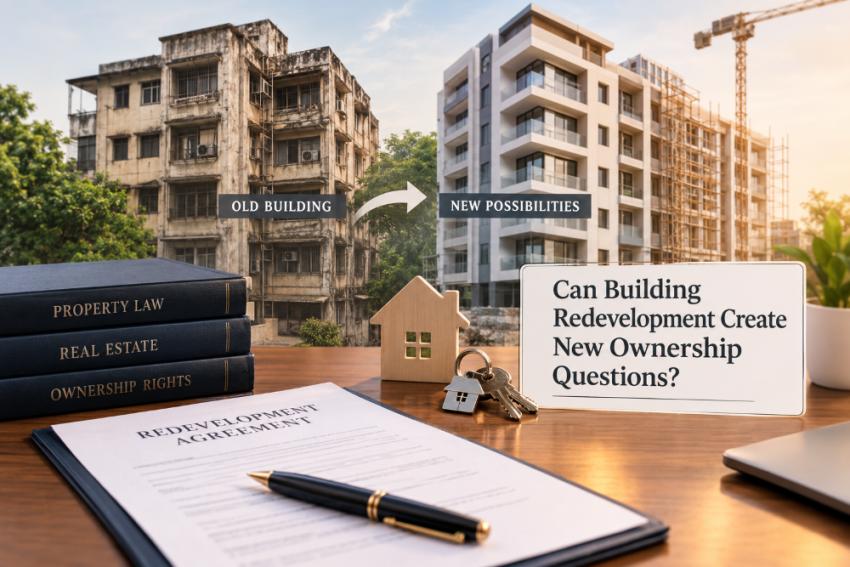
Building redevelopment is often seen as a practical solution to ageing infrastructure, growing housing demand and the need for modern amenities. Older residential buildings may require structural repairs, better facilities or more efficient use of available land. Redevelopment can address these concerns by replacing an existing structure with a newer building designed to meet present day needs. However, the process involves more than demolishing an old building and constructing a new one. It can raise important questions about property ownership, existing rights, allocation of new flats and the legal interests of residents, developers and other stakeholders.
These questions become particularly significant when a building has multiple owners, inherited properties, disputed title documents or unclear redevelopment agreements. Even where residents agree to redevelopment, disagreements may arise over the rights they hold before construction and the benefits they should receive afterwards. Understanding these issues early can help property owners make informed decisions and reduce the risk of lengthy disputes.
How Does Building Redevelopment Affect Existing Ownership Rights?
Redevelopment does not automatically erase existing ownership rights. Instead, it changes the physical structure and may alter the legal arrangements through which owners exercise their rights. For example, an individual may own a flat in an older residential building along with an undivided interest in the land or common areas. Following redevelopment, the individual may receive a new flat with a different carpet area, access to additional facilities or revised rights over common spaces.
The central question is whether the new arrangement adequately reflects the owner's existing legal entitlement and the terms agreed upon for redevelopment. The answer depends on the title documents, applicable property laws, the nature of ownership and the redevelopment agreement. Ownership of a flat, rights in common areas and interests in the underlying land may be governed by different documents and legal provisions. Consequently, redevelopment requires careful examination of existing rights before the original structure is removed.
Why Can Ownership Records Become Complicated?
Property records are not always complete or consistent, particularly in older buildings. Some properties have changed hands several times through sale deeds, inheritance, gifts or family settlements. Others may have undergone informal transfers without proper registration or mutation of records. Redevelopment can bring these inconsistencies to the surface. Consider a building where one flat has been inherited by several family members, but the municipal records continue to show the name of the deceased owner. If the redevelopment process begins, questions may arise about who is authorised to sign the agreement, receive compensation or claim the replacement flat.
Similarly, differences between registered documents, society records and municipal entries can create uncertainty about ownership. Mutation records may help establish the administrative history of a property, but they do not, by themselves, conclusively establish title. Before redevelopment proceeds, the parties should identify the lawful owners, examine the chain of title and determine whether any mortgages, court orders, pending claims or third party interests affect the property. Early verification can prevent ownership disputes from delaying the project or affecting the allocation of replacement premises.
Can Redevelopment Change the Rights of Flat Owners?
The terms of a redevelopment arrangement can significantly influence the rights and obligations of existing flat owners. These arrangements may provide for replacement accommodation, additional area, temporary accommodation during construction, rent payments or compensation. Disputes can arise when the agreed benefits are unclear or when the final construction differs from the original proposal. For instance, an owner may expect a replacement flat of a particular carpet area, while the developer calculates the entitlement using a different measurement. Disagreements may also concern parking spaces, balconies, storage areas, access to lifts or the use of common facilities.
A redevelopment agreement should clearly identify the existing premises, the replacement premises and the benefits promised to each owner. It should also address the timeline for vacating the property, construction milestones, payment obligations and the consequences of delay. Owners should examine whether the agreement protects their interests if the developer fails to complete construction or changes the approved plans. The distinction between ownership rights and contractual promises is important. A promise to provide additional space does not necessarily establish ownership of a particular area unless the relevant documents and applicable law support the entitlement.
What Happens When Owners Disagree About Redevelopment?
Not every owner will have the same priorities. Some may favour redevelopment because of structural concerns, while others may prefer repairs or may be unwilling to relocate temporarily. Disagreements may also arise over the proposed developer, the distribution of benefits, the authority of a housing society or the validity of resolutions passed by its members. The legal position depends on the type of property, the governing legislation, the society's rules and the applicable approval requirements. A majority decision does not necessarily resolve every legal question, particularly where statutory safeguards, individual property rights or procedural requirements apply.
In India, redevelopment projects may involve state specific cooperative housing society laws, apartment ownership legislation, municipal regulations and local development control rules. Requirements can differ considerably between states and even between categories of property. Owners should therefore avoid assuming a redevelopment procedure followed in one city will apply in another. Where consent is required, the parties should verify how it must be obtained and recorded. Meeting notices, resolutions, consent documents and agreements should be maintained carefully. If a dispute emerges, these records may help establish whether the process followed the applicable legal requirements.
How Can Developers and Investors Manage Ownership Risks?
Ownership uncertainty can affect not only residents but also developers, investors, lenders and purchasers of newly constructed units. A developer who begins work without verifying title may face claims from heirs, co owners, mortgage holders or other parties asserting rights over the property. Such disputes can delay approvals, restrict construction or complicate the sale of newly developed units. Due diligence should therefore extend beyond checking the identity of the person signing the redevelopment agreement. It should include an examination of title documents, existing encumbrances, development rights, planning permissions and the authority of the parties entering into the arrangement.
For property owners, consulting real estate property lawyers can help identify gaps in ownership records, clarify individual entitlements and assess the legal implications of proposed redevelopment terms. Developers must also distinguish between the right to develop a property and the right to transfer ownership of the resulting premises. These rights may arise from different instruments and remain subject to statutory approvals and contractual conditions. Clear documentation at the beginning can reduce uncertainty for all parties involved.
Why Are Redevelopment Agreements Important for Commercial Properties?
Ownership questions can become more complex when redevelopment involves commercial buildings, mixed use developments or properties held through companies and investment structures. A commercial property may be subject to leases, licences, secured lending arrangements, shareholder agreements or contractual rights held by multiple parties. Redevelopment can affect rental income, possession, business operations and the value of existing investments. For example, a company may own a commercial unit while another entity operates a business from the premises under a lease. Redevelopment could require temporary relocation, early termination of contractual arrangements or negotiations over compensation.
These issues require a coordinated assessment of property rights and business obligations. Corporate real estate lawyers can assist with reviewing development agreements, evaluating contractual exposure and coordinating property transactions with the legal requirements applicable to corporate ownership. The agreement should identify responsibility for obtaining approvals, addressing existing tenancies, managing relocation and resolving disputes. It should also specify how changes in project scope or construction timelines will affect the parties. Without these provisions, a redevelopment project may create disputes even where the underlying ownership is undisputed.
Can New Ownership Disputes Be Prevented?
Although redevelopment can create new legal questions, many disputes can be reduced through proper preparation. The process should begin with a review of ownership documents and the identification of all parties holding a legal or contractual interest in the property. Unresolved inheritance claims, inconsistent records and existing financial charges should be addressed wherever possible before commitments become difficult to reverse.
The redevelopment agreement should then set out the rights of each party in clear language. Replacement accommodation, additional area, compensation, temporary rent, possession dates and completion obligations should be recorded precisely. Parties should also verify the required permissions and ensure the agreement is consistent with applicable planning rules and property legislation. Independent legal review can be particularly valuable where the project involves several owners or substantial financial commitments. Finally, all parties should retain signed agreements, consent records, approved plans, payment records and correspondence relating to material changes. These documents can provide important evidence if disagreements arise during construction or after possession is delivered.
Conclusion
Building redevelopment can improve the safety, functionality and value of existing properties, but it may also expose weaknesses in ownership records and create disagreements over new property rights. The key issue is not simply who owned the original flat or building. It is whether existing entitlements have been properly identified and translated into enforceable rights under the redevelopment arrangement. Clear title verification, transparent agreements and compliance with applicable laws can help residents, developers and investors navigate these challenges. When ownership questions are addressed before construction begins, redevelopment is more likely to proceed with greater legal certainty and fewer avoidable disputes.