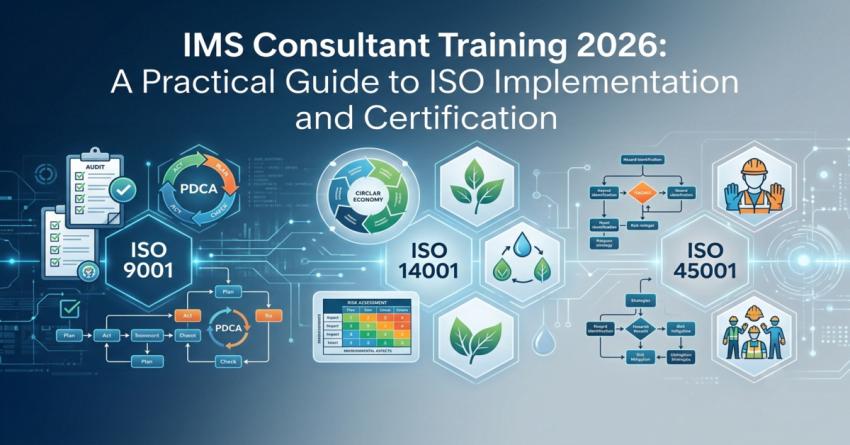
Organizations need effective management systems to maintain quality, manage environmental responsibilities, and protect employee health and safety. An Integrated Management System (IMS) combines these areas within a coordinated framework. IMS Consultant Training - 2026 helps professionals understand ISO requirements, documentation, risk assessment, auditing, and certification preparation.
What Is an Integrated Management System?
An Integrated Management System combines requirements from multiple management system standards to reduce duplication and improve coordination. Organizations can integrate quality management, environmental management, and occupational health and safety processes rather than managing each system separately.
The relevant standards include ISO 9001:2026 for quality management, ISO 14001:2026 for environmental management, and ISO 45001:2018 for occupational health and safety. Applicable editions and requirements should be verified before implementation.
Key Steps in IMS Implementation
A structured approach helps organizations identify gaps, improve processes, and prepare for certification assessment.
1. Conduct an IMS Gap Analysis
An IMS gap analysis compares existing processes, documents, and records against applicable ISO requirements. It identifies weaknesses, prioritizes improvements, and helps consultants develop a practical implementation plan.
2. Prepare IMS Documentation
IMS documentation preparation involves developing suitable manuals, policies, procedures, work instructions, forms, and operational records. Documents should reflect actual business activities, establish responsibilities, and support consistent implementation.
Well-maintained IMS manuals and procedures also help employees understand their responsibilities and provide evidence of conformity during audits.
3. Identify Risks and Opportunities
IMS risk assessment considers relevant risks and opportunities related to quality, environmental performance, and workplace safety. Consultants evaluate environmental aspects and impacts, conduct hazard identification and risk assessment (HIRA), and recommend appropriate operational controls.
Regular reviews help organizations respond to changing conditions and maintain effective risk management practices.
4. Implement the System and Conduct Internal Audits
Employees need appropriate training, awareness, and clearly defined responsibilities. Organizations should monitor implementation and maintain relevant records.
IMS internal audits evaluate conformity with ISO requirements and internal procedures. Audit findings, corrective actions, and follow-up records help identify weaknesses and support continual improvement.
5. Prepare for Certification
IMS certification preparation involves reviewing implementation progress, addressing nonconformities, and maintaining management review records. Management reviews help leadership evaluate system performance and identify improvement opportunities.
An independent certification body conducts the certification assessment. Implementing an IMS or completing training does not guarantee certification.
Essential Skills for IMS Consultants
Successful consultants need to interpret ISO requirements, conduct gap assessments, prepare documentation, evaluate risks, communicate recommendations, and coordinate implementation activities. Problem-solving, attention to detail, and effective communication are equally valuable.
IMS Implementation Training helps aspiring consultants understand these activities and develop a systematic approach to consulting assignments.
Professionals exploring this career can also read our guide on how to become an IMS consultant to understand the responsibilities, skills, and practical steps involved in entering the ISO consulting field.
How IMS Consultant Training Can Help
A relevant Integrated Management System Consultant Training programme helps learners understand how ISO requirements translate into practical implementation. The IMS consultant training course covers gap analysis, quality management principles, ISO requirements, risk management, IMS documentation, environmental aspects, hazard identification, internal audit records, management reviews, and certification steps.
Learning resources include lecture videos, PDF handouts, sample IMS documents, procedures, forms, a completed risk assessment sheet, and management review examples. Learners complete session examinations and a final examination. Participants who pass the final exam can download their training certificate.
This online IMS consultant course can benefit aspiring consultants, internal auditors, quality professionals, and management system coordinators seeking to strengthen their practical understanding.
Build Your IMS Implementation Knowledge
Understanding ISO requirements, documentation, risk management, and auditing provides a valuable foundation for IMS consulting. Explore IMS Consultant Training to review the curriculum and learning resources and take the next step toward developing your integrated management system consulting skills.