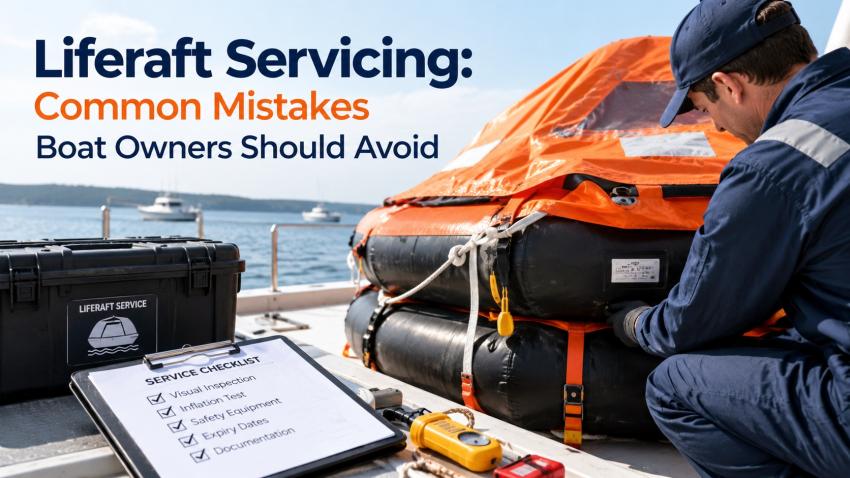
For boat owners, a liferaft is one of the most important pieces of safety equipment on board. Whether you own a sailing yacht, operate a fishing vessel, manage a charter boat, or use a motorboat for coastal trips, a properly maintained liferaft can provide essential protection if an emergency forces you to abandon your vessel.
However, owning a liferaft is only part of being prepared. Regular liferaft servicing helps ensure the equipment remains in suitable condition and can function as intended when needed. Damage, deteriorating materials, faulty inflation components, expired emergency supplies, and incorrect storage can all affect its reliability.
Many servicing problems occur because routine checks are delayed or important details are overlooked. Understanding these common mistakes can help UK boat owners maintain their safety equipment, prepare for inspections, and reduce the risk of avoidable problems at sea.
1. Missing the Recommended Liferaft Servicing Date
One of the most common mistakes is assuming that a liferaft will remain serviceable simply because it has not been used. Unlike some general boating equipment, an inflatable liferaft contains components that may deteriorate even when it stays packed inside its container.
Moisture, temperature changes, ageing materials, and the condition of inflation components can affect its reliability over time. Emergency equipment and other consumable items may also have replacement dates that need attention.
The appropriate servicing interval depends on the type of liferaft, its intended use, the manufacturer's instructions, and the regulations that apply to the vessel. The UK's Maritime and Coastguard Agency (MCA) states that SOLAS-certified inflatable life-saving appliances on UK ships generally require servicing at intervals not exceeding 12 months, subject to specified exceptions. Non-SOLAS liferafts may follow different arrangements under the applicable requirements and manufacturer instructions.
Boat owners should therefore check the service certificate, equipment label, vessel requirements, and manufacturer's guidance rather than relying on a general rule. Keeping a record of the next due date and arranging servicing well in advance can help prevent last-minute delays.
2. Choosing a Service Station Without Checking Its Authorisation
Another mistake is selecting a service provider based only on price, convenience, or availability. Liferafts vary by manufacturer, model, construction, and servicing requirements. A service station that handles one type of liferaft may not be authorised or equipped to service another.
For SOLAS-certified equipment on UK ships, the MCA requires servicing at a UK Approved Service Station accepted for that purpose. For non-SOLAS inflatable liferafts covered by the relevant commercial vessel guidance, owners should check that the service station is authorised or approved by the product's manufacturer.
Before arranging an appointment, confirm that the provider can service your particular make and model. Ask about the relevant approval or manufacturer accreditation, and check the scope of work included in the service.
Choosing a suitably authorised provider helps ensure that inspections, tests, repairs, and replacement parts follow the requirements for the equipment. It also gives owners a clearer record of the work carried out.
3. Assuming a Visual Inspection Is Enough
Checking a liferaft's exterior is useful, but it cannot establish whether every internal component is in working order. A container may look intact while the packed raft, inflation system, seals, or emergency equipment requires attention.
Routine visual checks can help identify obvious problems such as a cracked container, damaged straps, corrosion around fittings, missing identification details, or signs of water ingress. These observations are useful between professional services, but they should not replace the required servicing process.
A professional inspection may include examining the container or valise, checking the folded raft and its condition, testing inflation and pressure retention where required, inspecting valves and seams, checking the gas cylinder, and reviewing the emergency equipment pack. The precise procedures and test intervals depend on the liferaft type and manufacturer instructions.
If you notice visible damage or suspect that water has entered the container, contact an appropriate service station for advice. Avoid opening or repacking the liferaft yourself unless the manufacturer specifically permits the procedure. Unauthorised handling could introduce further damage or affect the equipment's readiness.
4. Storing the Liferaft Incorrectly
Storage conditions can affect the condition of a liferaft long before its next service date. Leaving the container exposed to avoidable damage, allowing equipment to remain in standing water, or placing heavy objects on top of it may compromise its condition or accessibility.
The liferaft should be stored and secured according to the manufacturer's instructions and the vessel's safety arrangements. Its location should allow the crew to reach it quickly during an emergency. It should not be blocked by loose equipment, stored gear, or other items that could delay deployment.
Owners should also pay attention to the condition of the cradle, securing straps, release arrangements, and any associated equipment. If the liferaft is fitted with a hydrostatic release unit, its servicing and installation requirements should be checked separately where applicable.
A simple routine check of the storage location can help identify loose fittings, obstructions, or signs of damage before they become more serious problems.
5. Overlooking the Emergency Equipment Pack
A liferaft is designed to provide more than flotation. Depending on the type and specification, its emergency equipment pack may contain supplies intended to support occupants while they await rescue.
However, equipment can become damaged, deteriorate, or reach its replacement date while the raft remains unused. Boat owners should not assume that everything inside the pack will remain suitable indefinitely.
During professional liferaft servicing, the service team checks the equipment pack against the requirements for that liferaft and replaces items where necessary. The inspection may include dated consumables and other equipment specified by the manufacturer or applicable standards.
Owners should also check that any separate emergency equipment carried on board remains accessible and is maintained according to its own requirements. Keeping an accurate inventory and retaining service documentation makes it easier to identify what has been inspected, replaced, or scheduled for future attention.
6. Waiting Until Just Before a Trip to Arrange Servicing
Leaving liferaft servicing until a few days before a planned sailing holiday or commercial voyage can create unnecessary pressure. A service station may have limited appointment availability, and inspection findings could require repairs, replacement parts, or further work.
If the liferaft is overdue or its service status is uncertain, a last-minute appointment may not be possible. This can disrupt sailing plans and create complications for operators who need to demonstrate compliance with applicable safety requirements.
A better approach is to include liferaft servicing in the vessel's annual maintenance schedule. Owners can review the expiry date when planning seasonal maintenance, before longer passages, or when preparing for a commercial inspection.
For fleets and charter operators, a central equipment register can help track servicing dates across multiple vessels. Recording each liferaft's identification details, service history, and next due date makes it easier to plan work and reduces the likelihood of equipment being overlooked.
7. Ignoring Other Equipment That Needs Attention
Liferaft servicing should form part of a wider review of the vessel's emergency arrangements. Associated components, including hydrostatic release units where fitted, may have their own inspection, replacement, or servicing requirements.
The liferaft's correct installation is equally important. Even a properly serviced unit may not deploy as intended if it has been secured incorrectly or reinstalled in a way that interferes with its launching or float-free arrangements.
This is particularly important when a liferaft has a specific configuration for its position on board. The painter, securing arrangements, release mechanism, and stowage location must be suitable for the vessel and installed according to the manufacturer's instructions.
After servicing, owners should confirm that the liferaft has been returned to its correct position, secured appropriately, and remains readily accessible. If any changes have been made to its installation, these should be checked before the vessel goes to sea.
8. Failing to Keep Service Records
A completed service is only part of good safety management. Boat owners should also retain the paperwork that confirms what work was undertaken and when the equipment is next due for attention.
Service records can help demonstrate that maintenance has been carried out, support vessel inspections, and provide useful information if a fault or defect is identified later. For commercial operators, organised records are especially important when managing several pieces of safety equipment or multiple vessels.
After liferaft servicing, check that you have received the relevant service documentation and that the equipment identification details match the raft on board. Review any recommendations or defects recorded by the service station and arrange any outstanding work promptly.
Keep the records somewhere accessible rather than relying solely on paperwork stored with equipment that may not always be easy to reach. A digital maintenance register can also provide reminders before future service dates.
A Practical Liferaft Maintenance Checklist
Good maintenance starts with a consistent routine. Between professional services, boat owners can carry out basic checks without opening the liferaft or interfering with its components.
Use this short checklist as part of your regular vessel inspections:
Check the service label, certificate, and next due date.
Look for visible damage to the container, valise, securing straps, and fittings.
Make sure the liferaft is accessible and stored according to the manufacturer's instructions.
Check associated release equipment and its service status where applicable.
Keep the liferaft's identification details and maintenance records up to date.
Arrange professional servicing with an appropriately authorised provider.
Confirm that the liferaft is correctly reinstalled after servicing.
These checks support routine maintenance, but they do not replace the inspections and tests required by the manufacturer or the regulations applicable to your vessel.
Why Professional Liferaft Servicing Matters
Professional liferaft servicing helps assess the condition of equipment that may remain unused for years but must be ready to operate in an emergency. The service process can identify hidden defects, check inflation components, assess the raft's condition, and ensure the equipment pack meets the relevant requirements.
For UK boat owners, selecting the correct service station is an important part of this process. The appropriate approval depends on the liferaft type and the requirements that apply to the vessel, so owners should verify the service station's authorisation rather than assuming that every provider can handle every model.
ADEC Marine provides liferaft servicing for a range of marine applications. Boat owners and operators can contact the company to discuss their liferaft type, servicing requirements, and appointment arrangements.
Before booking, confirm that the service station is authorised for your specific make and model and that the service offered meets the requirements applicable to your vessel.
Planning ahead, following the manufacturer's guidance, and keeping accurate records can help make liferaft maintenance more straightforward while supporting a stronger onboard safety routine.
Conclusion
Liferaft servicing is an essential part of responsible boat ownership and marine safety. Missing service dates, choosing an unsuitable provider, relying on visual checks, storing equipment incorrectly, and neglecting maintenance records can all undermine an otherwise sensible safety routine.
By following the manufacturer's instructions, checking the requirements for your vessel, arranging servicing in good time, and confirming that the liferaft is correctly installed afterwards, you can reduce avoidable maintenance problems and keep your emergency equipment better prepared.
For additional peace of mind, make liferaft servicing a planned part of your vessel's maintenance schedule rather than a task to handle just before departure. A well-maintained liferaft is an important element of a broader commitment to safety at sea.