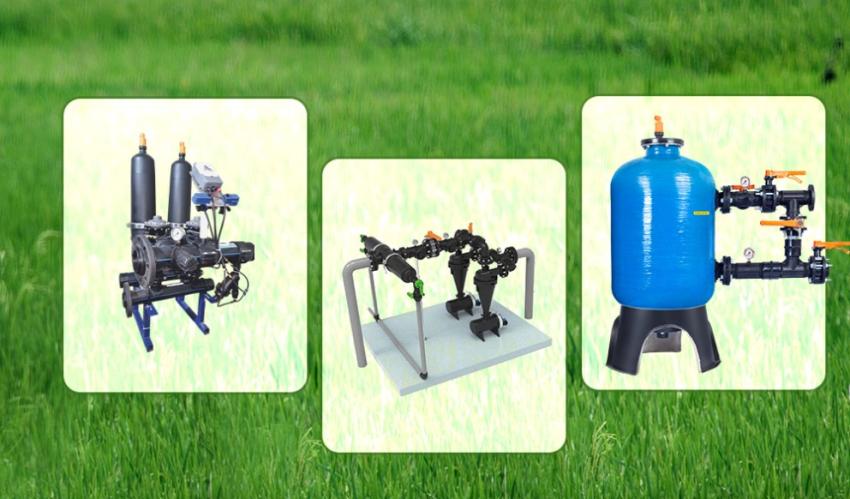
An industrial filtration system cannot be designed effectively by looking at the filter alone. The type and concentration of contaminants, flow rate, operating pressure, temperature, fluid characteristics and required level of filtration all influence the design.
In heavy industrial applications, these requirements can be particularly demanding because filtration may need to operate continuously and handle changing process conditions. Manufacturers therefore have to consider not only what needs to be removed from the fluid, but also how the filtration system will perform within the larger industrial process.
So, designing an industrial filtration system involves looking at the process requirements, filtration technology, system capacity and practical maintenance together.
It starts with understanding what is in the water
Before choosing a filtration method, manufacturers need to know what the water actually contains.
Water used around industrial facilities can carry different types of unwanted material. Depending on the source and application, there may be sand, silt, organic matter or other suspended particles that need to be removed before the water reaches other equipment.
This makes the nature of the contaminants one of the first things industrial filter manufacturers have to consider. A filter designed for one type of material may not be suitable when the water contains something completely different.
The required flow cannot be overlooked
A filtration system also has to deal with the amount of water moving through it.
The system needs to handle the required flow while still providing the level of filtration the application calls for. This is particularly relevant when filtration forms part of a larger water-handling installation, where restricting flow unnecessarily can affect the way the overall system operates.
For this reason, industrial filter manufacturers have to look at filtration as part of the complete installation rather than treating the filter as an isolated piece of equipment.
Pressure and operating conditions matter too
Flow is only one part of the picture. Operating pressure and temperature can also influence how a filtration system needs to be designed.
The equipment has to be appropriate for the conditions in which it will operate. This becomes even more important in applications where filtration is expected to run for long periods or where the operating conditions can change.
The fluid itself also matters. Its characteristics, along with the contaminants present in it, help determine what kind of filtration arrangement makes sense.
There is no single filtration method for every application
Different filtration technologies serve different purposes.
Automat works with a range of water management technologies, including hydrocyclone separators, sand media filters, screen filters and disc filters. The available systems include manual, semi-automatic and fully automatic options.
Hydrocyclone separators, for example, use centrifugal action for sand removal. Sand media filters are used as primary filtration for drip and micro irrigation and can handle water containing materials such as silt, clay and organic contaminants. Screen and disc filters provide other filtration options depending on the application.
This is why industrial filter manufacturers need a range of technologies rather than trying to adapt one filter to every situation.
Maintenance has to be considered from the beginning
A filtration system does its job by collecting or removing unwanted material. That material eventually has to be dealt with.
For an industrial installation, frequent manual cleaning may not always be practical. Automatic cleaning and backflushing can reduce the amount of intervention required, depending on the filtration system being used.
Some filtration solutions are designed around automatic flushing and self-cleaning. Certain systems can also continue filtration during the cleaning process, which is useful where uninterrupted operation is important.
The design therefore needs to account for what happens after the filter has collected the material it was installed to remove.
Materials are part of the design too
The material used for filtration equipment also needs to suit the conditions in which the system will operate.
Filtration systems can use engineering plastics, reinforced glass fibre and other corrosion-resistant materials, depending on the design. Stainless steel components are also used in some systems.
The choice of material is not simply about appearance. It forms part of how the equipment is expected to perform under its intended operating conditions.
What makes an industrial filtration system suitable for the job?
There is a lot more to filtration design than selecting a filter with a particular rating.
The source of water, contaminants, required flow, pressure, operating conditions, filtration level and maintenance requirements all need to be considered together. A system that works well in one application may not be appropriate for another.
When selecting an industrial water filtration system, understanding these requirements first makes the choice of filtration technology much clearer.
Designing around the application
For industrial filter manufacturers, the job is not simply to produce a filter. The filtration system needs to fit the process in which it will be used.
Automat develops filtration and water management solutions for applications including agriculture, landscaping, industrial wastewater and other water-handling requirements. Its range covers different filtration methods and levels of automation, allowing the system to be selected according to the conditions it needs to handle.
For heavy industrial use, that application-specific approach matters. The right filtration system is one that can handle the water, operate within the required conditions and remain practical to maintain over time.