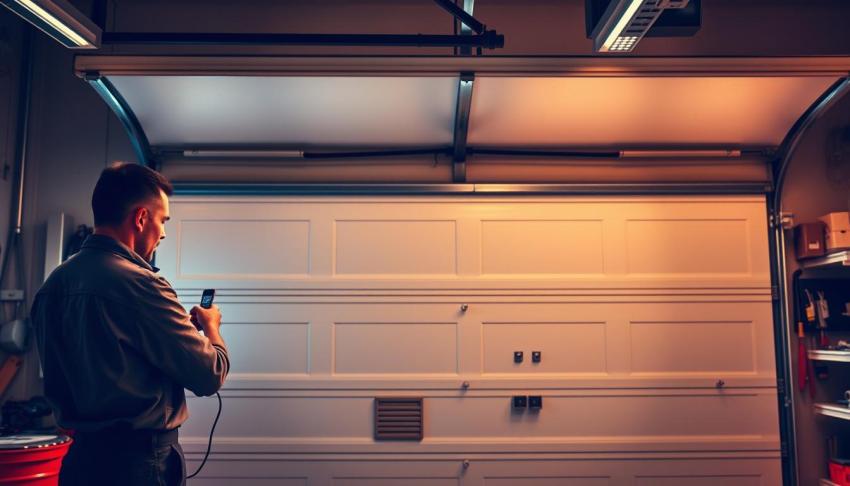
Your garage door is easy to ignore, right up until it isn't. Most garage door problems start small. A little noise here, a slight hesitation there. Catching these signs early can save you from a bigger repair. It can also stop a door from failing entirely at the worst possible time. Here are nine signs worth paying attention to.
1. The door is noisy when it opens or closes
A little sound is normal. Loud grinding, squealing, or banging is not. These noises usually point to worn rollers, a dry track, or a spring under too much strain. Left alone, the wear tends to get worse, not better.
A quick lubrication sometimes helps. But if the noise keeps coming back, it's worth having a technician take a look before a part fails completely.
2. The door moves unevenly or looks crooked
Watch your door as it opens. Does one side move faster than the other? Does it look tilted at any point? This is often a sign that one of the springs or cables is failing. A door that's out of balance puts extra strain on the opener too, which can shorten its life.
3. The door is slow to respond
A garage door should react to the opener within a second or two. If there's a noticeable delay, or if you have to press the button more than once, something in the system is struggling. This could be the opener itself, the sensors, or a mechanical issue with the door.
4. The garage door opener struggles or reverses on its own
If your door starts to close and then reverses without hitting anything, don't ignore it. Most openers include a safety feature that reverses the door when it senses an obstruction. If that's triggering with nothing in the way, the sensors may be misaligned or dirty. That's worth checking right away. A faulty safety sensor can also mean the door won't close at all when you actually need it to.
Sometimes the fix is as simple as wiping dust off the sensor lenses or realigning them so they face each other directly. Other times, the sensor itself has failed and needs replacing.
5. Visible rust, wear, or damage on springs or cables
Springs and cables carry a huge amount of tension. Visible rust, fraying, or gaps in the coil are signs of wear that shouldn't wait. A spring under tension can snap suddenly, and that's not a repair to attempt yourself.
6. The door won't open or close all the way
A door that stops partway can have a few different causes. It might be a track obstruction. It might be a misaligned sensor. Or it might be a broken spring that no longer has enough force to lift the door fully. This is one of the more urgent signs, since it usually means the door isn't functioning safely.
Don't force the door manually if it's stuck. Forcing it can bend the track or damage the panels, turning a simple repair into a more expensive one.
7. The remote or keypad is unreliable
If you find yourself pressing the remote multiple times, or the keypad only works some of the time, that's usually an electronic issue rather than a mechanical one. It's a smaller fix. But an inconsistent entry system is still worth addressing, especially if you rely on it daily.
Weak batteries are the simplest cause and worth ruling out first. If a fresh battery doesn't help, the receiver or the remote itself may need attention.
8. Your garage door is significantly older than the rest of your home's systems
Garage door components wear out gradually with regular use. If yours has been in place for many years without any major service, a checkup is worth scheduling. This holds true even if nothing seems obviously wrong yet. A technician offering garage door repair in San Bernardino can spot early wear before it turns into a breakdown.
9. The door feels heavy or hard to lift manually
Try lifting your garage door by hand with the opener disconnected. It should feel relatively light and balanced. If it feels heavy, uneven, or like it's fighting you, the spring system is likely compensating poorly for the door's weight. That's a sign the springs need attention.
How often should a garage door be inspected?
Most manufacturers recommend a basic visual check every few months. Look at the springs, cables, and rollers for obvious wear. Listen for new noises during operation. Test the auto-reverse safety feature by placing a block of wood in the door's path and making sure it reverses on contact.
A more thorough professional inspection once a year catches issues a visual check might miss. This includes wear on parts that are hard to see without taking anything apart. For a door that gets heavy daily use, twice a year is a reasonable habit.
What to do if you notice one of these signs
Start with the basics. Note exactly what you're seeing or hearing, and when it happens. Does it happen every time, or only sometimes? Does it happen at a specific point in the door's movement, like only near the top or only near the bottom of the track? That kind of detail helps a technician narrow down the cause before they even arrive.
Avoid trying to repair springs or cables yourself. These parts hold serious tension. Working on them without the right tools and training is genuinely dangerous. Most other issues, like sensor alignment or roller replacement, are also best left to a technician. They can confirm the exact cause before anything is adjusted.
Why San Bernardino homeowners shouldn't wait
A garage door is one of the largest moving parts in most homes. It's also a main entry point. A door that isn't working properly can be a safety risk. It can also leave your home less secure until it's fixed.
Many of the signs above are fixable quickly when caught early. Waiting usually means a bigger repair bill later. In some cases, it means a door that fails completely at an inconvenient time, like right before you need to leave for work.
Local climate plays a role too. Heat and dust in the Inland Empire can dry out lubricant faster and add grit to tracks and rollers. That's one more reason a periodic check makes sense here, not just when something already sounds wrong.
Questions worth asking before you book a repair
Is the technician licensed, insured, and experienced with your door's brand?
What's the estimated cost range, including any inspection or service fee?
Is same-day or emergency service available if the issue is urgent?
Is there a warranty on the parts and labor?
A technician who answers these clearly is one you can trust with the job. Whether you're dealing with one sign or several, searching for garage door repair near San Bernardino and getting it checked sooner rather than later is almost always the safer choice. It's usually the more affordable one too.