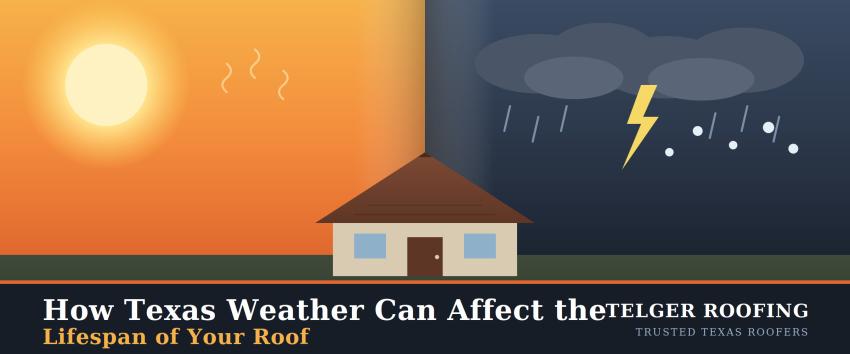
Anyone who has lived in Texas for more than a summer knows the weather here has a personality of its own. One week you are cranking the AC because it is 105 degrees, and the next you are watching hail the size of golf balls bounce off your driveway. Your roof takes the brunt of all of it. It stands between your family and everything the sky throws down, and over time that job wears it out faster in Texas than it would in a milder climate.
If you own a home in the Lone Star State, understanding how the local weather chews through roofing materials can save you thousands of dollars and a lot of stress. Here is what you need to know.
The Heat Never Really Lets Up
Texas summers are long and brutal. Roof surfaces can reach 150 degrees or higher on a hot afternoon, even when the air temperature is closer to 100. That kind of sustained heat is hard on asphalt shingles, which are the most common roofing material in the state. The heat dries out the oils in the shingles, causing them to become brittle, curl at the edges, and crack.
Ultraviolet rays make the damage worse. Constant sun exposure breaks down the protective granules on shingles year after year. Once those granules wash away, the shingle underneath is exposed and the whole roof starts aging much faster than the manufacturer ever intended.
Hail Is a Serious Threat
Parts of Texas sit right in the middle of what people call Hail Alley. North Texas in particular sees some of the most frequent and severe hailstorms in the country. A single storm can dent metal, crack shingles, and knock loose the granules that shield your roof from the sun.
The tricky part about hail damage is that it is not always easy to spot from the ground. A roof can look fine after a storm while small bruises and fractures quietly let moisture seep in. That slow leak often goes unnoticed until you see a water stain on the ceiling or find mold in the attic. A professional inspection after any major hailstorm is one of the smartest things a Texas homeowner can do.
Wind and Storms Do Their Part
Thunderstorms roll through Texas with real force, and the winds that come with them can lift and tear shingles right off the roof. Straight line winds and the occasional tornado can peel back large sections of roofing in a matter of seconds. Even when a storm does not rip anything off outright, repeated gusts loosen fasteners and weaken the seals that keep water out.
Once wind lifts a shingle, water has a clear path underneath it. From there the damage spreads to the decking and the structure below.
Heavy Rain and Humidity
When the rain comes in Texas, it tends to come hard. Heavy downpours test every seam, valley, and flashing point on your roof. Any weak spot that has been baking in the sun or bruised by hail becomes an easy entry point for water.
In the Gulf Coast region around Houston, humidity adds another layer of trouble. Constant moisture in the air encourages algae, moss, and mildew to grow on the roof surface. These growths trap water against the shingles and speed up rot and decay.
Sudden Temperature Swings
Texas is famous for wild temperature changes. It can be freezing in the morning and warm by the afternoon, especially in the spring and fall. When roofing materials heat up they expand, and when they cool down they contract. This constant back and forth stresses the shingles and the sealants, causing tiny cracks that grow larger over time. The winter freeze of 2021 reminded a lot of Texans that cold weather can be just as damaging as the heat.
What You Can Do to Protect Your Roof
The good news is that a roof does not have to fail early just because it lives in Texas. A few habits go a long way:
- Schedule a professional inspection at least once a year, and again after any big storm.
- Keep your gutters clean so water drains properly and does not back up under the shingles.
- Trim tree branches that hang over the roof to reduce debris and impact damage.
- Address small repairs quickly before they turn into big ones.
- Consider impact resistant shingles or metal roofing if you are due for a replacement, since both hold up better against Texas hail.
Choosing the right materials and the right roofing team matters more here than in almost any other part of the country. A quality roof installed by experienced hands will simply last longer under these conditions.
"In Texas, your roof works overtime against heat, hail, and storms that most other regions never see. The homeowners who get decades out of their roof are the ones who inspect it regularly and fix small problems early. A little attention now protects the biggest investment you own." — Marcus Telger, Founder and Lead Roofing Specialist at Telger Roofing
Final Thoughts
Texas weather is tough, and it puts your roof through a lot every single year. Heat, hail, wind, rain, and sudden temperature swings all shorten the life of your roofing materials, sometimes without any obvious warning. By staying on top of inspections and repairs, and by choosing durable materials suited to the climate, you can help your roof reach or even beat its expected lifespan. When in doubt, bring in a trusted local roofing professional who understands exactly what Texas throws at a home.