An ISO 50001 Energy Management System (EnMS) provides a structured way for organizations to manage energy use, improve energy performance, and support continual improvement. Procedures are an important part of this system because they explain how energy-related activities are performed, monitored, controlled, and reviewed.
The exact number and names of procedures can vary depending on the organization's size, operations, energy uses, and EnMS scope. However, several key procedures are commonly needed to establish an effective ISO 50001 system.
1. Energy Review Procedure
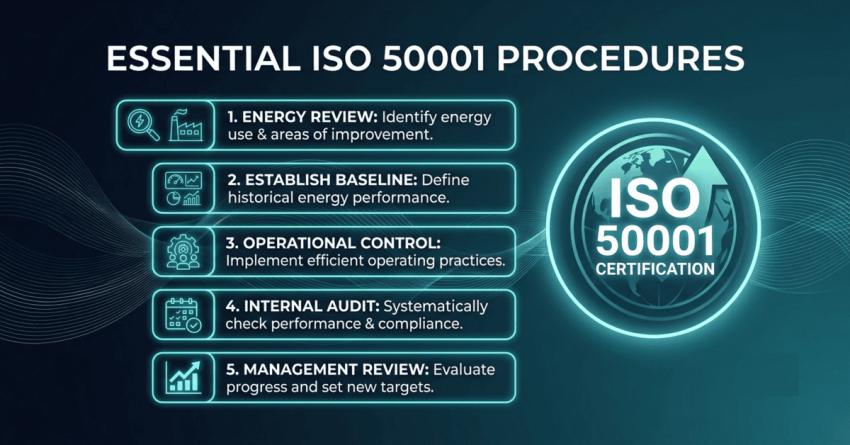
The energy review is one of the most important activities in an EnMS. A procedure should define how the organization collects and analyzes energy data, identifies significant energy uses (SEUs), determines relevant variables, and identifies opportunities for improving energy performance.
This process provides the foundation for setting realistic energy objectives and targets.
2. Energy Baseline and EnPIs Procedure
Organizations need a consistent method for establishing and maintaining an energy baseline and energy performance indicators (EnPIs). The procedure should explain how energy performance is measured and compared over time.
Well-defined EnPIs help organizations determine whether changes in operations, equipment, or energy-saving initiatives are actually improving energy performance.
3. Operational Control Procedure
Operational controls help ensure that activities affecting significant energy uses are performed under suitable conditions. The procedure may address operating parameters, maintenance practices, energy-efficient operating methods, and employee responsibilities.
Documented controls can help reduce unnecessary energy consumption and make energy performance part of routine operations.
4. Monitoring and Measurement Procedure
Energy management decisions depend on reliable information. A monitoring and measurement procedure should establish what energy data is collected, how measurements are performed, how frequently information is reviewed, and who is responsible.
The collected data can then be used to evaluate energy performance and identify unusual trends or areas requiring attention.
5. Internal Audit Procedure
An ISO 50001 internal audit helps determine whether the EnMS is properly implemented and maintained. The procedure should define audit planning, auditor responsibilities, evidence collection, reporting, and follow-up.
A systematic audit process can identify gaps before they become larger problems during an external assessment.
6. Corrective Action Procedure
When a nonconformity or performance-related issue is identified, corrective action should address its cause rather than simply correcting the immediate problem. A suitable procedure should cover investigation, action planning, implementation, verification, and effectiveness review.
7. Management Review Procedure
Management review gives top management an opportunity to evaluate the EnMS and its energy performance. The procedure should establish how relevant performance results, objectives, audit findings, changes, and improvement opportunities are reviewed.
Building a Practical ISO 50001 Documentation System
Developing these procedures from scratch can require considerable time, particularly when supporting forms, records, checklists, and templates are also needed. A structured set of ISO 50001 documents can provide a useful starting point for organizations developing their Energy Management System.
The most effective procedures are not simply created for certification purposes. They should reflect actual energy-related activities, clearly assign responsibilities, and provide practical instructions that employees can follow. When documentation supports day-to-day operations, an ISO 50001 EnMS becomes a useful tool for improving energy performance rather than just a collection of paperwork.
Conclusion
The right ISO 50001 procedures help organizations control energy-related activities, monitor performance, and support continual improvement. A structured set of ISO 50001 documents can provide a practical starting point for developing an effective Energy Management System while reducing documentation effort and supporting consistent implementation across the organization and improving long-term energy performance.