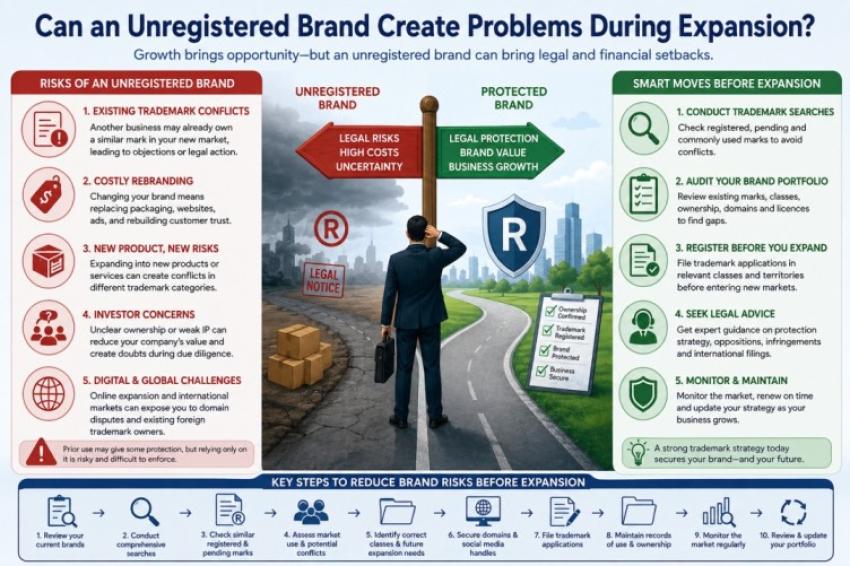
Business expansion is often a sign of growth. A company may enter new cities, launch additional products, establish an online presence or expand into international markets. As the business grows, its brand can become one of its most valuable commercial assets. Yet many businesses expand while relying on an unregistered brand name or logo. Using a brand for several years does not necessarily provide the same level of protection as registering it. A business may develop strong customer recognition around its name, only to discover a similar trademark already exists in a new market or category. This can create legal uncertainty at a stage when the business is investing heavily in expansion. Understanding the risks associated with an unregistered brand can help businesses make better intellectual property decisions before entering new markets.
What Is an Unregistered Brand?
An unregistered brand is a name, logo, symbol, tagline or other distinctive identifier used commercially without registration as a trademark. In India, trademark rights can arise through use in certain circumstances. The Trade Marks Act, 1999 also recognises protection for prior users. However, relying solely on unregistered rights can be more complicated than relying on rights supported by a valid trademark registration. A registered trademark generally gives the proprietor stronger statutory rights in relation to the goods and services covered by the registration. For businesses planning expansion, this distinction becomes increasingly important.
Why Expansion Can Expose an Unregistered Brand to Risk
A business may operate successfully in one location for years without encountering a dispute. Expansion can change this situation. Entering a new market increases the number of businesses, customers and competitors with whom the brand may interact. A similar or identical mark may already be in use or registered in the new territory. The problem may not become visible until the business attempts to establish itself in the new market. This can lead to objections, legal notices, settlement discussions or the need to change the brand.
Another Business May Already Own the Trademark
One of the biggest risks involves an existing trademark registration. Suppose a company has operated under a particular brand name for several years. It then plans to expand into another state or launch a new product line. During the expansion process, it discovers another business has registered a similar mark. The registered proprietor may object to the proposed use. The original business may have arguments based on prior use, depending on the facts and applicable law. However, defending such rights can involve considerable legal and commercial effort. A registration obtained before expansion can provide a stronger foundation for protecting the brand.
Rebranding Can Become Expensive
Rebranding is rarely limited to changing a logo. A growing company may have already invested heavily in packaging, product labels, websites, mobile applications, advertising campaigns, social media accounts, signage, stationery, product catalogues and customer communications. If a trademark dispute forces the business to change its identity, these assets may need to be replaced. There can also be indirect costs because customers may struggle to recognise the new identity. Marketing campaigns may lose momentum, and the company may need to rebuild the goodwill associated with the previous brand. The financial impact can be particularly significant when rebranding occurs during a period of rapid expansion.
Expansion Into New Product Categories Can Create Conflicts
Businesses often expand beyond their original products or services. A company initially known for clothing may later introduce footwear, accessories or cosmetics. A technology business may move from software services into hardware. A food company may introduce packaged products under an existing brand. Trademark protection is connected with specific goods and services. Registration should therefore be planned according to the business's present activities and reasonably foreseeable expansion. An unregistered brand provides less certainty when the company begins using its identity across additional commercial areas. Businesses should review their trademark strategy whenever their product or service portfolio changes.
Investors May Question Brand Ownership
Intellectual property can be an important part of a company's value. During investment, acquisition or due diligence exercises, investors may examine whether the company owns or controls the intellectual property associated with its business. An unregistered brand can raise questions about who owns the brand, whether another business is using a similar name, whether trademark searches have been conducted, whether the brand can be protected in future markets and whether there are disputes involving the brand. These questions can affect the legal assessment of the business. A clear trademark portfolio can therefore provide greater certainty during fundraising, investment discussions and transactions.
Online Expansion Can Increase Brand Conflicts
Digital expansion can make brand conflicts easier to discover. A company may begin selling through an e commerce platform or launch a website targeting customers across India. It may also create social media profiles and invest in digital advertising. At this stage, another business using a similar name may raise objections. Domain names and social media accounts can also become contested assets. Securing a digital identity does not automatically create trademark rights, but an online presence can increase the commercial importance of the brand. Businesses should therefore assess digital assets alongside their trademark strategy.
International Expansion Creates Additional Challenges
Trademark rights are generally territorial. A company may have built substantial goodwill in India but discover its preferred brand is already registered by another party in a foreign jurisdiction. This can create serious difficulties when entering international markets. The company may need to negotiate with the existing trademark owner, select a different name, seek a licence or develop a new brand for the relevant market. International trademark searches should therefore be conducted before committing to overseas expansion. Businesses planning international growth should consider their trademark strategy early rather than waiting until they are ready to enter a foreign market.
Prior Use Can Still Matter
An unregistered brand does not necessarily mean the business has no legal rights. Indian trademark law recognises certain rights arising from prior use. Section 34 of the Trade Marks Act, 1999 protects certain prior users against registered trademark proprietors, subject to the conditions set out in the provision. Passing off may also provide a remedy in appropriate circumstances where a business can establish the necessary elements. However, relying on unregistered rights can involve evidentiary challenges. The business may need to demonstrate the history and extent of its use, goodwill associated with the brand and the circumstances supporting its claim. Documents such as invoices, advertisements, packaging, sales records and promotional material can become important evidence. Registration can provide a clearer statutory framework for asserting trademark rights.
Trademark Registration Should Be Considered Before Expansion
Businesses approaching expansion should review their intellectual property position before entering a new market. A proper process can include conducting trademark searches, identifying relevant classes, assessing potential conflicts and filing applications for appropriate marks. Businesses can also consider whether they should register their trademark in India before investing significantly in a new market. The timing of an application can be important. Waiting until a brand has become commercially valuable may increase the consequences of discovering a conflict. Early registration can help establish a stronger foundation for future growth, subject to the applicable legal requirements.
Conduct a Trademark Audit Before Entering New Markets
A trademark audit can help identify weaknesses in a company's existing brand protection. The review can cover current registered trademarks, pending applications, unregistered brands in use, new products and services, proposed expansion territories, domain names, social media identities, licence arrangements, ownership records and potentially conflicting third party marks. This exercise can help businesses identify gaps before expansion creates additional exposure. It can also help management prioritise which intellectual property assets require immediate attention.
When Should a Business Seek Legal Advice?
Legal advice can be particularly useful when a business has operated under an unregistered brand for several years and is preparing for significant expansion. A trademark professional can assess the existing brand, review potential conflicts and advise on the appropriate protection strategy. Businesses may also benefit from consulting a top trademark lawyer in India when dealing with complex ownership issues, opposition proceedings, infringement concerns or expansion into multiple markets. The objective should not simply be to obtain registration. The broader goal is to understand whether the brand can support the company's future commercial plans.
How Businesses Can Reduce Brand Risks Before Expansion
Businesses preparing for expansion should review all brands currently used by the business and conduct comprehensive trademark searches. They should identify similar registered and pending marks and examine relevant market use by third parties. The business should also review trademark classes covering existing activities and consider additional classes for planned expansion. Ownership of logos and other creative assets should be assessed, while relevant domain names and digital identities should be secured where appropriate. Suitable trademark applications should be filed, records showing continuous commercial use should be maintained and the market should be monitored for potentially conflicting marks. The trademark portfolio should also be reviewed regularly as the business grows.
Brand Protection Should Grow With the Business
A business's intellectual property strategy should evolve alongside its commercial activities. A brand suitable for a small local operation may eventually become the identity of a national or international business. As the commercial value of the brand increases, the consequences of weak protection can also become more serious. Registration does not eliminate every trademark risk. Searches, monitoring, proper ownership arrangements and timely legal advice remain important. However, formal protection can give a growing business a stronger basis for defending its brand and managing expansion.
Conclusion
An unregistered brand can create significant problems during business expansion. The risks may involve trademark conflicts, rebranding costs, investor concerns, product diversification and international market entry.
Although Indian law recognises certain rights associated with prior use and passing off, relying exclusively on unregistered rights can make enforcement more complex. Businesses should therefore consider brand protection as part of their expansion strategy rather than treating it as an administrative task.
A comprehensive trademark search, appropriate registration, clear ownership and regular portfolio review can help businesses build stronger foundations for growth. The earlier a business examines its brand protection position, the easier it can be to identify conflicts and make informed decisions before substantial resources are committed to expansion.