Most electrical issues can wait for a scheduled appointment. A light switch that feels a little loose, an outlet that stopped working in the guest room, or a breaker that trips every few weeks are all worth fixing but none of them require a midnight phone call.
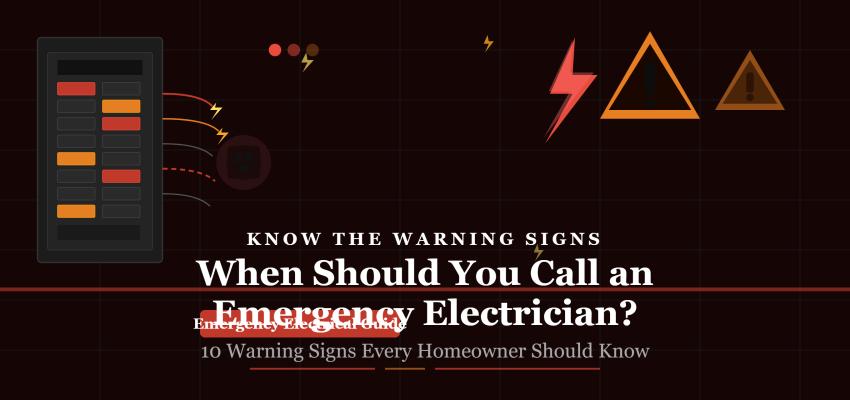
Some problems are different. Certain warning signs mean the risk of fire, electrocution, or a total loss of power is real and immediate. Knowing the difference could save your home and your family.
Here are the 10 warning signs that mean you should stop what you are doing and call an emergency electrician right now.
1. You Smell Burning Near an Outlet, Switch, or Panel
A burning smell coming from anywhere in your electrical system is a five-alarm warning. It usually means wire insulation is overheating or already melting inside your wall, outlet box, or breaker panel.
Why it is urgent: Electrical fires can travel through wall cavities silently and quickly. By the time you see smoke or flame, the fire may already be inside your walls.
What to do: Turn off the breaker for that area if it is safe to reach the panel. Do not use the outlet or switch. Call an emergency electrician immediately. If the smell is strong or you see discoloration, leave the house and call 911 first.
2. Sparks Coming From an Outlet or Panel
An occasional, tiny spark when you plug something in can be normal. But large sparks, sparks that happen repeatedly, or sparks coming from your breaker panel are never acceptable.
Why it is urgent: Sparking indicates arcing, which is uncontrolled electrical discharge. Arcing is one of the most common causes of house fires and can ignite nearby materials in seconds.
What to do: Stop using the outlet immediately. If sparks are coming from the panel, do not touch it. Call an emergency electrician. If anything catches fire, call 911.
3. Breakers That Trip and Will Not Reset
A breaker that trips and simply will not reset is telling you something serious is wrong with that circuit. This is different from a breaker that trips under a heavy load and resets normally.
Why it is urgent: A breaker that refuses to reset may indicate a short circuit, a ground fault, or a wiring failure on that circuit. Forcing it back on can cause immediate overheating or a fire.
What to do: Do not keep trying to force the breaker back on. Unplug everything on that circuit and try once. If it trips again immediately, call an emergency electrician before using that circuit again.
4. Lights Flickering Throughout the Whole House
A single flickering light is usually a loose bulb or a failing fixture. But when lights flicker across multiple rooms or throughout the entire house at the same time, the problem is at the main service level.
Why it is urgent: Whole-house flickering often points to a failing main breaker, a loose connection at the utility service entrance, or a problem with the power coming into your home. These are high-voltage situations that can cause fires or damage appliances.
What to do: Note whether the flickering happens randomly or when large appliances cycle on. Call an emergency electrician. If flickering is combined with a burning smell or buzzing sound, treat it as an emergency.
5. You Hear Buzzing, Crackling, or Hissing From Walls or the Panel
Electricity should be silent. If you can hear it, something is wrong.
Why it is urgent: Buzzing or crackling sounds typically mean arcing is occurring inside the wall, behind an outlet, or inside your breaker panel. This generates heat that can ignite insulation, wood framing, or other nearby materials without any visible warning.
What to do: Identify where the sound is coming from. Turn off the breaker for that area. Call an emergency electrician. Do not ignore electrical sounds thinking they will go away on their own.
6. An Outlet or Switch Feels Hot to the Touch
Wall plates and outlets should always be at room temperature. If touching one makes you pull your hand back, that heat is coming from inside the wall.
Why it is urgent: Heat at an outlet or switch means current is flowing where it should not, wires are loose and arcing, or the circuit is severely overloaded. In any case, the wiring behind the wall is being damaged in real time.
What to do: Stop using that outlet immediately. Do not plug anything into it. If the switch controls a light, leave the light off. Call an emergency electrician the same day. A warm dimmer switch controlling a heavy load can be normal, but hot is never acceptable.
7. Water Has Contacted Your Electrical System
Flooding, a burst pipe, or even a significant roof leak that reaches wiring, outlets, or your panel creates an immediate life-safety emergency.
Why it is urgent: Water and electricity together can electrify standing water, walls, and metal surfaces throughout your home. This is how people and pets are killed in flood situations. Wet wiring also corrodes and creates fire risks long after the water is gone.
What to do: If water has reached your electrical panel or you believe circuits are wet, do not enter the affected area. If it is safe to do so, shut off the main breaker from a dry location. Call an emergency electrician before restoring power to any wet area. In a serious flood, call your utility company to disconnect service at the meter.
8. A Complete Loss of Power to Part of the House (With No Utility Outage)
If your neighbors have power and you suddenly lose it to a section of your home, or to the whole house, the problem is inside your system.
Why it is urgent: Partial power loss can indicate a failed leg of your service entrance, a failing main breaker, or a serious wiring fault. Total power loss without a utility outage points directly to your panel or service connection. Both situations can worsen quickly.
What to do: Check the utility company outage map first to rule out a neighborhood outage. Check your main breaker. If the main breaker has not tripped and neighbors have power, call an emergency electrician. Do not assume the problem will resolve itself.
9. Scorch Marks or Discoloration Around Outlets or Switches
Visible burn marks, yellowing, or blackening around an outlet face or switch plate is physical evidence that overheating or arcing has already happened.
Why it is urgent: Scorch marks mean the wiring inside that box has already been hot enough to char surrounding materials. That damage does not heal. The conditions that caused the scorching are still present and will happen again.
What to do: Do not use that outlet or switch under any circumstances. Turn off the breaker for that circuit. Call an emergency electrician. This is not a problem that can wait for a weekend repair.
10. You Receive an Electrical Shock From an Outlet or Appliance
Getting a mild tingle from an appliance occasionally can happen. Getting a genuine shock, or a shock that happens more than once, is a medical and electrical emergency.
Why it is urgent: A shock means current is reaching a surface it should never touch. This can indicate a ground fault, a wiring reversal, or a failed appliance. The same fault that shocked you could electrocute a child or cause a fire.
What to do: If someone has been seriously shocked, call 911 first. For milder shocks, stop using the outlet or appliance immediately. Unplug the appliance and try a different outlet. If the problem follows the outlet rather than the appliance, call an emergency electrician. If it follows the appliance, have it professionally repaired or replaced.
What Counts as a True Electrical Emergency?
As a simple rule, an electrical problem is an emergency if any of the following are true:
The situation poses an immediate risk of fire, electrocution, or total power loss. You cannot safely use your home as a result. The problem appeared suddenly without any clear cause. You smell burning, hear arcing sounds, or see sparks or scorch marks.
If your situation checks any of those boxes, do not wait for a weekday appointment. Emergency electricians exist precisely because some electrical problems are dangerous right now, not tomorrow.
How to Stay Safe While You Wait
While you are waiting for an emergency electrician to arrive, there are a few things you can do to reduce risk:
Turn off the breaker for any circuit that is behaving abnormally, as long as you can reach the panel safely. Keep everyone away from the affected area. Do not use extension cords or power strips as a workaround. If you smell burning or see smoke, get everyone out of the house and call 911.
Do not try to open your electrical panel, splice wires, or make repairs yourself in an emergency situation. High-voltage panels contain components that can arc and cause serious burns even when the main breaker is off.
Choosing the Right Emergency Electrician
Not every electrician who answers after hours is equipped to handle serious emergencies. When you call, ask whether they are licensed in your state, how quickly they can arrive, and whether they carry liability insurance.
For Houston-area homeowners, Doctor Home Expert provides licensed emergency electrical services with rapid response times and experienced technicians who know how to handle high-risk situations safely.
Final Thoughts
Most homeowners are good at recognizing when something is off with their home. Trust that instinct when it comes to electricity. A burning smell that disappears, a shock you write off as static, or a breaker that keeps tripping but has not caused a fire yet are all warning signs worth taking seriously.
Electrical emergencies rarely announce themselves clearly until something has already gone wrong. The 10 warning signs in this article are your advance notice. Acting on them quickly is what separates a close call from a genuine disaster.