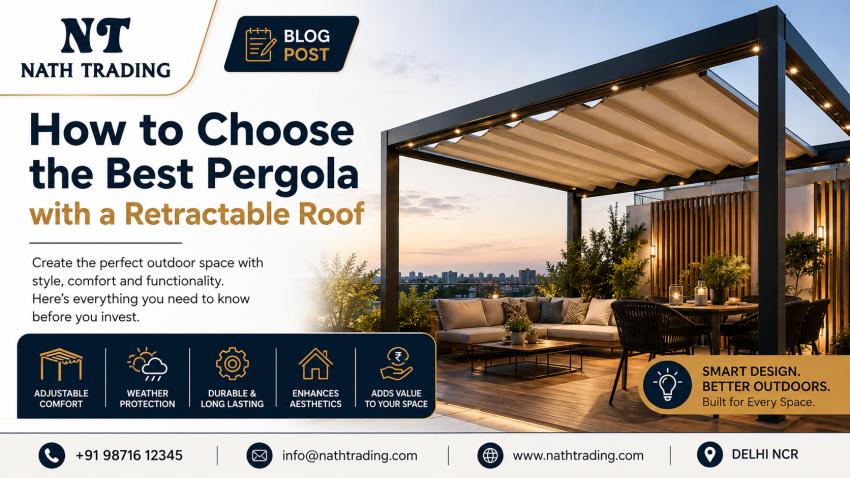
You finally got your dream outdoor space that you always desired, but when you get to use it is decided by the sun. That's the problem a pergola with a retractable roof solves for you.
Still, walk into the buying process without a plan, and you'll end up comparing photos instead of function, and that's how people end up with a roof that looks great but doesn't actually fit how they live or work outside. Here's what to think through before you sign off on one.
Start With How You'll Actually Use the Space
Before you even waste your time turning the pages of the catalogue, wait for a moment and ask yourself: what is the purpose of the pergola?
Do you want it to be installed over an open dining area for family dinners, a lounge corner for slow weekend mornings, or just to cover the spot for a restaurant patio? Will you be opening and closing the roof daily or just a few times a season?
Your answer here shapes everything else. A homeowner who wants occasional shade has disparate needs than a hospitality business running the space every day. So don't skip this step; it's the filter everything else gets measured against.
Understand the Roof Mechanism Options
Most people don’t understand this thing that not every retractable pergola works in the same way, even if marketing makes it sound the same to you.
● Retractable fabric canopy: Retractable fabric canopy slides and rolls back easily. It is suitable for your space only if you want an adjustable shade and open-air feel most of the time.
● Motorised fabric systems: In a motorised fabric system, you use a push button to open and roll back the canopy. It is suitable and makes sense for your roof if it is large and you need to open it and close it more frequently.
● Motorised louvred roofs: A motorised louvred roof is made up of aluminium slats. It can rotate and shut just like other roofs, too. This motorised louvred roof gives tighter control over sunlight, airflow, and rain protection.
Before installing any one of them, you need to have knowledge of this that a fabric canopy and a louvred roof are not interchangeable technologies.
Get Your Sizing Right
This part trips up more buyers than you'd expect. Measure the actual footprint you're covering, then factor in your furniture and how people will move underneath it. Check clearance around doors, windows, and nearby walls too.
Are you covering the whole seating area, or just one zone of it? If you're working with a larger span, this is also the point to ask your supplier about the beams and posts needed to support it properly.
Check the Structural and Weather Specs
Before you invest in a pergola, give importance to hard engineering data over the marketing claims. Focus on the material, such as frame alloys, micron levels, etc. Two pergolas that look the same to you might behave totally differently in a storm. Just the same shape does not guarantee the same durability.
Decide Between Manual and Motorised
If your space is small and you'll only open the roof now and then, manual operation might be all you need; it's simpler, and there's less to maintain. But once the roof gets bigger, or you're adjusting it several times a day, a motor starts to earn its keep.
Ask whether the motor is actually built for your roof's size and weight, and if you like the idea of controlling it from your phone or a wall switch, confirm that option is available, along with what electrical work it requires.
Look Past the Sale to Installation and Support
This is where a lot of buyers get caught off guard later. Ask who's handling installation, what upkeep the roof mechanism needs, and whether you can actually get replacement fabric, tracks, or motor parts down the line.
Find out what the warranty covers and for how long, and whether your quote already includes installation, drainage, and electrical work, or whether those show up as surprises afterwards. Two pergolas priced the same can leave you with disparate ownership experiences a year in.
Choose the Right One
Choosing the best retractable pergolaisn't about picking the flashiest option on the showroom floor. It's about matching the system to your space, your climate, and how you'll actually live or work under it. This is something that most people forget about,
Think through your use case, pick the right roof mechanism, confirm the structural details, and ask the hard questions about support before you buy. Get that right, and you'll have a pergola that still works for you years from now, not just on installation day.