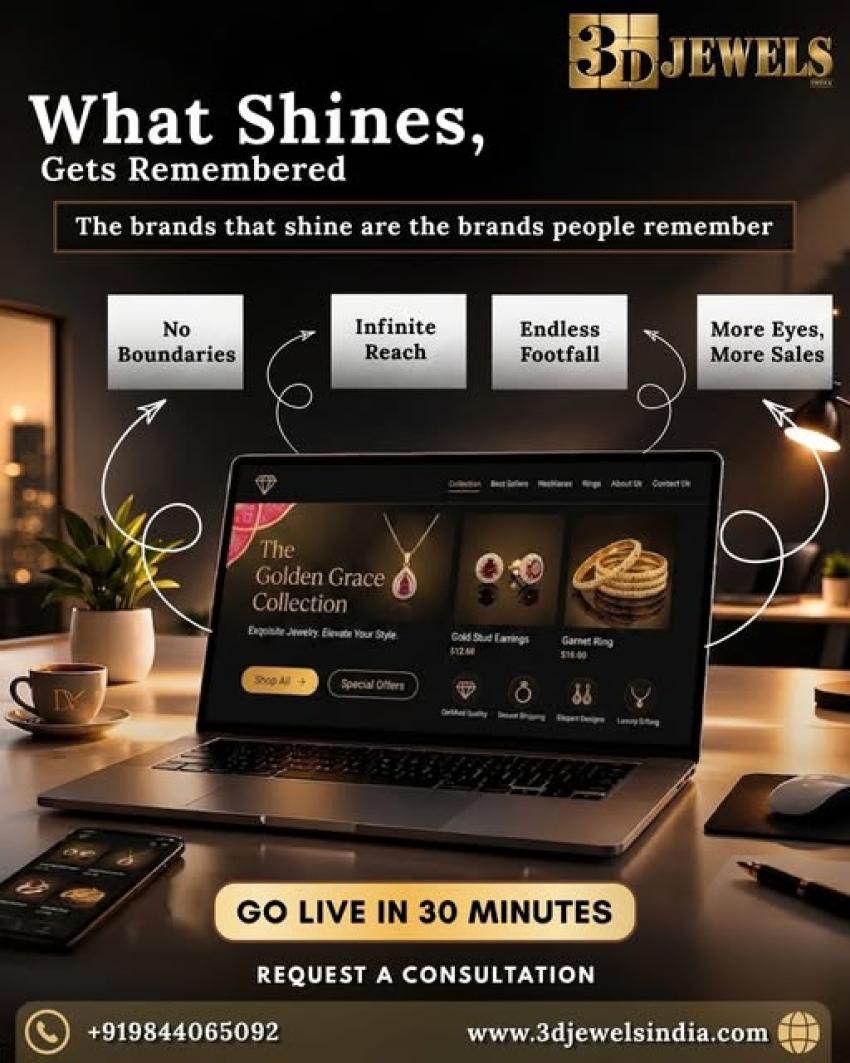
The jewellery industry has changed significantly with the growth of online shopping. Customers no longer need to visit a physical showroom to explore rings, necklaces, bracelets, earrings, or customised jewellery. They can browse collections, compare products, check details, and place orders directly from their smartphones or computers.
For jewellery businesses, this shift makes having a professional website more important than ever. However, simply creating an attractive website is not enough. A jewellery website needs to combine visual appeal, easy navigation, product information, trust signals, mobile usability, and a smooth buying experience.
A well-planned online jewellery website design can help a jewellery brand present its collections professionally while making it easier for customers to move from browsing to purchasing.
1. Attractive and Premium Visual Design
Jewellery is a visually driven product. Customers want to see the shine, craftsmanship, colour, shape, and finishing before deciding to purchase.
Therefore, the website design should create a premium visual experience. Clean layouts, high-quality product images, balanced spacing, readable typography, and consistent branding can make the website look professional.
The design should also complement the jewellery rather than distract from it. Too many colours, animations, pop-ups, or decorative elements can make the website difficult to use.
A simple and elegant interface allows customers to focus on the products.
2. Easy Website Navigation
Customers should be able to find products quickly without having to search through multiple pages.
A clear navigation structure can divide products into categories such as:
- Rings
- Earrings
- Necklaces
- Bracelets
- Bangles
- Gold Jewellery
- Diamond Jewellery
- Silver Jewellery
- Bridal Jewellery
- Custom Jewellery
Subcategories can also be added based on product type, occasion, material, price range, or collection.
For example, a customer looking specifically for diamond earrings should be able to reach the relevant products within a few clicks.
Good navigation improves the overall shopping experience and reduces the chances of visitors leaving the website because they cannot find what they need.
3. Detailed Jewellery Product Pages
Product pages are one of the most important parts of an online jewellery store.
Customers cannot physically touch or examine jewellery online, so product pages need to provide enough information to help them make an informed decision.
A well-designed product page can include:
- Multiple product images
- Zoom functionality
- Product name
- Price
- Jewellery material
- Weight
- Dimensions
- Stone information
- Available sizes
- Colour or finish
- Certification details
- Delivery information
- Return policy
- Care instructions
Images should show the product from different angles. Lifestyle images can also help customers understand how the jewellery looks when worn.
The more useful information a product page provides, the more confident customers can feel about purchasing online.
4. High-Quality Online Jewellery Catalog
An Online Jewellery Catalog allows customers to explore an entire jewellery collection digitally. Instead of depending only on individual product pages, businesses can organise their products into visually appealing collections.
A catalogue can showcase products according to categories, collections, festivals, occasions, or jewellery materials.
For example, a jewellery brand could create collections such as:
Wedding Collection: Bridal necklaces, earrings, bangles, and rings.
Everyday Collection: Simple and lightweight jewellery for regular use.
Festive Collection: Traditional and statement jewellery for celebrations.
A well-organised catalogue makes it easier for customers to discover related products and explore the brand's complete collection.
5. Advanced Search and Product Filters
A jewellery website may contain hundreds or even thousands of products. Finding a particular product can become difficult without an effective search and filtering system.
Customers should be able to filter products according to relevant attributes such as:
- Price
- Jewellery type
- Material
- Stone
- Collection
- Occasion
- Size
- Colour
- Brand
- Availability
A search bar should also provide relevant results when customers enter terms such as "gold ring," "diamond necklace," or "bridal earrings."
These features save customers time and make the shopping experience more convenient.
6. Mobile-Friendly Design
A large percentage of online shoppers browse websites using smartphones. Jewellery websites therefore need to work properly across mobile phones, tablets, laptops, and desktops.
On mobile devices, product images should load correctly, menus should be easy to access, and buttons should be large enough to tap comfortably.
The checkout process should also be simple on smaller screens.
Responsive design is not just about making the website fit different screen sizes. It is about ensuring that the complete shopping experience remains convenient regardless of the device being used.
7. Professional Jewellery Catalog Design
Good Jewellery Catalog Design can significantly influence how customers perceive a jewellery brand.
The catalogue should maintain consistency in product photography, typography, colours, layouts, and product descriptions. Every collection should feel like part of the same brand.
For premium jewellery businesses, the catalogue can use a sophisticated layout with high-resolution photography and carefully presented product information.
For a modern jewellery brand, a cleaner and more contemporary catalogue style may work better.
The goal should be to create a catalogue that looks attractive while helping customers understand the products easily.
8. Secure and Simple Checkout
Even if a website has excellent products, customers may abandon their purchases if checkout is complicated.
The checkout process should be straightforward and should not require unnecessary steps.
Important elements include:
- Guest checkout
- Multiple payment options
- Secure payment processing
- Clear order summary
- Shipping information
- Estimated delivery date
- Coupon or promotional code field
- Order confirmation
Customers should also receive clear information about taxes, shipping charges, and the final amount before completing their purchase.
A transparent checkout process can help build confidence and reduce cart abandonment.
9. Trust and Security Features
Jewellery is often a high-value purchase, so customers need strong reasons to trust an online store.
A professional website should clearly display information such as:
- Business address
- Contact information
- Customer support details
- Return and refund policy
- Shipping policy
- Privacy policy
- Terms and conditions
- Secure payment information
- Jewellery certifications where applicable
Customer reviews and testimonials can also provide valuable social proof.
For expensive jewellery, displaying authenticity or certification information can further reassure potential buyers.
10. Jewellery Customisation Options
Many customers want jewellery that feels personal or unique. If the business offers customisation, the website should make these options easy to understand.
Customers could be allowed to select features such as:
- Metal type
- Jewellery size
- Stone type
- Stone colour
- Engraving
- Design variations
A customisation feature can turn a standard product page into a more interactive shopping experience.
The website should clearly explain additional costs, production time, and customisation limitations before customers place an order.
11. Fast Website Performance
Website speed has a direct impact on user experience. High-resolution jewellery images are essential, but large, unoptimised images can make pages slow.
Businesses should optimise images without significantly reducing their visual quality. Unnecessary scripts, plugins, animations, and large files should also be reviewed.
A fast website allows visitors to browse more products comfortably and reduces frustration, especially for mobile users.
Performance should therefore be considered from the beginning of the Online Jewellery Website Design process rather than treated as an afterthought.
12. SEO-Friendly Website Structure
A jewellery website also needs to be discoverable through search engines.
Each category and product page should have relevant page titles, descriptions, headings, image alt text, and clean URLs.
For example, instead of a generic URL, a jewellery website can use a descriptive structure such as a category followed by the product name.
Blog content can also target informational searches related to jewellery buying, styling, maintenance, gemstones, and gifting.
An SEO-friendly structure helps search engines understand the website while making it easier for potential customers to discover relevant products.
13. Customer Support and Contact Options
Online customers may have questions about jewellery size, materials, delivery, returns, customisation, or payment.
Providing accessible customer support can make a significant difference.
A website can include:
- WhatsApp support
- Live chat
- Phone support
- Email support
- Contact forms
- Frequently Asked Questions
For high-value products, customers may prefer speaking with someone before placing an order. Quick access to support can help remove purchase barriers.
Conclusion
A successful jewellery website needs more than beautiful product photographs. It should combine attractive design with functionality, trust, useful information, and a smooth shopping experience.
From a well-organised Online Jewellery Catalog and professional Jewellery Catalog Design to mobile responsiveness, product filters, secure checkout, SEO, and customer support, every feature plays a role in helping visitors become confident buyers.
A carefully planned Online Jewellery Website Design can help jewellery businesses present their collections professionally, improve customer experience, and create a stronger online presence. The right combination of design and functionality allows a jewellery brand to provide customers with the confidence and convenience they expect from modern online shopping.