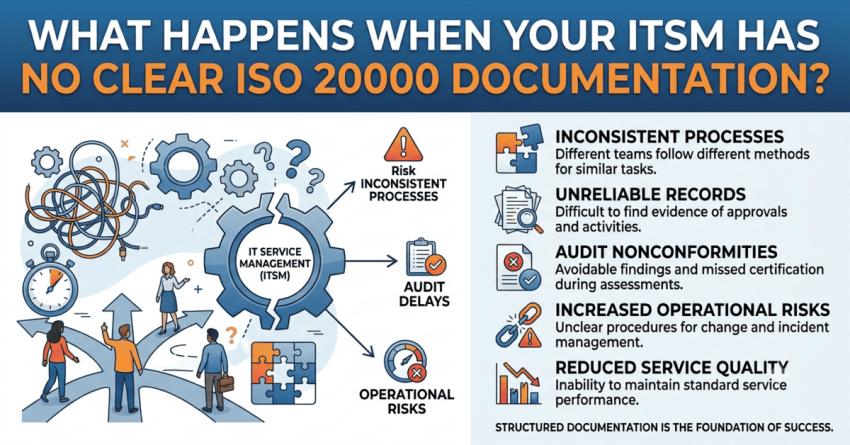
Many organizations devote a lot of effort to upgrading their IT services, but still find it challenging to succeed because of insufficient documentation or mismanagement of their ISO 20000 documentation. In cases where the service delivery looks effective, lack of procedures, outdated documents, and poor documentation can lead to confusion and cause delays in certification.
If your organization is planning ISO 20000 certification or strengthening its IT Service Management System (ITSMS), having structured and well-controlled documentation is essential. Clear documentation helps teams follow standardized processes, improves service quality, and demonstrates compliance with ISO 20000 requirements.
Why documentation matters in ISO 20000 standard
ISO 20000 is the international standard for IT service management. It requires organizations to establish documented processes that ensure services are planned, delivered, monitored, and continually improved. Documentation is not simply paperwork–it is the foundation that keeps IT operations consistent across teams and locations.
Well-prepared IT service management documentation helps organizations:
- Define roles and responsibilities clearly
- Standardize incident, problem, and change management processes
- Maintain accurate service records and evidence
- Support internal audits and management reviews
- Demonstrate compliance during certification assessments
Without these documented controls, even experienced IT teams may struggle to maintain consistent service performance.
Signs your ITSM documentation needs improvement
Many organizations discover documentation gaps only when preparing for an audit. Some common warning signs include:
- Different teams follow different versions of the same process.
- Service requests are handled inconsistently.
- Change management approvals are poorly documented.
- Records are difficult to locate during internal audits.
- Employees rely on verbal instructions instead of documented procedures.
These issues often lead to inefficiencies, repeated errors, and unnecessary audit findings that could have been prevented with a structured documentation system.
The risks of unclear ISO 20000 documentation
Incomplete ISO 20000 documentation requirements can affect more than certification readiness. It also impacts everyday business operations.
For example, if incident management procedures are unclear, support teams may respond differently to similar issues, resulting in inconsistent customer experiences. Likewise, undocumented service continuity or configuration management processes can increase operational risk during system failures or major changes.
Strong documentation creates repeatable processes that reduce uncertainty and improve decision-making throughout the IT service lifecycle.
One of the biggest reasons organizations receive nonconformities is the lack of documented evidence during an audit. Understanding what auditors look for in ISO 20000 ITSM can help you review your documentation, records, and procedures before the certification assessment, reducing the risk of avoidable audit findings.
What documents should an ITSMS include?
A compliant ITSMS typically includes policies, procedures, process maps, templates, records, and operational forms that support ISO 20000 requirements. These ISO 20000 certification documents provide evidence that processes are implemented and consistently followed.
Organizations looking for a faster implementation approach often use professionally developed ISO 20000 documents that include editable manuals, mandatory procedures, templates, audit checklists, and records. Using a structured documentation package can significantly reduce preparation time while helping maintain consistency across the management system.
Building a stronger IT Service Management System
Documentation alone will not guarantee certification, but it makes implementation far more effective. Review your existing documents regularly, ensure employees use the latest approved versions, and maintain records that reflect actual operational practices.
When documentation supports real business processes, your organization gains more than compliance–it achieves improved service quality, better operational control, and greater confidence during audits.
Conclusion
If your ITSM does not have adequate documentation based on ISO 20000, you will recognize the problem through inconsistent processes, delayed audits, and less efficient delivery of IT services. Proper investment in IT service management documentation will help you standardize your processes, satisfy ISO criteria, and be ready for certification.
Documentation and maintenance of the ITSMS not only meet the needs of the audit but also become a means of providing high-quality IT services and continuous improvement of them.