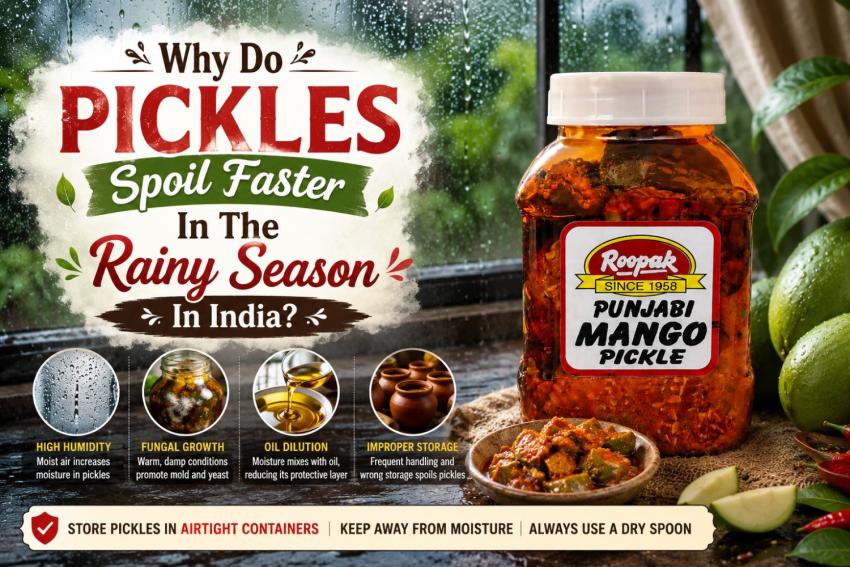
Featured Highlights
High humidity speeds up pickle spoilage during the Indian rainy season.
Always use clean, dry jars and dry spoons for storage.
Keep enough oil above oil-based pickles to block air.
Store pickles in a cool, dry place away from moisture.
Check regularly for mold, bad smell, or unusual texture changes.
Refrigerate fresh pickles after opening during very humid weather.
Proper hygiene and storage help homemade pickles stay fresh longer.
Do you ever wonder why your homemade pickles spoil quickly during the rainy season in India, even if they stayed fresh for months before? Rainy weather creates the perfect conditions for spoilage.
High humidity, extra moisture, and warm temperatures affect the quality of pickles.
If you understand these reasons, you can store your pickles and lemon pickle masala online better and keep them fresh for longer.
Pickles stay fresh because salt, oil, vinegar, and spices stop harmful microorganisms from growing.
Why Do Pickles Spoil Faster During the Rainy Season?
Pickles spoil faster during the rainy season because the air contains more moisture. Warm temperatures and high humidity help bacteria, yeast, and mold grow quickly.
Moisture enters pickle jars every time you open them. Even a small amount of water can disturb the balance of salt, oil, or vinegar.
Harmful microorganisms then multiply faster. This process changes the taste, smell, and texture of the pickle.
How Does Humidity Affect Pickles?
Humidity is one of the biggest reasons behind pickle spoilage.
During the rainy season, the air carries more moisture than usual. This moisture can settle inside the jar, especially if you open it often.
Extra moisture creates a good environment for mold and yeast. Once these microorganisms start growing, they spread quickly.
What Causes Mold to Grow on Pickles?
Mold grows when moisture and air reach the pickle.
Mold usually appears as white, green, black, or blue patches on the surface. Sometimes it also creates a fuzzy layer.
The most common reasons include:
Wet spoons touching the pickle
Water entering the jar
Loose or damaged lids
Low oil level in oil-based pickles
Improper drying of ingredients before preparation
Does Temperature Also Affect Pickle Shelf Life?
Yes. Warm temperatures increase the speed of microbial growth.
The rainy season in most parts of India stays warm and humid. This combination creates ideal conditions for spoilage.
Higher temperatures can also change the texture of vegetables and fruits inside the pickle. They may become soft or mushy over time.
Direct sunlight can also affect pickle quality if the jar becomes too hot. Store pickles in a cool and dry place instead.
Which Types of Pickles Spoil More Easily?
Some pickles spoil faster than others.
Fresh pickles that contain less oil, salt, or vinegar have a shorter shelf life. Fruit pickles with natural sugars can also spoil faster because yeast grows easily on sugary foods.
These pickles usually need extra care during the rainy season:
Mango pickle with low oil
Lemon pickle
Mixed vegetable pickle
Green chilli pickle
Garlic pickle
Fresh seasonal pickles
How Can You Keep Pickles Fresh During the Rainy Season?
Simple storage habits can greatly increase the shelf life of pickles.
Use a Completely Dry Jar
Wash the jar properly before use.
Dry it fully. Even a few drops of water can start spoilage.
Glass jars work better because they do not react with acidic ingredients.
Always Use a Dry Spoon
Never use a wet spoon.
A dry and clean spoon prevents water and bacteria from entering the jar.
Avoid touching the pickle with your hands.
Keep Enough Oil on the Surface
Oil-based pickles need a layer of oil on top.
The oil blocks air from reaching the pickle. This slows bacterial and mold growth.
If the oil level becomes low, add fresh oil after heating and cooling it.
Close the Lid Properly
Always tighten the lid after every use.
A loose lid allows moisture and air to enter the jar.
Check the lid regularly for cracks or rust.
Store in a Cool and Dry Place
Keep the pickle away from direct sunlight and damp areas.
A kitchen cabinet with good airflow works well.
What Are the Signs That a Pickle Has Spoiled?
You should inspect your pickle before eating it.
Common signs of spoilage include:
Mold on the surface
Bad or sour smell that was not present earlier
Gas bubbles inside the jar
Slimy texture
Unusual color changes
Soft vegetables with an unpleasant taste
Can Refrigeration Help During the Rainy Season?
Yes. Refrigeration can slow spoilage for some pickles.
Fresh pickles and pickles with less oil or salt benefit from refrigeration after opening.
Traditional oil-based pickles usually stay fresh at room temperature if stored correctly. Still, refrigeration can extend their freshness during very humid weather.
What Mistakes Should You Avoid While Storing Pickles?
Small mistakes often reduce the shelf life of pickles.
Avoid these habits:
Using wet spoons.
Leaving the lid open.
Storing jars near water sources.
Filling jars with damp ingredients.
Ignoring mold or bad smell.
Mixing fresh pickle with old pickle.
Keeping too little oil in oil-based pickles.
Are Homemade Pickles Safe During the Monsoon?
Yes. Homemade pickles remain safe if you prepare and store them properly.
Use fresh ingredients. Dry fruits and vegetables completely before mixing them with spices. Add the correct amount of salt, oil, or vinegar based on the recipe.
Check the pickle every few days during the rainy season. If you notice any early signs of spoilage, stop using it.
Good hygiene and proper storage play a big role in keeping homemade pickles fresh.
The Bottom Line
Pickles spoil faster in the rainy season in India because high humidity, warm temperatures, and extra moisture help mold, yeast, and bacteria grow. Simple storage habits can greatly increase shelf life. When you buy mango pickle online, make sure to use dry jars, clean dry spoons, and proper oil coverage. Regular checks help you enjoy fresh, safe, and tasty pickles throughout the monsoon.
FAQS
Can I still eat a pickle if I remove the mold from the top?
No. It is not safe. Mold can spread below the surface, even if you cannot see it. Throw away the entire pickle if you notice mold growth.
Why does my pickle become soft during the rainy season?
High humidity and warm weather can affect the texture of pickles. Moisture entering the jar also softens the fruits or vegetables over time.
Is it necessary to refrigerate homemade pickles during the monsoon?
Not always. Traditional pickles with enough oil, salt, or vinegar can stay fresh at room temperature if stored properly. Fresh pickles or low-oil pickles last longer in the refrigerator.
Can I use a plastic container instead of a glass jar for storing pickles?
You can, but a clean, dry glass jar is usually a better choice. Glass does not react with acidic ingredients and helps preserve the taste and quality of the pickle.
How often should I check my pickle during the rainy season?
Check your pickle every few days. Look for mold, a bad smell, excess moisture, or changes in texture. Early inspection helps you spot spoilage before it spreads.